A brief London trip in honour of new and old kinds of obsessive romanticism.
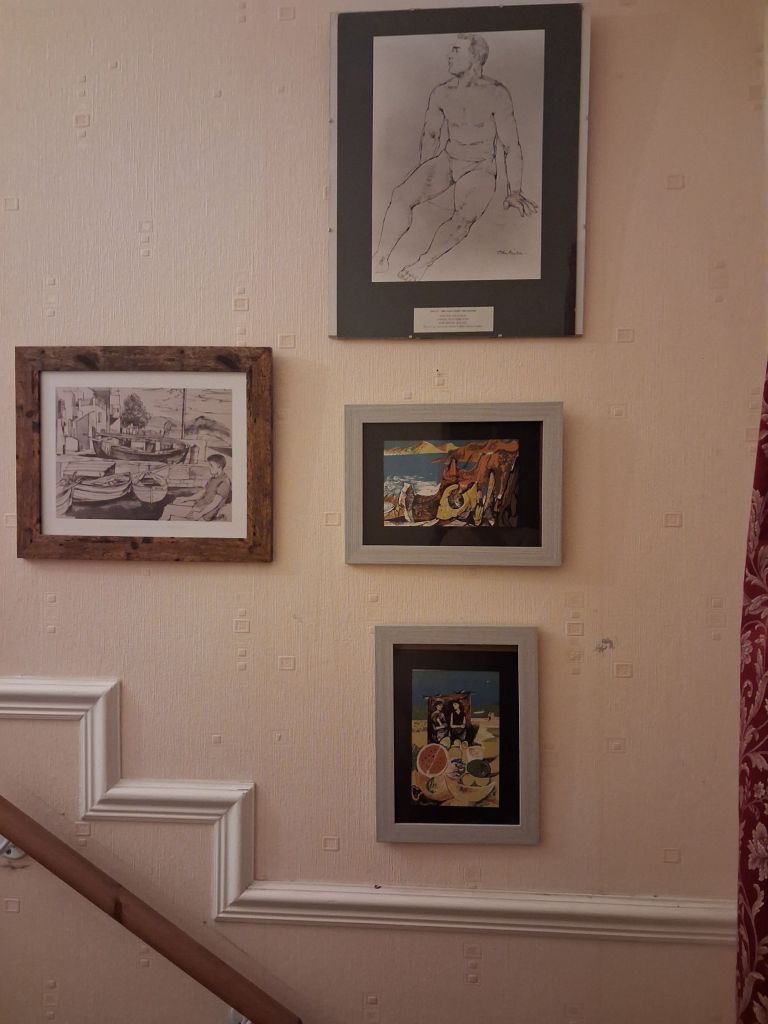
At home I recently added to my little wall of prints related to my hero Johnny Minton. Once only represented by the nude study top left (as you look at the wall), a print discarded from the British Museum. The rest are from the beautiful and costly book, these days, in its original editions, Time Was Away, a Corsican travel book commissioned by John Lehmann with colour illustrations by Minton. I have only just added the colour ones which were taken from a cut up (not by me I hasten to add) copy of the book, the black and white print being a museum reprint of an original illustration of the same book.
The colour illustrations represent landscapes studied by Minton in Corsica. They have a wonderful and curious abstraction about them, with a clear interest in the kind of geometric shapes in design Minton inherited from Cezanne via Picasso, but with an overcast of mood Mood derives from the coding of depth, whete illusion of perspective is replaced by shadows that are both the margin of shapes representing geological features and the depth that separates them from other features. In brief it represents the favour towards recognition that painting is a roughly-speaking (for Vaughan in particular exploited impasto depth a lot in oils) two-dimensional art, whilst coding for physical depth in a way that matched aspiration to emotional depth.
Beautiful isn’t it? And landscape with figures and other signifies of human presence follows a similar path, often using too theatrical metaphors to occult what lies beneath wraps and curtains. The foreground of cut fruits allows the geometric to again feature, the shadows round figures to darken the potentials of what passes between human figures.
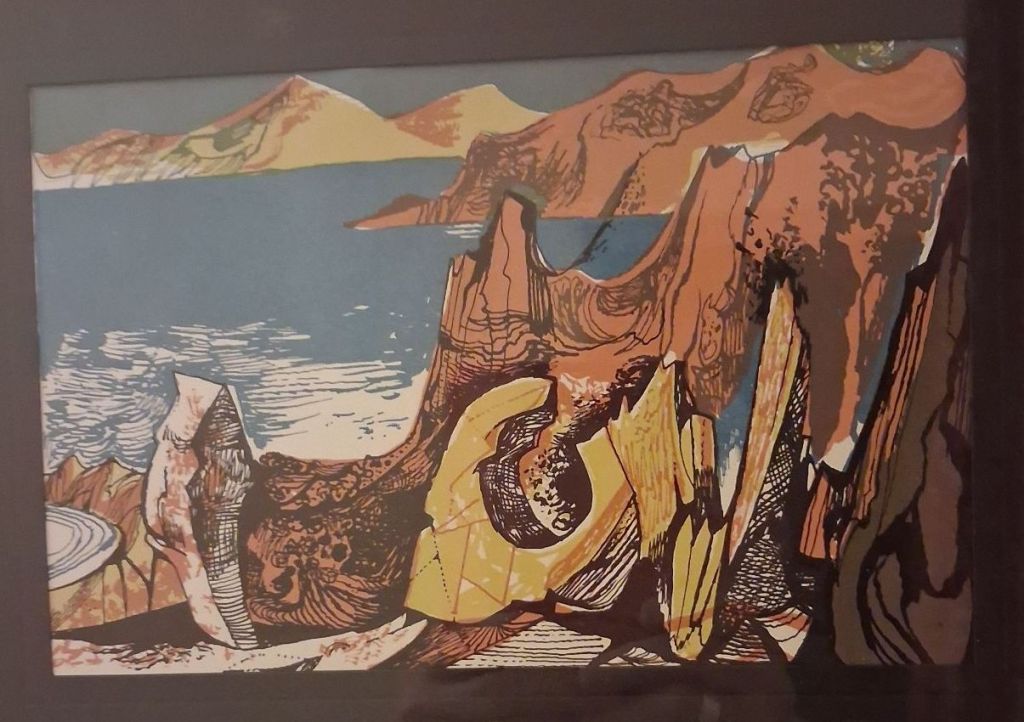
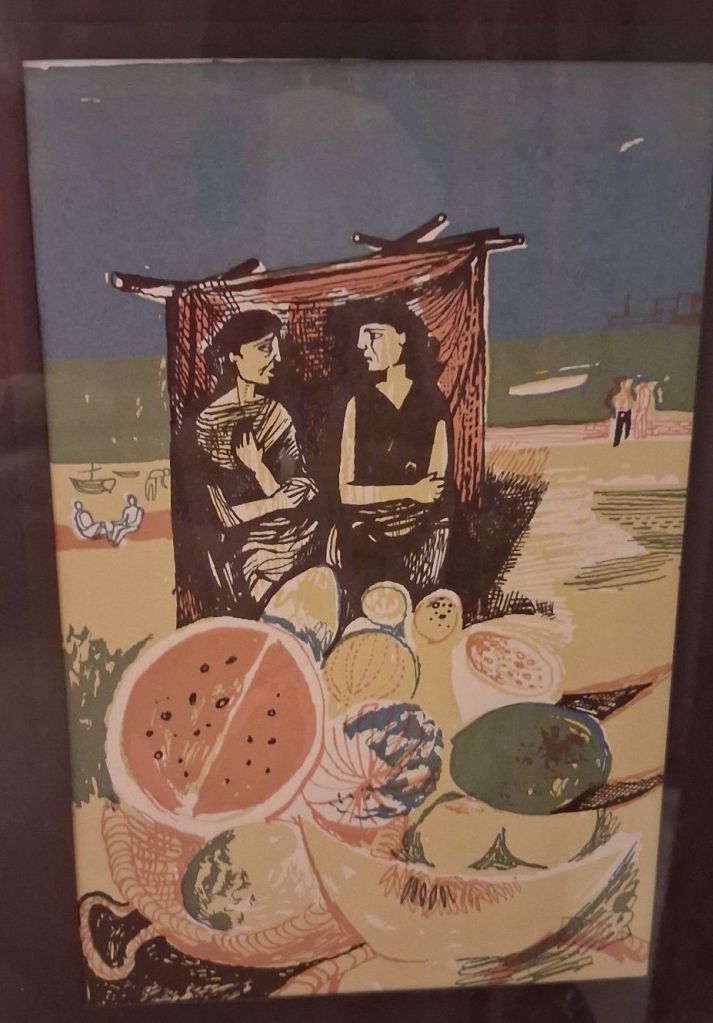
I have grown to love Minton in many ways though my interest in him as a man who expressed non-normative queerness as a feature of visual art as well as in the arena of sexual desire was my first starting point (see earlier blogs in my collection). But the movement in art associated with Johnny has always had that connection, with varying degrees of centrality to each artist. Thid brief London trip in honour of new and old kinds of obsessive romanticism starts then in honour of a movement, called, in its early days and before its artists began to follow separate pathways, Neo-Romanticism.
I will always remember with just a little bitterness attempting to complete an MA in the History of Art with the vindictive department in that subject in the Open University, whose staff refused to accept anything of value in queer theory and who took a dim view of the marginal aspects of Neo-Romanticism as undefinable, a position its Associate Lecturers equated with academic rigour. But those days are passed and interest in Neo-Romanticism still reflowers, if still marginally in the art world.
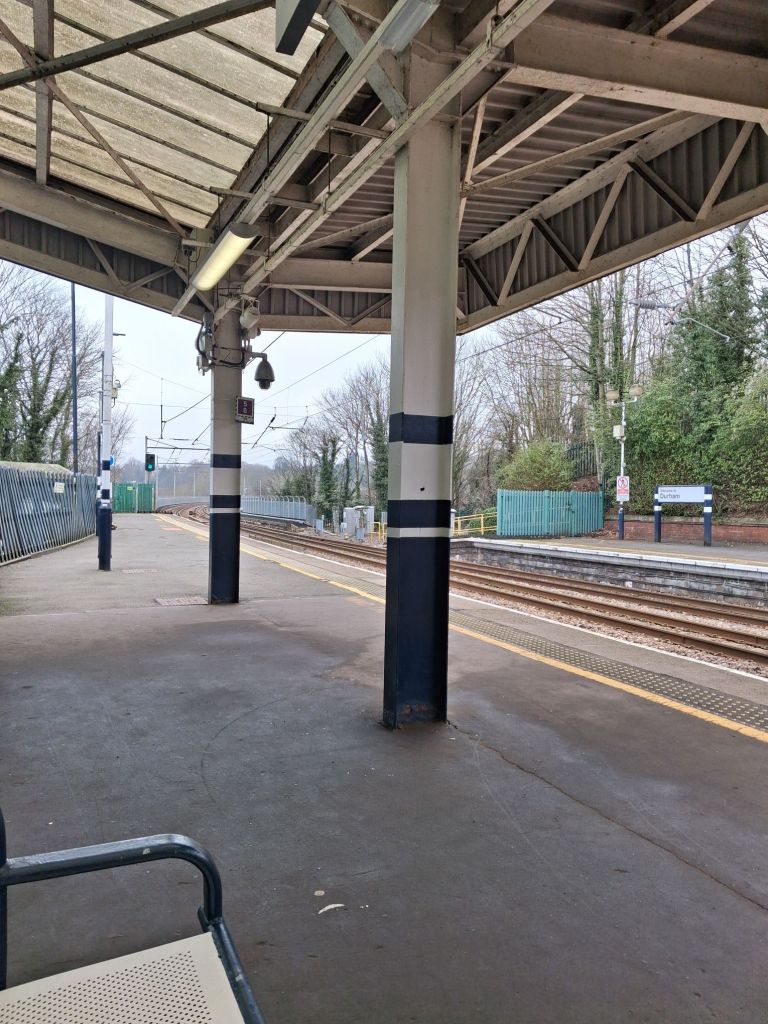
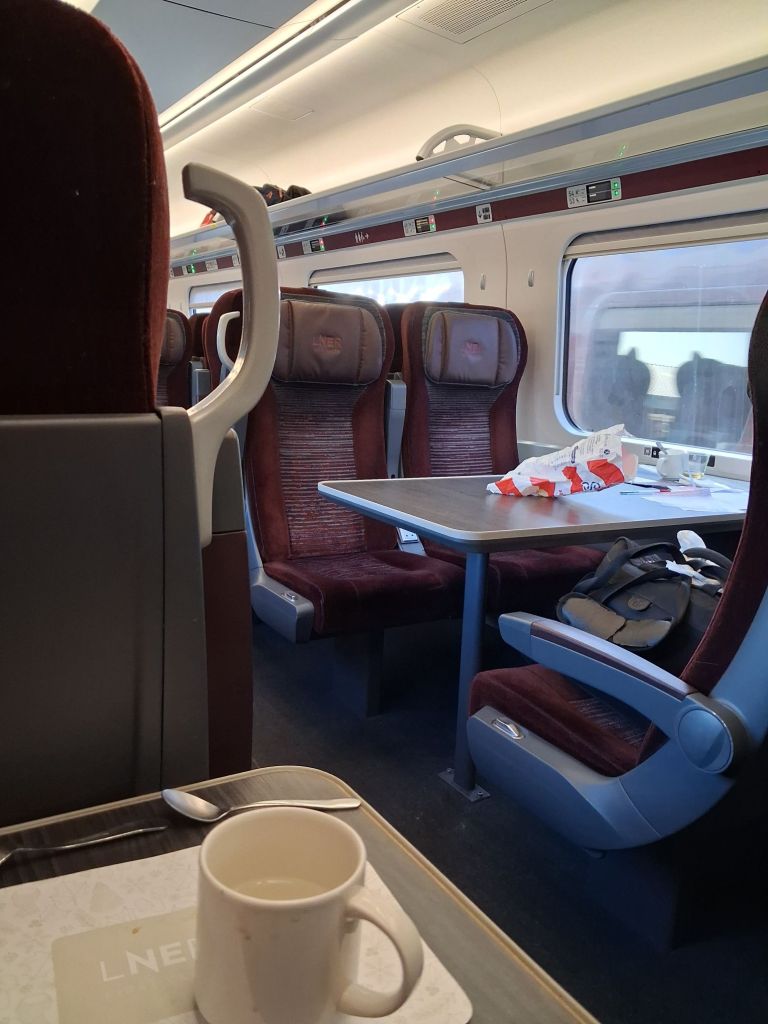
And so, for the background of my trip to London. I am on the train now but I so remember looking longingly up the track from Durham earlier:
The motive to go originated from an email from the fabulous Keith Vaughan society, a society commemorative of my very favourite queer Neo-Romantic artist. It told me of two exhibitions, my main events of this two day trip, starting today. I have booked a cheap hotel in King’s Cross , will go on arrival and later to the exhibition via a number 91 bus to Trafalgar Square, brandishing my elders bus pass.
The first is at Brooke-Walder Gallery in St. James’s and is a show describing early Neo-Romanticism through its drawings, studies and, perhaps, painting. Neo-Romanticism took its early impetus and perhaps its queer colourings from the continental and US definition, as described in the book by James Thrall Soby, a curator in the New York Museum of Modern Art (MOMA) in 1935 avidly read by John Minton and Michael Ayrton as London art students, around the work of Christian Berard, Pavel Tchelitchew, and Eugene Berman (Tchelitchew in particular being a very open queer artist in every which way).
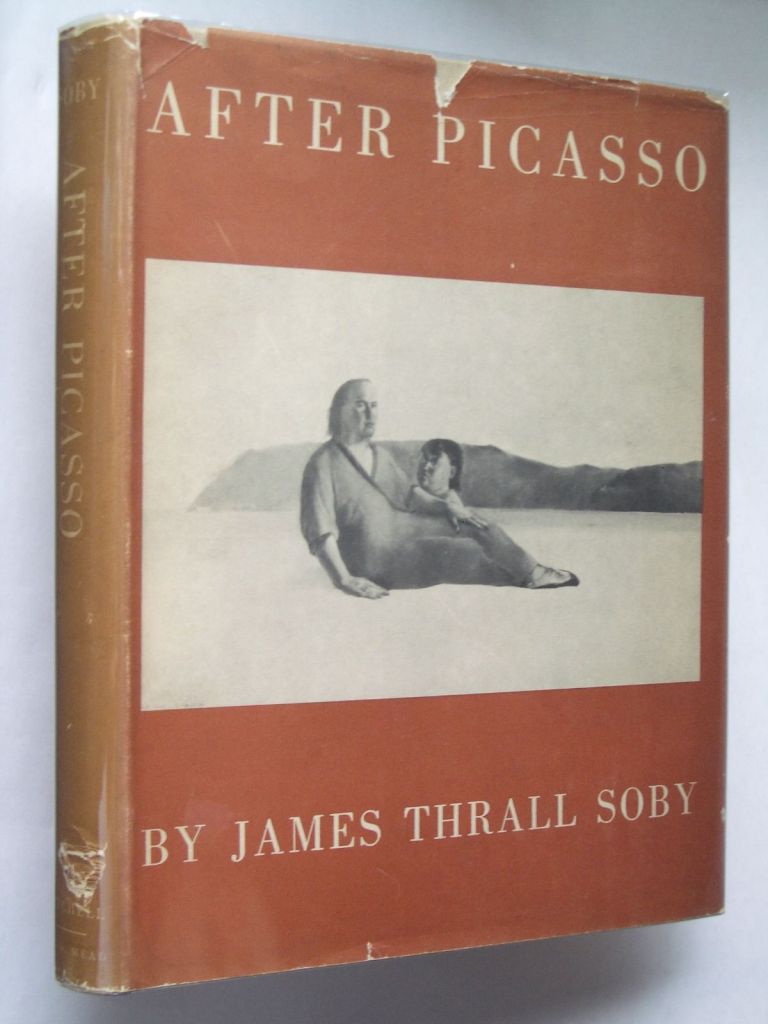
Soby’s distinction of the term was to include other forms, including the Surrelism he saw in Max Ernst, Hans Arp, Man Ray, Joan Miro, Salvador Dali, and others.
However, in England the Neo-Romanticism of the movement took on very English roots, especially as an art of landscape with or without figures. Mediated through Geoffrey Grigson, it focused on William Blake to some extent but mainly Samuel Palmer. This is is the movement Brooke-Walder Gallery focuses on in visual art (I can’t wait):
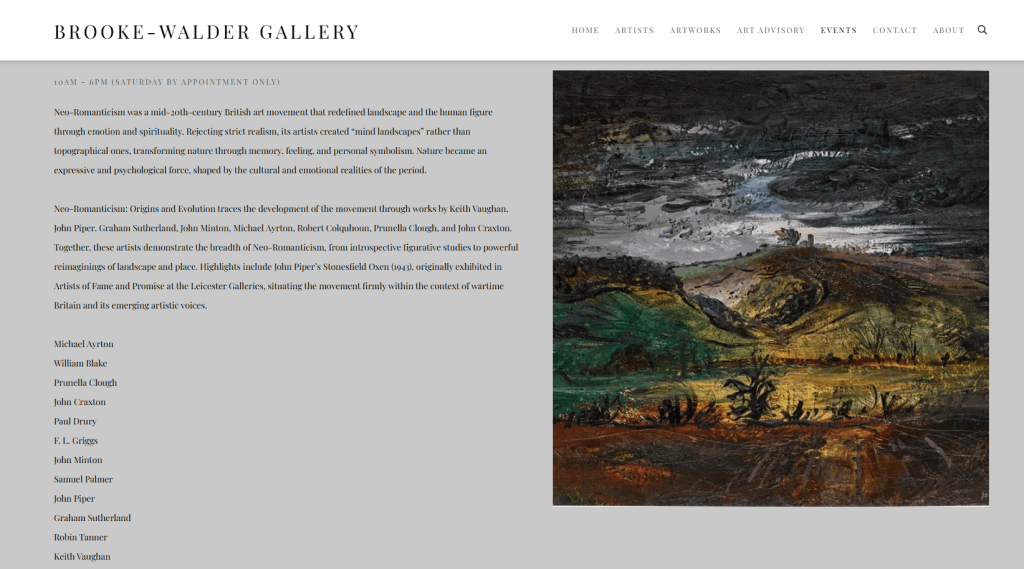
It defines Neo-Romanticism as a:
British art movement that redefined landscape and the human figure through emotion and spirituality. Rejecting strict realism, its artists created “mind landscapes” rather than topographical ones, transforming nature through memory, feeling, and personal symbolism. Nature became an expressive and psychological force, shaped by the cultural and emotional realities of the period.
Neo-Romanticism: Origins and Evolution traces the development of the movement through works by Keith Vaughan, John Piper, Graham Sutherland, John Minton, Michael Ayrton, Robert Colquhoun, Prunella Clough, and John Craxton. Together, these artists demonstrate the breadth of Neo-Romanticism, from introspective figurative studies to powerful reimaginings of landscape and place. Highlights include John Piper’s Stonesfield Oxen (1943), originally exhibited in Artists of Fame and Promise at the Leicester Galleries, situating the movement firmly within the context of wartime Britain and its emerging artistic voices.
Of these my focus is on the queer artists mainly, rather than the rather vapid attempt at definitions of Englishness in John Piper, though even that takes surprising anti-romantic turns in the more interesting Graham Sutherland’s (and Prunella Clough’s) use of industrial architecture to reinterpret nature. I expect surprises.
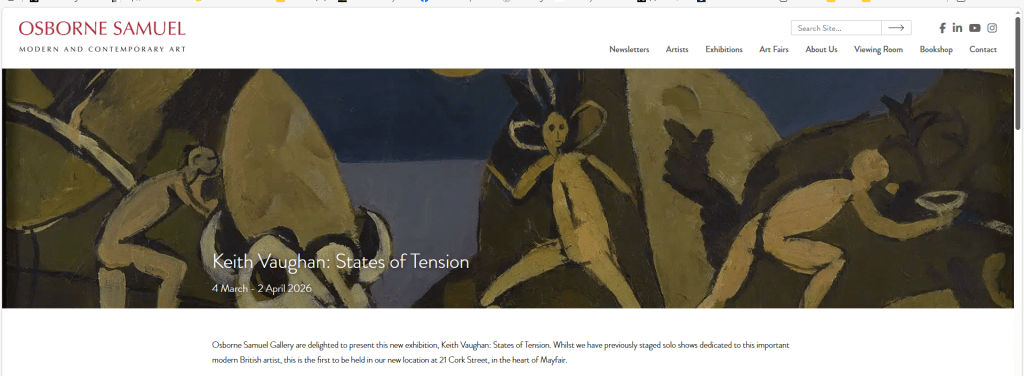
Up the road towards Oxford Street I am rejoicing to return to Osborne Samuel Gallery, the virtual home of the period of art that I have visited several times before and which boasts a catalogue of its new exhibition, solely of Keith Vaughan based on the theme of interpersonal and other forms of tension in art:
All this needs writing up once I have seen those exhibitions they close at 6 p.m tonight, their first day and my evening was free until I arranged just now (this is a revision of the blog) to meet my lovely friend Claire for an Indian supper.
I needed other things to fill the two days – my return train is 6.30 tomorrow. The first thing I will see I booked last, and I do not know the sculptors I will see but I like what the Hayward, a wonderful modern gallery offers in its joint exhibitions of Chiharu Shiota & Yin Xiuzhen:
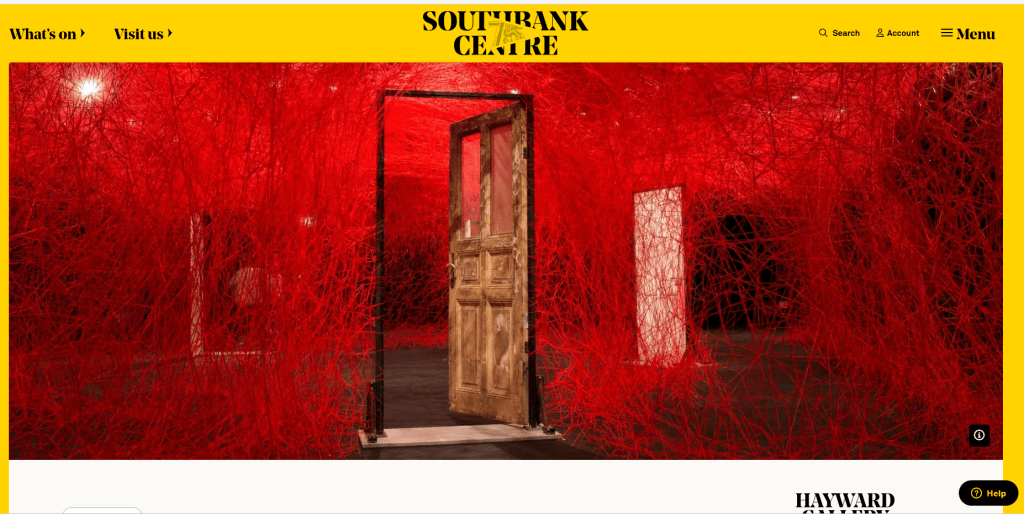
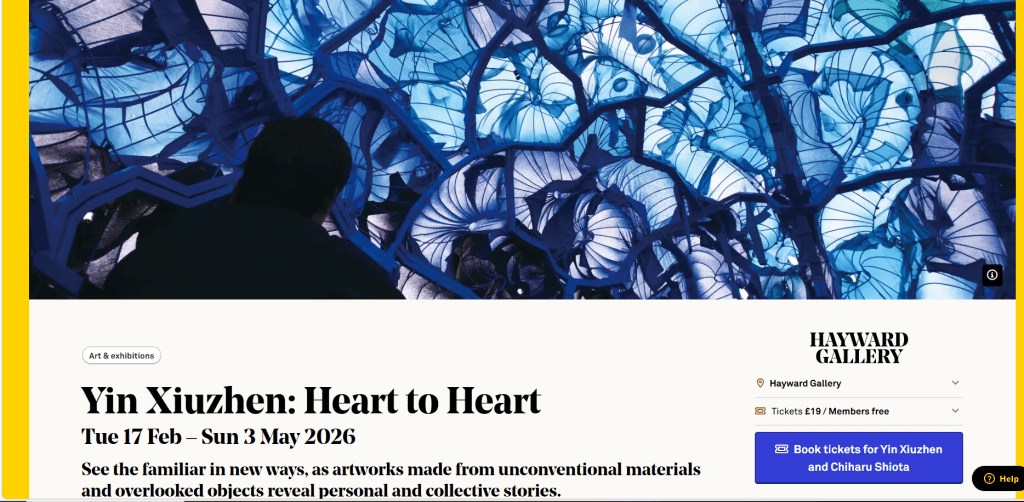
Again more when I have seen them. I had booked before that a little treat, a crossgenre theatrical experience currently at the Noel Coward Theatre,ST. Martin’s Lane, Dracula,in which all roles, to the accompaniment of film backgrounds (I have yet to understand how that happens) are performed by Cynthia Evri.
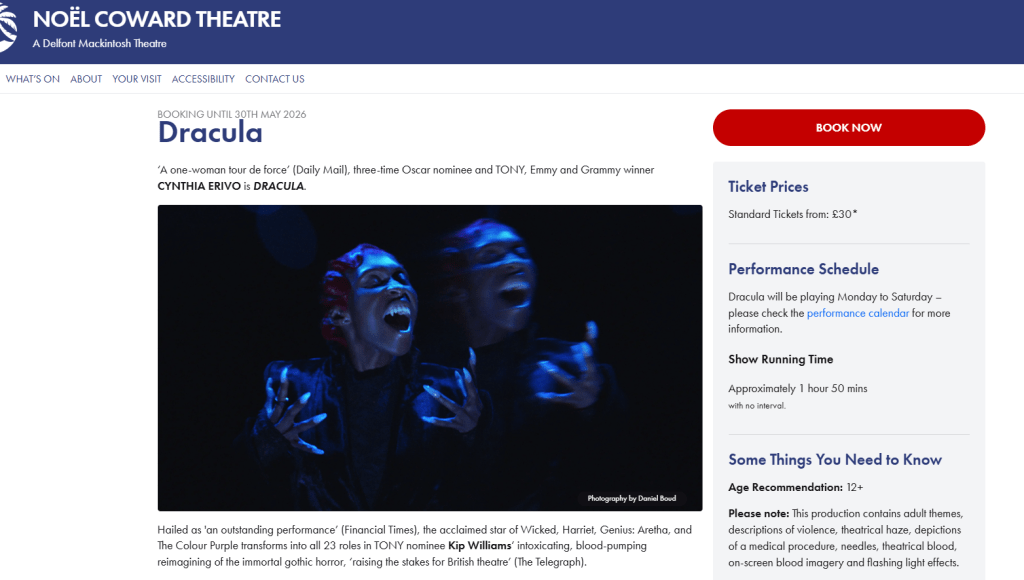
I am re-reading Bram Stoker’s Dracula [on the Kindle on my smart phone], a novel I have always admired as a pot-pourri of queer sexualities, as a treat and, of course, to blog in ways that might extend my learning. Will it I hope illuminate passages like this where Jonathan Harker projects the versions of love he might receive, as does nearly every character in the book, from vampirism. The passage comes from the point when Dracula sweeps in to rescue Johnathan from the penetrative kisses of three ladies (two dark one pale) and says he hasn’t finished with Jonathan yet. What consummation does he hope? Lol.
Then the Count turned, after looking at my face attentively, and said in a soft whisper, “Yes, I too can love. You yourselves can tell it from the past. Is it not so? Well, now I promise you that when I am done with him you shall kiss him at your will. Now go! Go! ….
I will stop here as this train pulls into Grantham. So many blogs for me to look forward to writing will result.
With love
Steven xxxxxx
 Steve_Bamlett_blog
One thought on “A brief London trip in honour of new and old kinds of obsessive romanticism.”