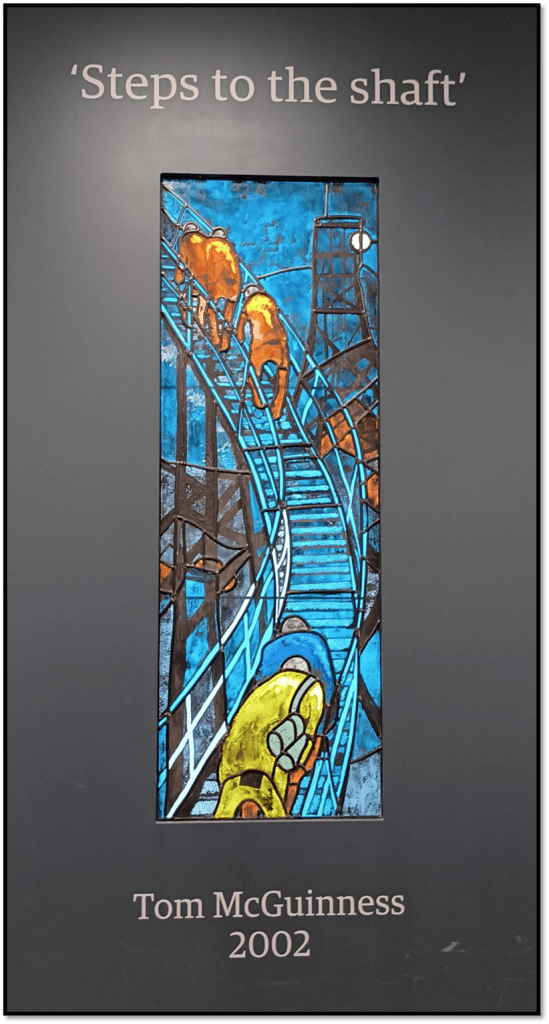
;…, and behold a ladder set up on the earth, and the top of it reached to heaven; and behold the miners of God ascending on it, that they may descend thereafter’. [with apologies to Genesis 28 v. 12[1]] A dream vision based on Tom McGuinness‘ stained glass window on permanent display at Bishop Auckland Town Hall, Steps to the Shaft (2002).
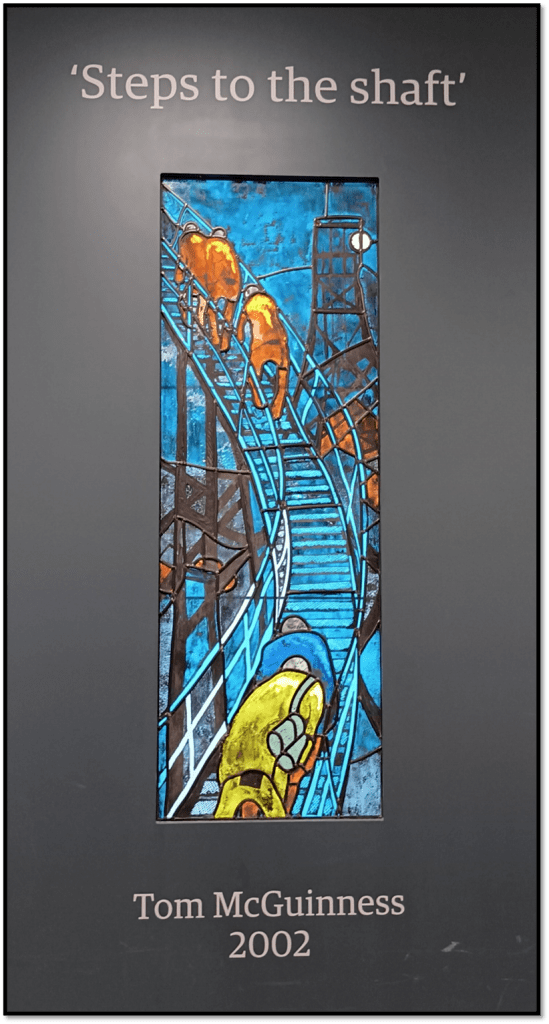
The first descent was  when Lucifer fell
Cag’d with a horde of angels down to hell.
Since then the cage fell many times, though time
Felt longer. To the shaft did miners climb
Before the cage swallows ‘em down its shaft
Where deep int’ pit's bowels they sang and laughed
Until the shift ends. Then back to the shaft,
The pit vomiting up what it had quaffed.
Miners don’t descend into mines, without
Ascending some ladder of steps that led
Unseen to heaven, though they descending
To their underground smell each other’s lives
In cages that the need of feeding kith
And kin locks them in.
                                Tom McGuinness dreamed,
His head on stones, that building Bethel seemed
To need that the miners of God ascend
But not descend on the same ladder angels
Feigned to tread ‘tween God and man, but instead
Only make Ascent to the shaft, which will
Entail descent even further than did
Those falling angels. Durham men bred bread
For Family, which was their oath to Heaven
Heaving coal to feed the sweet starving world.
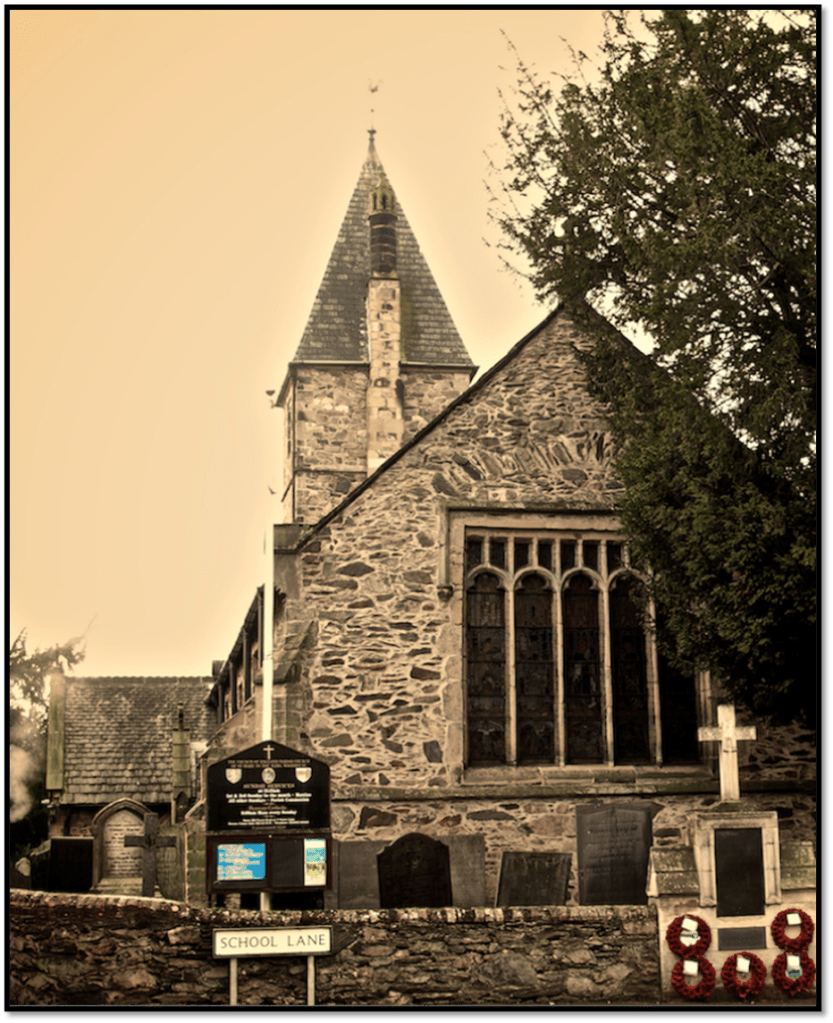
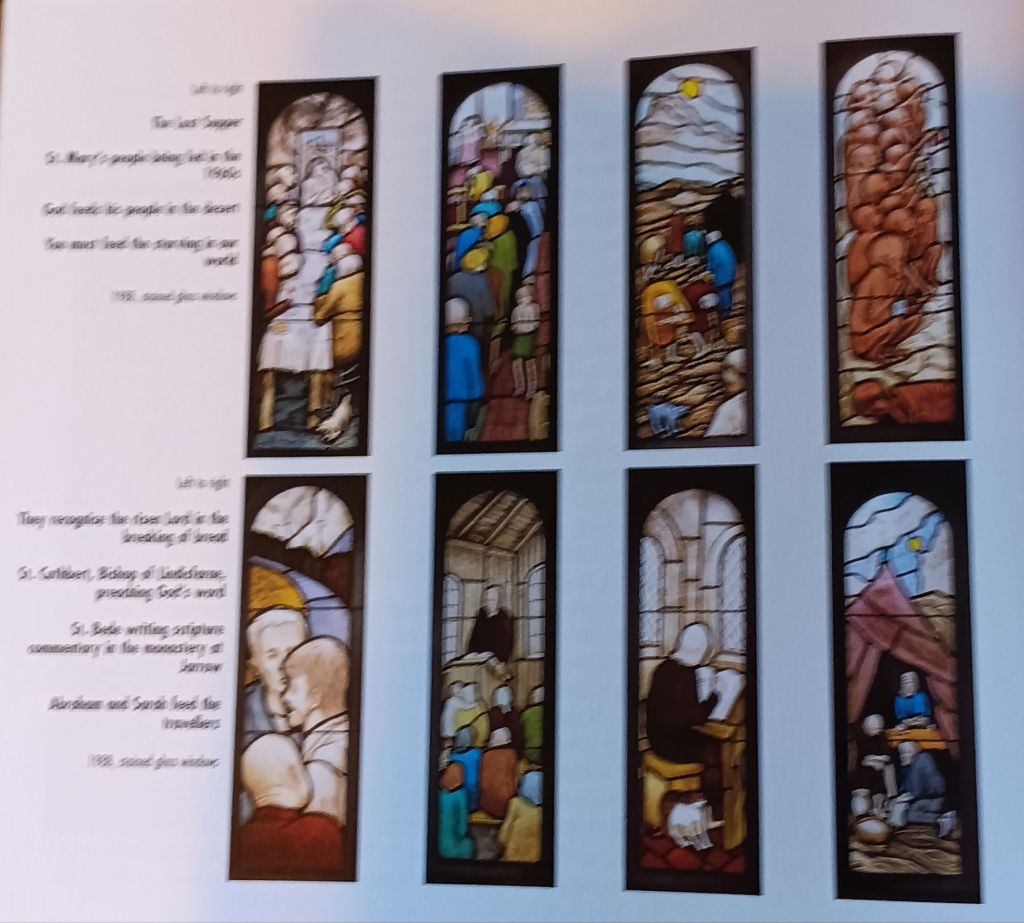
The last lines refer to the stained glass windows Tom McGuinnes crafted for the Blessed Sacrament Chapel in St. Mary’s Church, Woodhouse Lane. These show intermixed pictures of feeding the hungry and preaching the Word, emphasising the importance of a responsibility to feed both spiritually and physically in McGuinness’ Catholicism, its main emblem of both messages being The Last Supper.
I wrote this following a visit to Bishop Auckland Town Hall which now shows Tom McGuinness works from the Jack Reading Bequest in its permanent collection. The first pictures shown are placed as in the photograph below from the venue website.
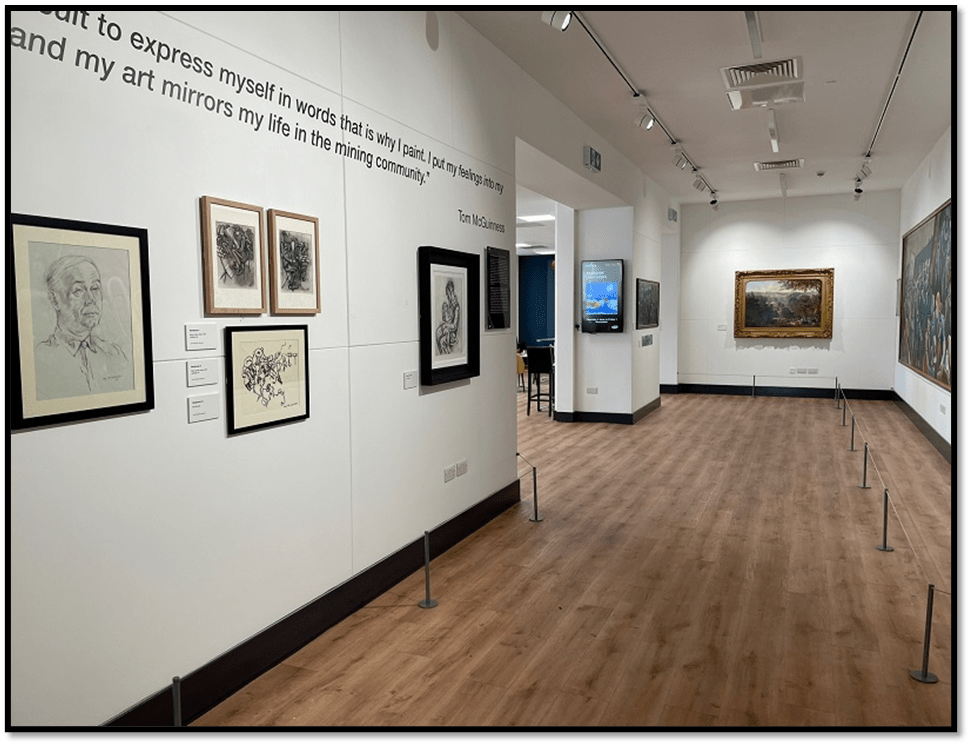
On this visit I thought more about the ways in which McGuinness paintings (and lithographs, murals and stained glass too) must be read as expressionist forms. There is a tendency in some takes on McGuinness to domesticate him as a miner (and minor) painter confining himself alone to recording mining scenes underground and overground, but this belittles the ambition of these painting that use formal design (and distortions with them) and figures also distorted to emphasise not a visual reproduction but reproduction of the world – and manifest human striving in the context of ideas, such as ascent and descent, and the web, and mire of a world that is sometimes infernal as well as underground. Processions of men ascending or descending (oe in transfer in one marvellous painting The Transfer Point) talk about humanity on a mission. Mc Guinness chose distortion to make a point. Of course family drawing from the life was different.
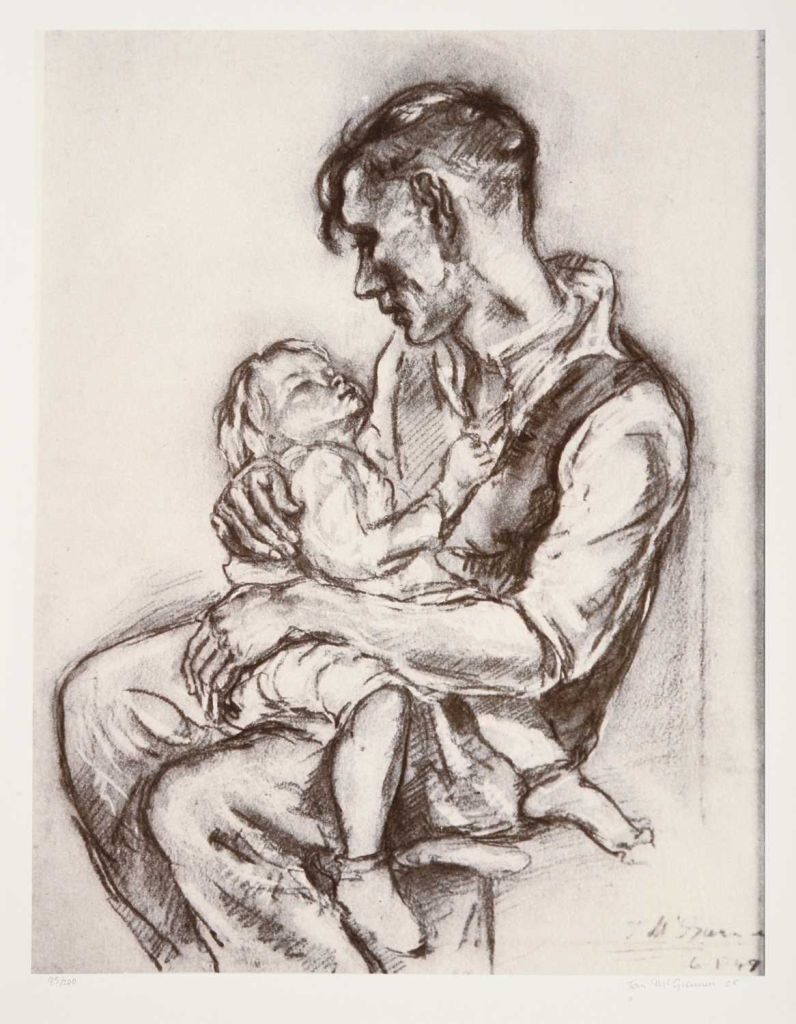
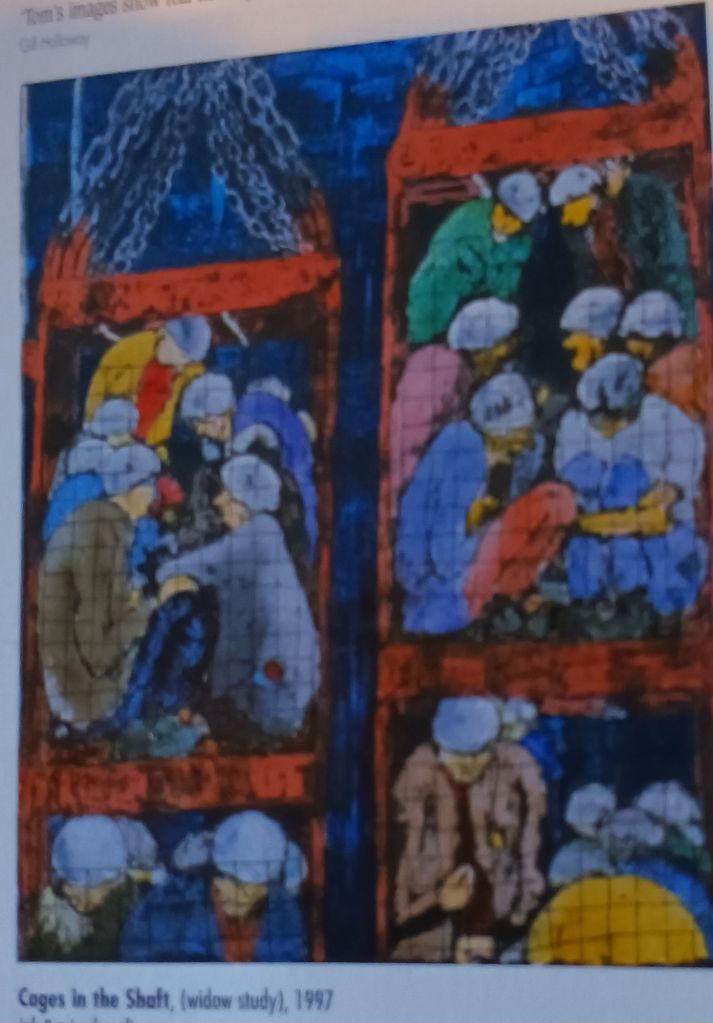
As you will see he could do drawing that reproduced likenesses – he did it for his family, as in the drawings above, but his love was of the experimental in which the sensation – including its look but not only that, idea and feeling of the painting was all pointing towards polysemous interpretation. See these examples which one day I will write up which always show iconic emblems of ascent and descent in an architectural interiors, not shown by the poet, of Milton’s ‘Pandemonium’ and in one mural ascending and descending in the cramped ‘cages’, as they were called, in the pit shaft:

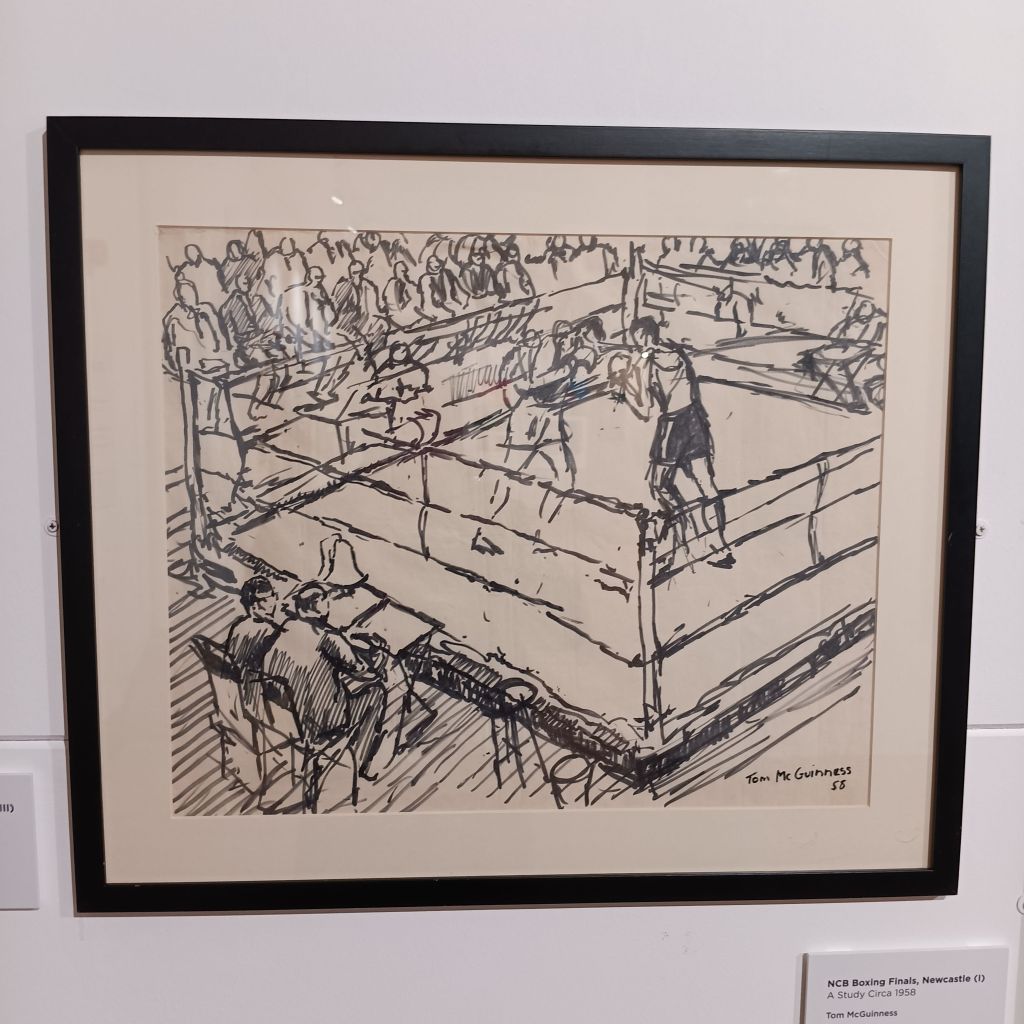
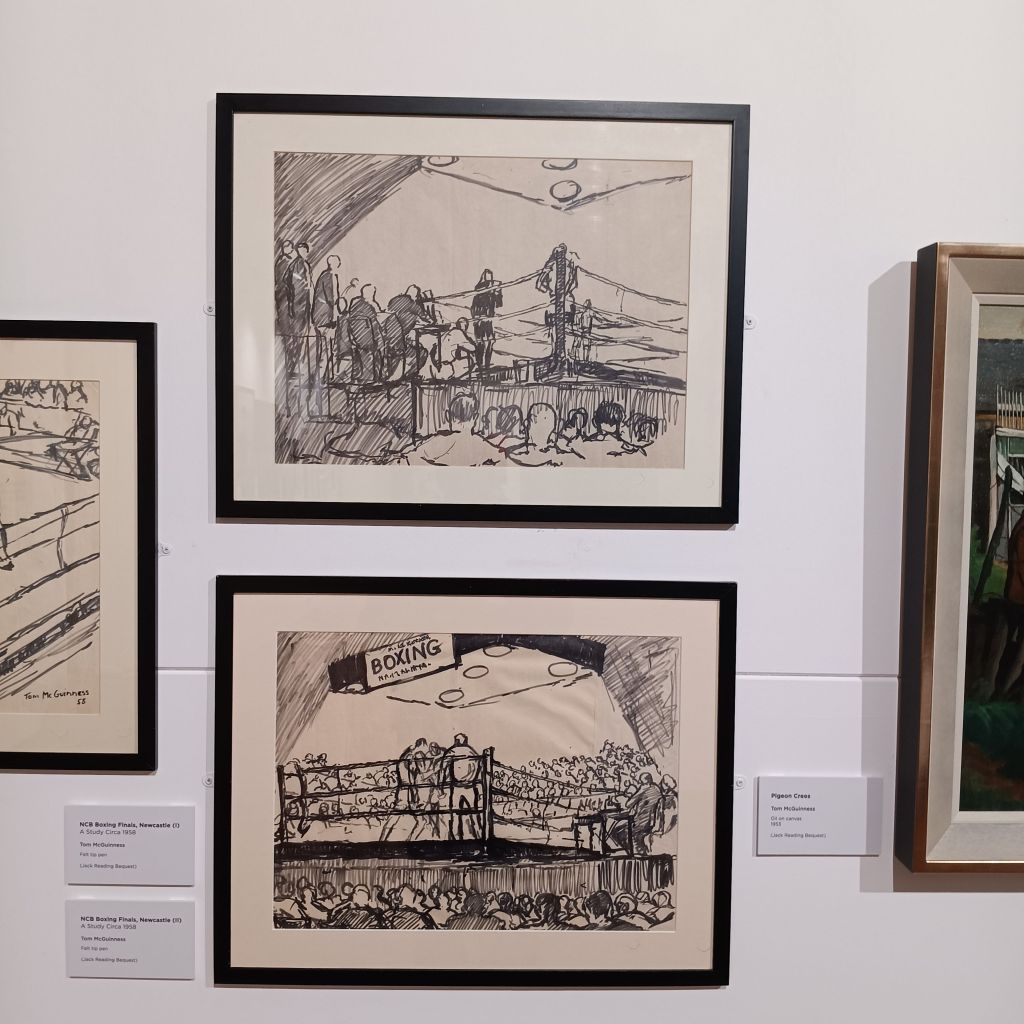
But McGuinnes is a complex artist as well as working-class hero, though with a spiritual yen that is not usually to my taste but in this case …… Don’t miss now though, on a different tack, in the Permanent Exhibition these late scenes (1990s) of a Newcastle Boxing Club for Boys. They are beautiful (adventurous like Rembrandt is adventurous) – and may be recycled to the archive soon.
With love
Steven
[1] And he dreamed, and behold a ladder set up on the earth, and the top of it reached to heaven; and behold the angels of God ascending and descending on it.
 Steve_Bamlett_blog