You’re going on a cross-country trip. Airplane, train, bus, car, or bike?
I am describing a trip I am currently engaged on, and so the simple answer is by train as my photograph from yesterday, below, illustrates.
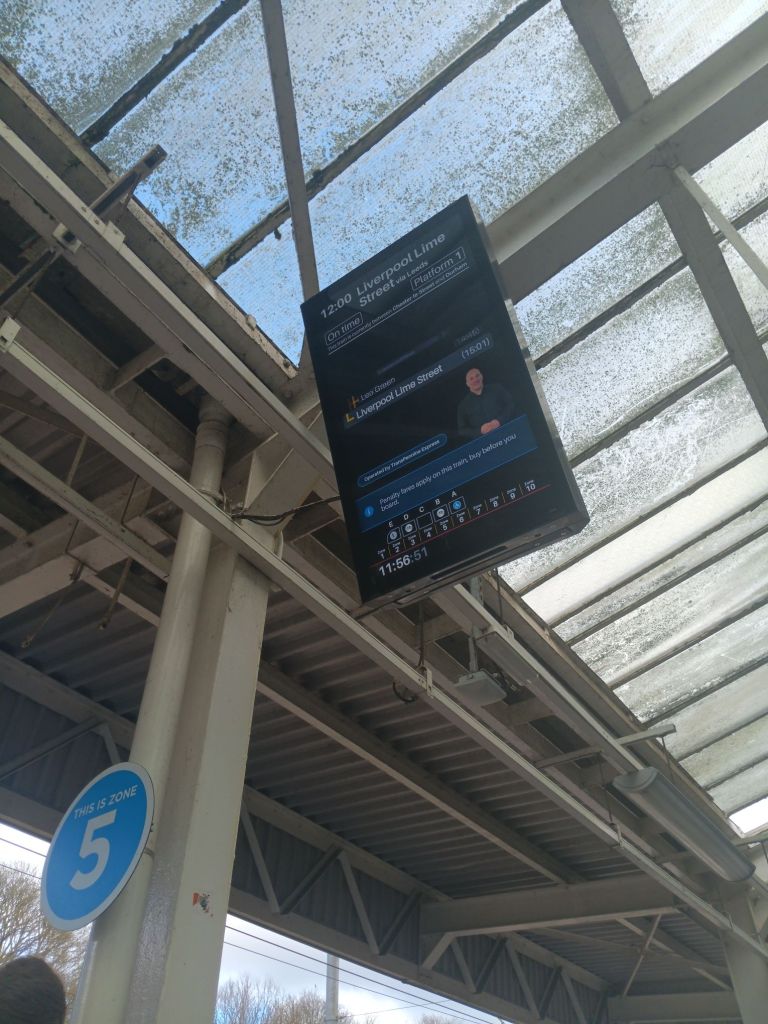
However, as it is for most of these prompts, there is a simple answer that is a kind of untruth, and there is a longer one that has to complicate the answer to the implied question. It does that in order to get nearer to telling exact truth even concerning how I got here, where I type now in Manchester, from home via the nearest cross country train station to Crook, eleven miles away in Durham City.
Manchester is a city that is very unlike Durham as the pictures below suggest. To get to the evening bustle pictured below on Tuesday evening on my walk to the Manchester Opera House from my hotel, sometimes seems the most significant part-journey of the trip as a whole.
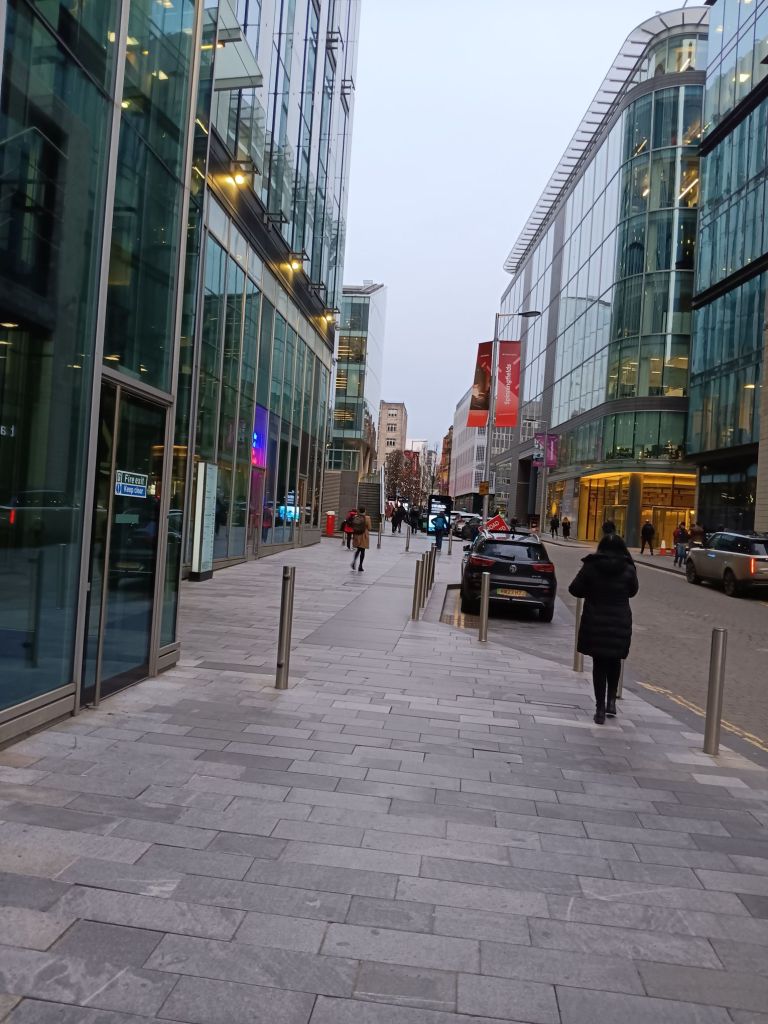
Especially when the trip had to involve a car journey the eleven miles from Crook to this very different city centre:
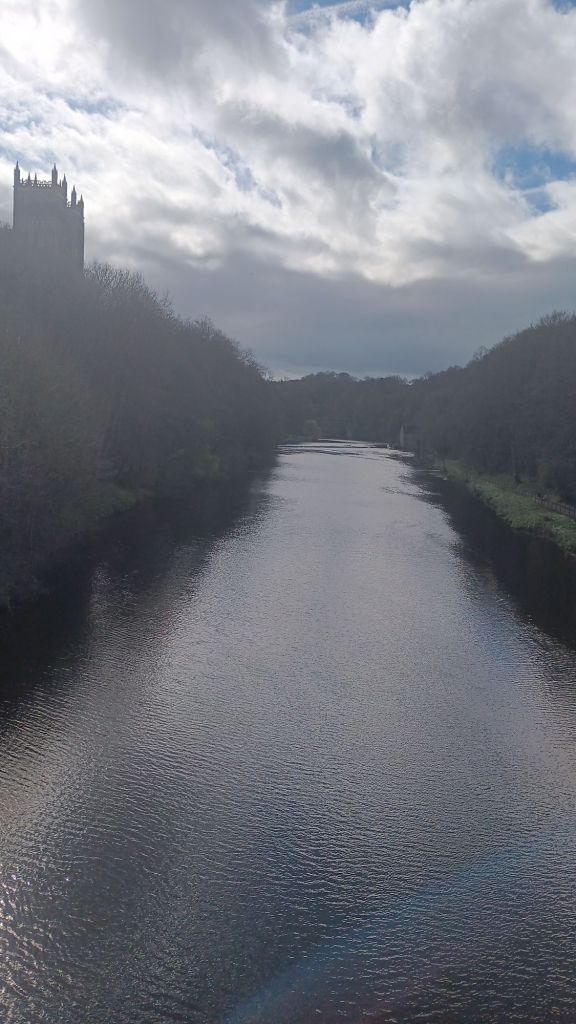
But does truth count in these questions? Can I, for instance, really say that I travel only by one mode of transport and that the chosen modes are dictated really by the motives for travel.mainly as well as the availability and pragmatic utility of the different modes I feel I have to use. It may be a self-justifying illusion, but modes of transport I used yesterday and will again today on my return trip do not all seem to be chosen, as such, for the choice involves so many other factors.
To get from home across a country that is relatively small and especially in width across it from east to west, especially when the relative borth to south journey ia also limited seems not to be what the question is about. By mentioning aeroplanes in it, for instance the question gives its presumptions (as being born in the USA) away.
In the USA you could be travelling, whether it be either north to south or east to west or both combined, across long distances through differing time and climate zones. Such distances mean the question may even be about whether your journey involves calculations of relatively very significant differences of ‘carbon footprint’ in your choice of mode, as well as question of one’s own relative capacity or will to take certain modes of transport. In the UK, the question seems diminished by the circumstances implied by ‘cross-country’.
As I said above, my simplest answer is to say: by train. But the nearest cross-country train station to our home in Crook, County Durham is in the city of Durham itself. To get there, the only practicable means is by car. Doesn’t anyway the trip and the means used it depend more on your motives for travelling in the first place.
My trip was motivated by a desire to see one of this country’s greatest living actors playing in a play based on two plays I love and know well, Shakespeare’s ‘histories’ of Henry IV, though, in the event, during to include a famous bit from Henry V, the report of the lonely death of Sir John Falstaff by the brothel madam he ‘marries’, Mistress Quickly. It was this focusing on the tragi-comedy implied in the life Of Falstaff that must have brought Ian McKellen to accept a role he has, it seems, always resisted as I mention in my preparatory blog, at this link.
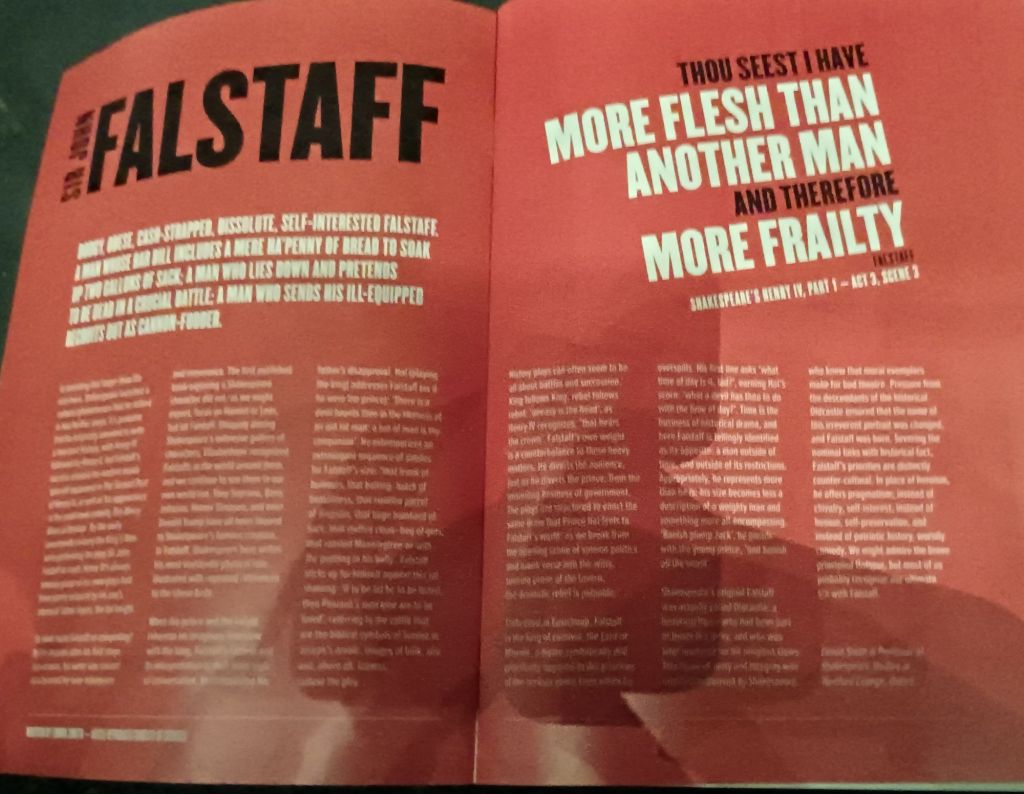
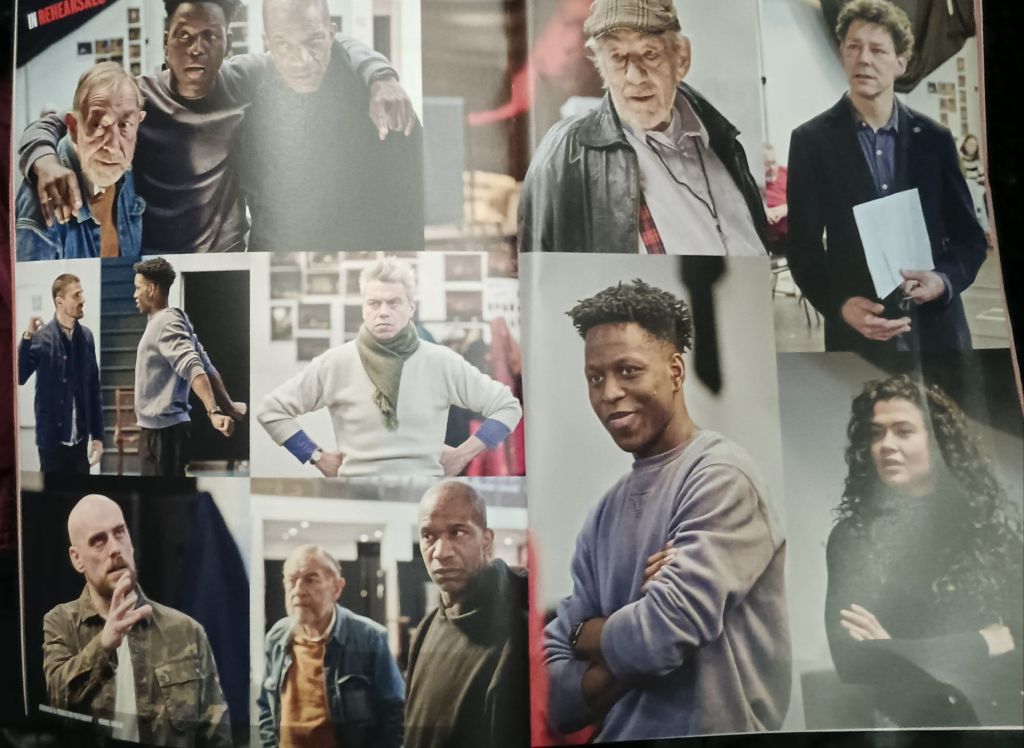
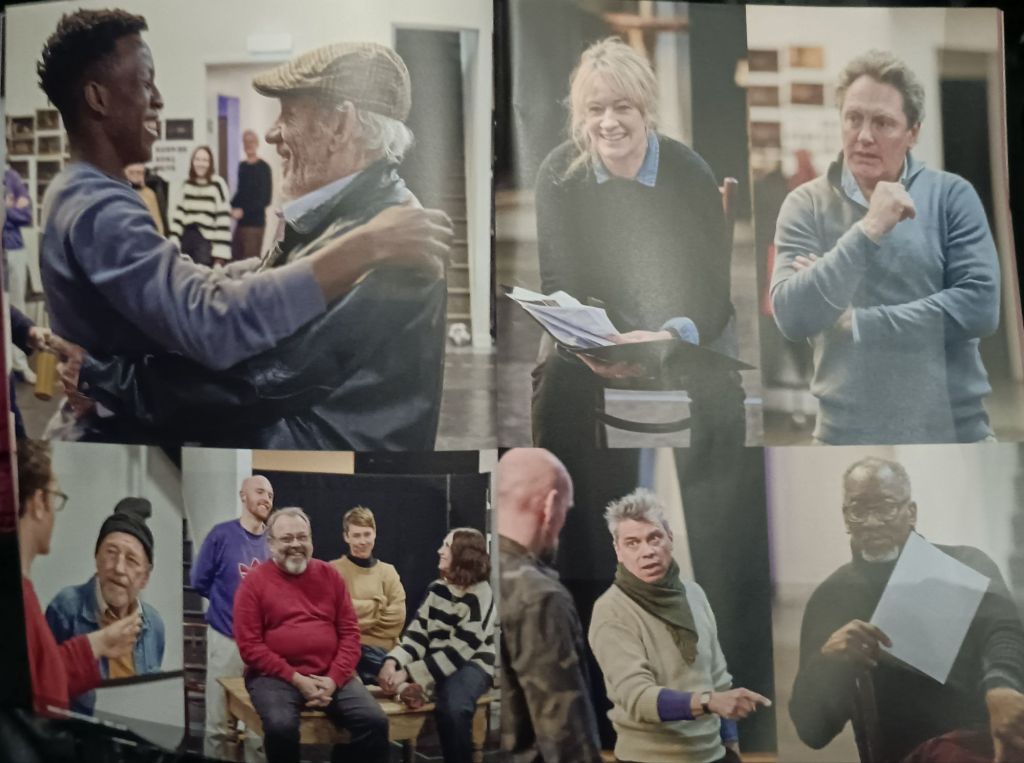
But that motive aside (for I will report on that magnificent production tomorrow), cross-country journeys, even in this small island nation, never feel simple to me. They prompt memory and emotion, as well as thoughts that were randomly selected from some half-conscious lifescan process. Maybe that is because journeying to and from Manchester is a thing that now has layers of history for me and my husband less Manchester’s own than mine these days. That is so despite my age, though an age far less august than that of Ian McKellen.
I felt the age stuff summarised when Falstaff talks about his own corrupted and decaying country that ‘hate us youth’ regarding his own performative regenerations, for you see regeneration in action at so many levels of performative life in this play, where the Machiavelluan young seem older than the old. Yet, for me, it was a factor, even in having the emergy for holding together in an uncomfortable seat and an old man’s bladder in a play made as short as it could be, at nearly four hours.
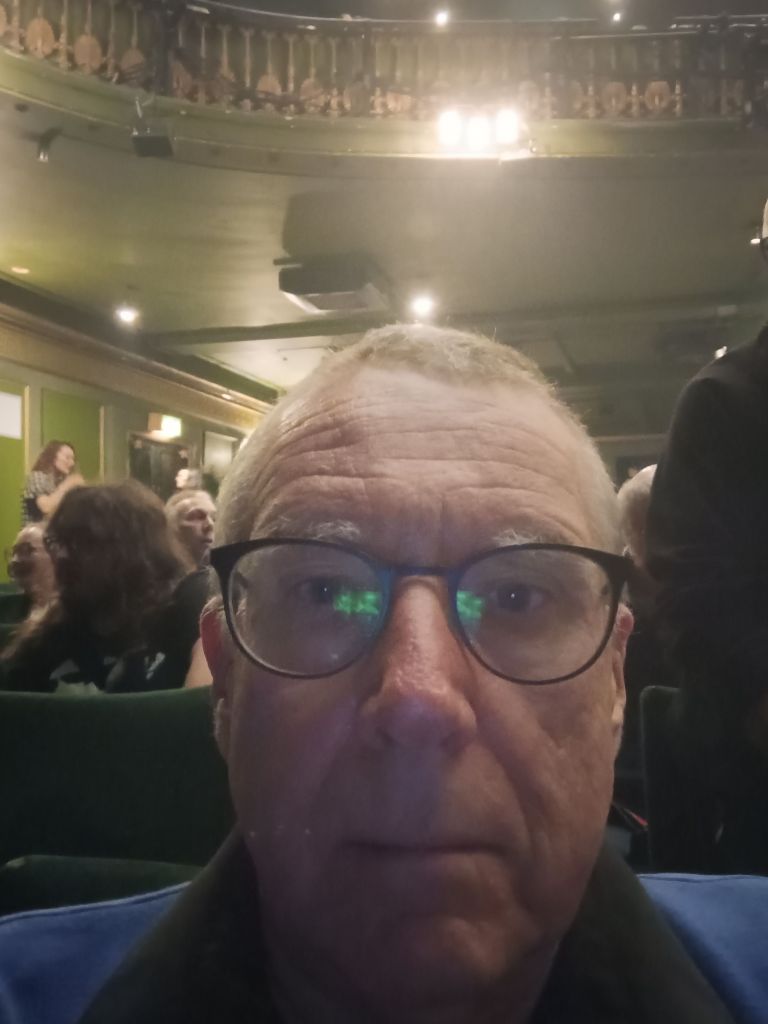
“How did he at 84 sustain this role that dominated the time-space of this adaptation?” I think to myself. This was the same thought as that of many other men my age, I think, judging from the overheard conversation of those queuing at the grossly inadequate toilets in the stalls bar in Manchester Opera House.. Even my modest day tired me, at my relatively sprightly 69, sitting earnestly in that theatre in the front row of the stalls ( seat A10).
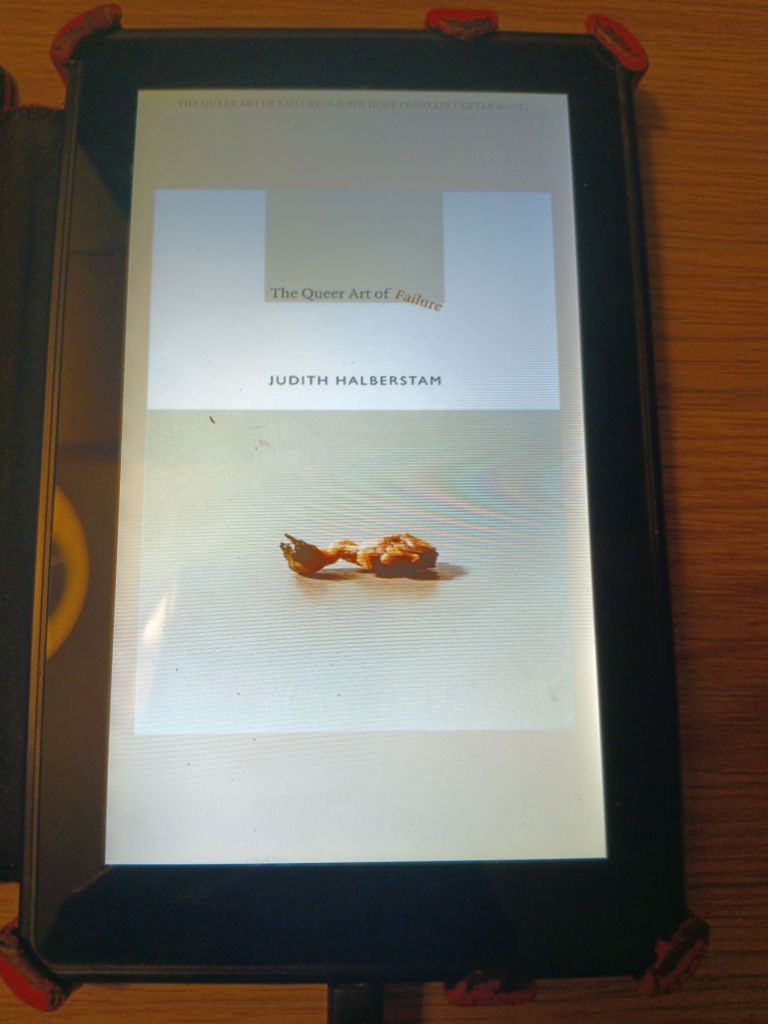
But I rush to the end, for the emotion of the journey started earlier, covered only slightly by reading on my Kindle an academic text by Juduth Mandelstam called The Queer Art of Failure, a necessary text for someone as obsessed as I about the ridiculousness of positive thinking ideologies and reflecting on a lifetime in queer politics.
Occasionally, I looked up from my reading on the train journey when it turned from York when it became truly Trans-Pennine. I came from the hills that surrounded me on the train from Leeds to Dewsbury. It moved me to see the roads I travelled with my Mum and Dad through deep-cutting valleys, with a green that I should have rembered less sadly but that made sense in Icke’s Player Kings when I discovered it stole from Henry V the scene where Mistress Quicklyreports that Falstaff died as he ‘babbled o’ green fields’.I didn’t photograph the fields till over the Pebnines, pulling into the now idle stacks of warehouses at Stalybridge, where the hill.land was flattening down a little.
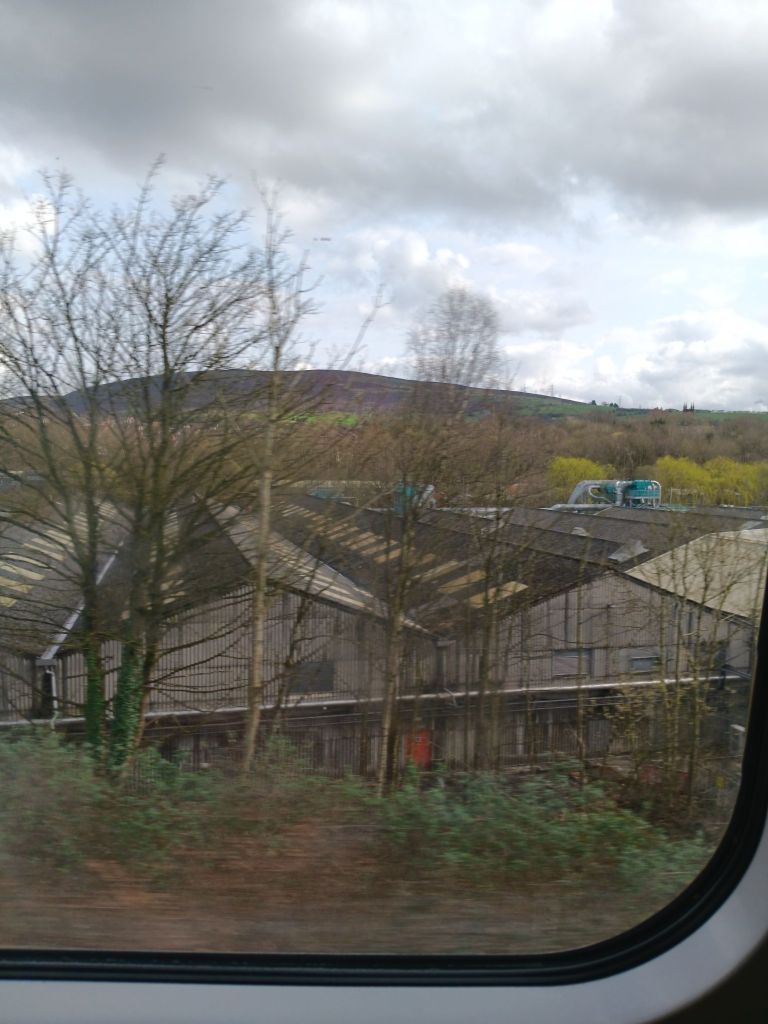
Arriving at Manchester Victoria didn’t feel right. Maybe because I now thought of Manchester through that lost love, I always give a false name to these days; although I do try as my hubby advised me to put that behind me as gone and past. In Manchester itself, I may have done so. It was a shock to me in that ‘Victorian’ station concourse of partings and greetings that once seemed to matter like life itself, but confusion aside that changed in the city.
Perhaps, for the first time, I realised that Manchester had lately seemed so alien because my lostness regarding it came from trying to locate myself during journeys through it using the eyes of another more lost than I, though stuffed with that ‘vicious pride of youth’ as Mr.Venus calls it in Dickens’ Our Mutual Friend, and familiarity caused by self imposition on the space.
With help from Google maps and friendly helpers on the street, I found my way along the tramway that is Corporation and Cross Street added together.
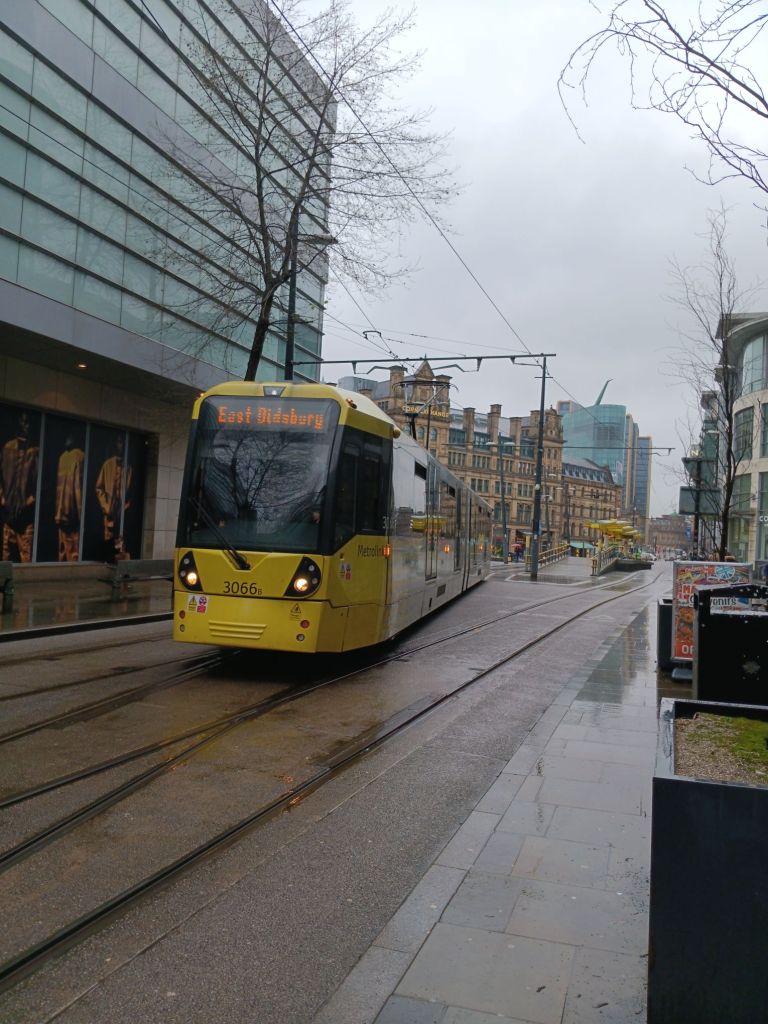
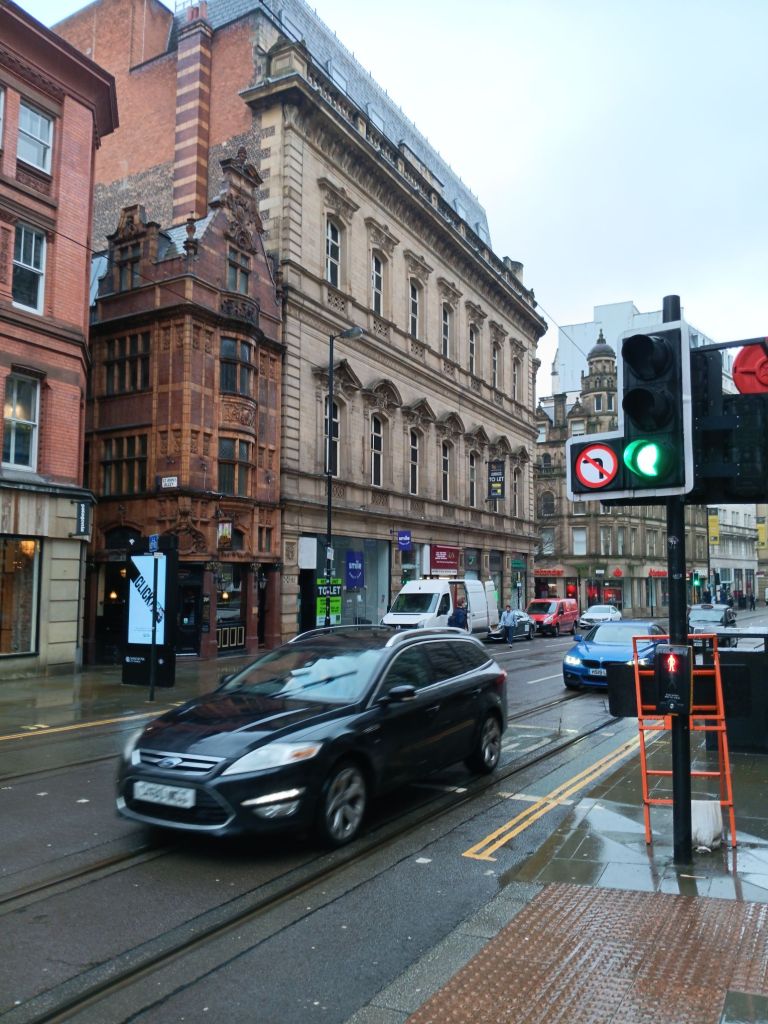
And theb down Princess Street, past landmarks that had seemed isolated spots in memorial time-space, like the Royal Exchange Thatre and Manchester Art Gallery (this latter, this morning’s planned venue) and to my hotel room.

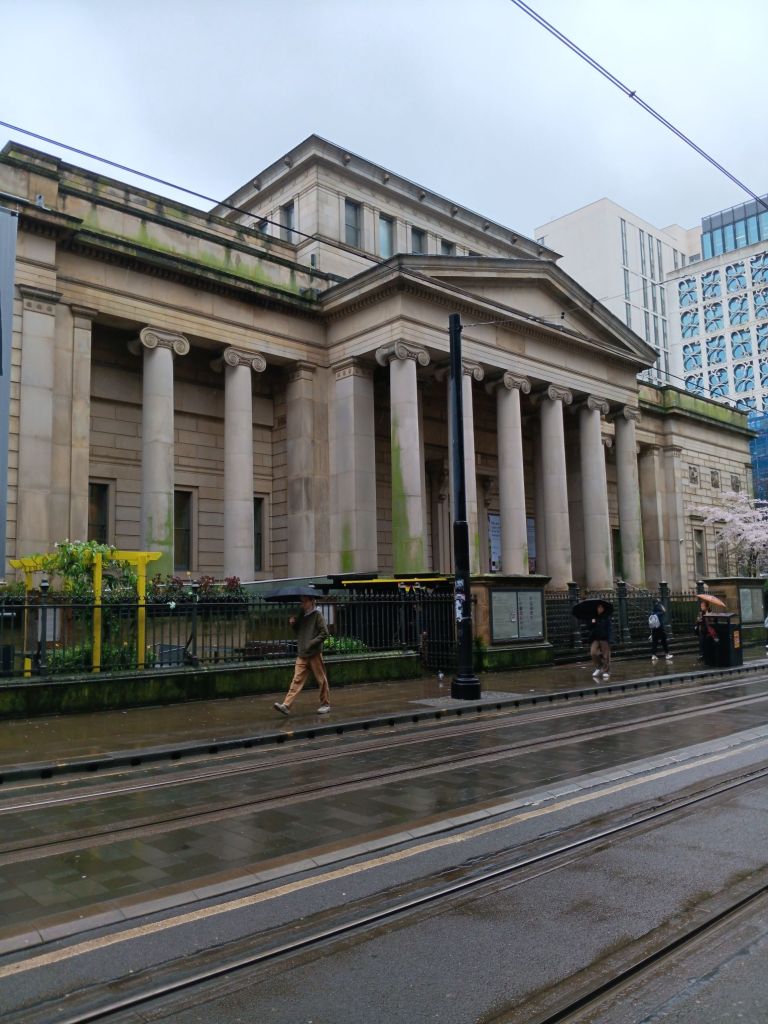
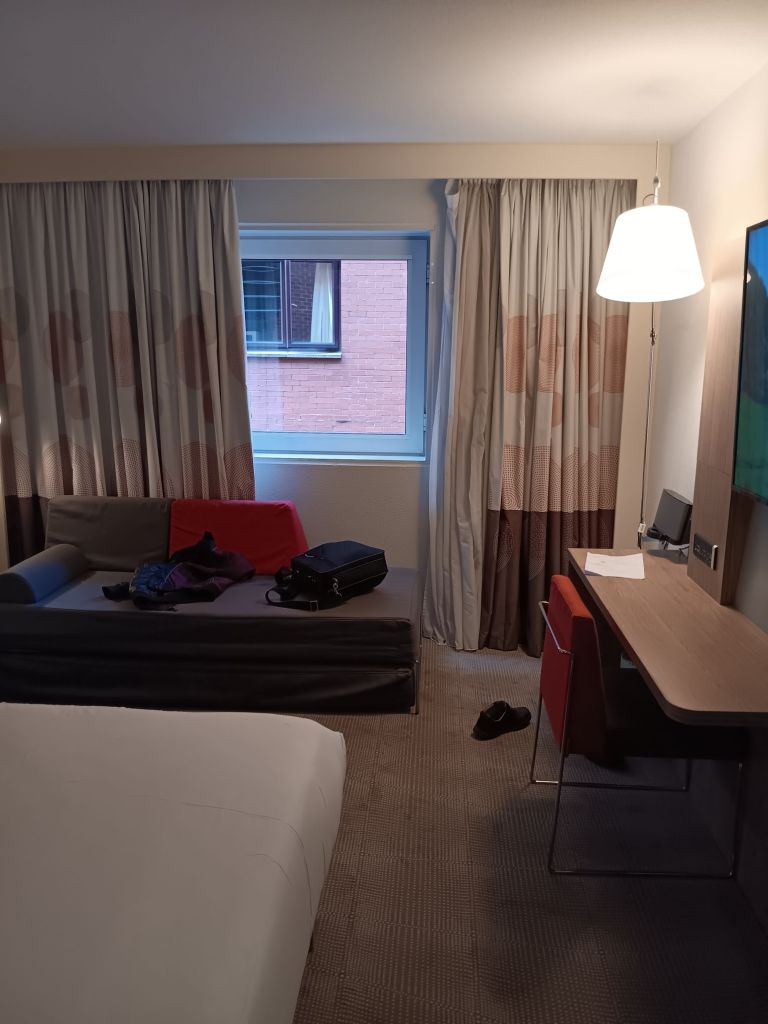
That walk seemed more significant than the train journey and across more country. in my mind, at least, because it freed me. I was in my own present, not a false position in someone else’s past. I rested a little in the hotel room. By the way, that room APPEARS in the photographs to have two beds, but the overcoloured one is on a TV screen.

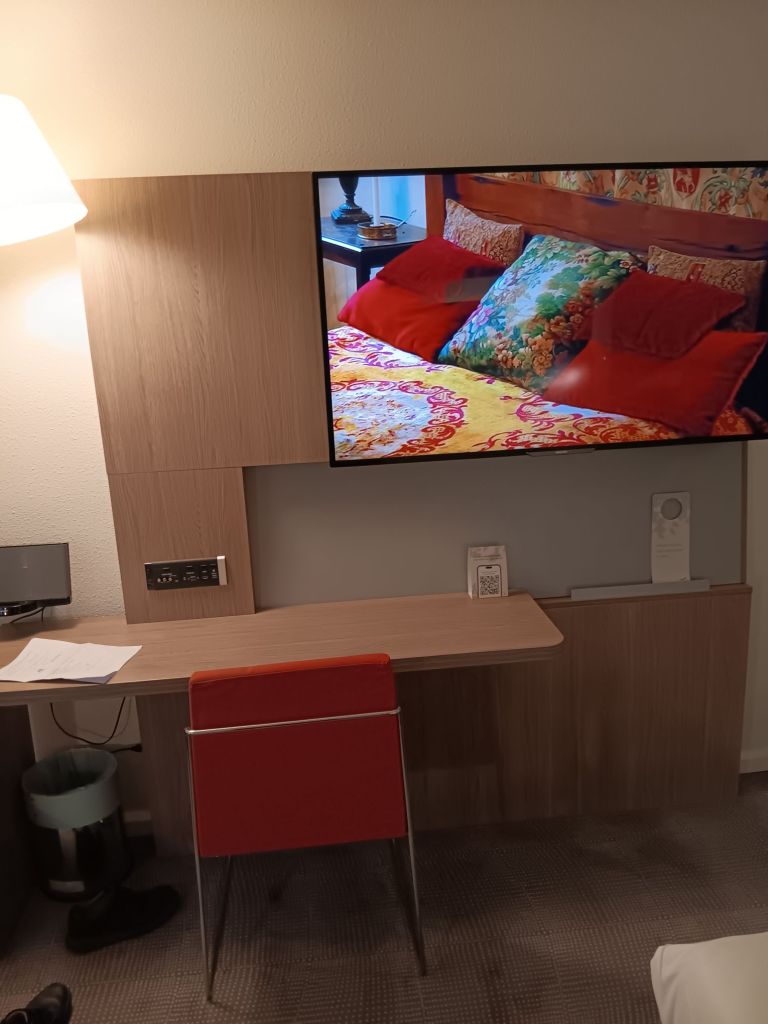
Rest on the comfortable looking one being virtual, not wasn’t possible but perhaps bo less comfortable than the whited sepulchre of a Novotel bed. A try for rest soon made lunch preferable..

I loved finding the Opera House. It wasn’t far in truth, but the process had that freedom in it that makes you feel that even errors grow your confidence in feeling located in your travel. Thus, before coming to the Opera House, Ibratgwr liked surveying the arcane plush and faux modernity of the new IVY, bruiting its Northern luxury as a sign, perhaps the only one. Of what a Northern Powerhouse really means to Tory governance.
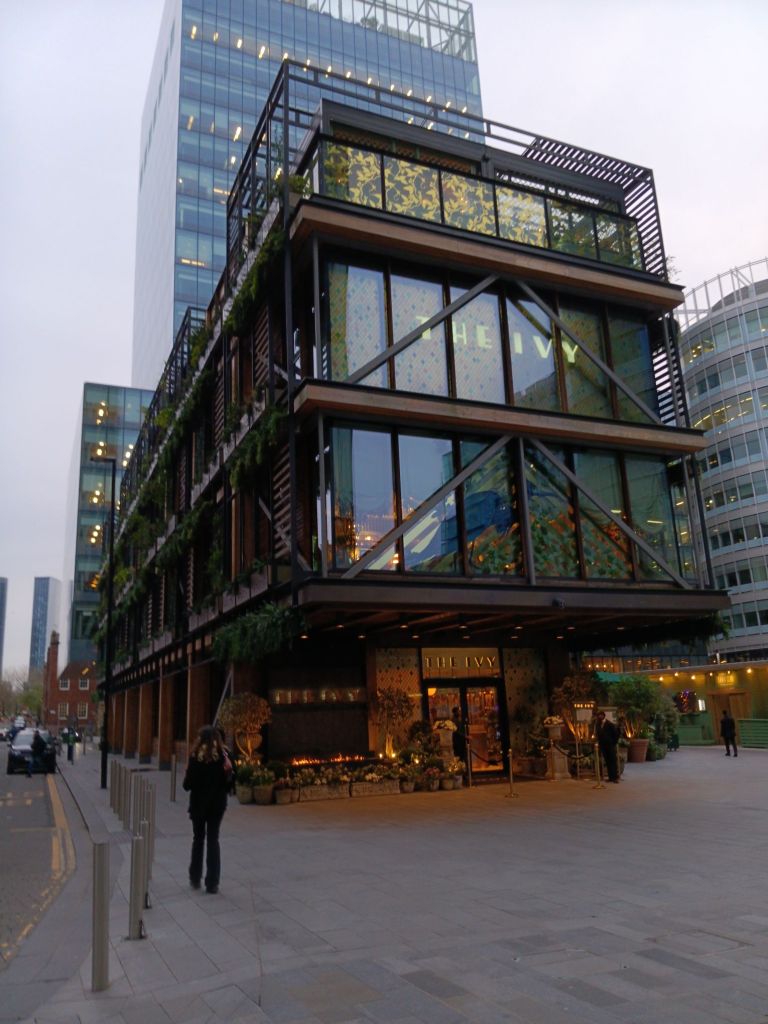
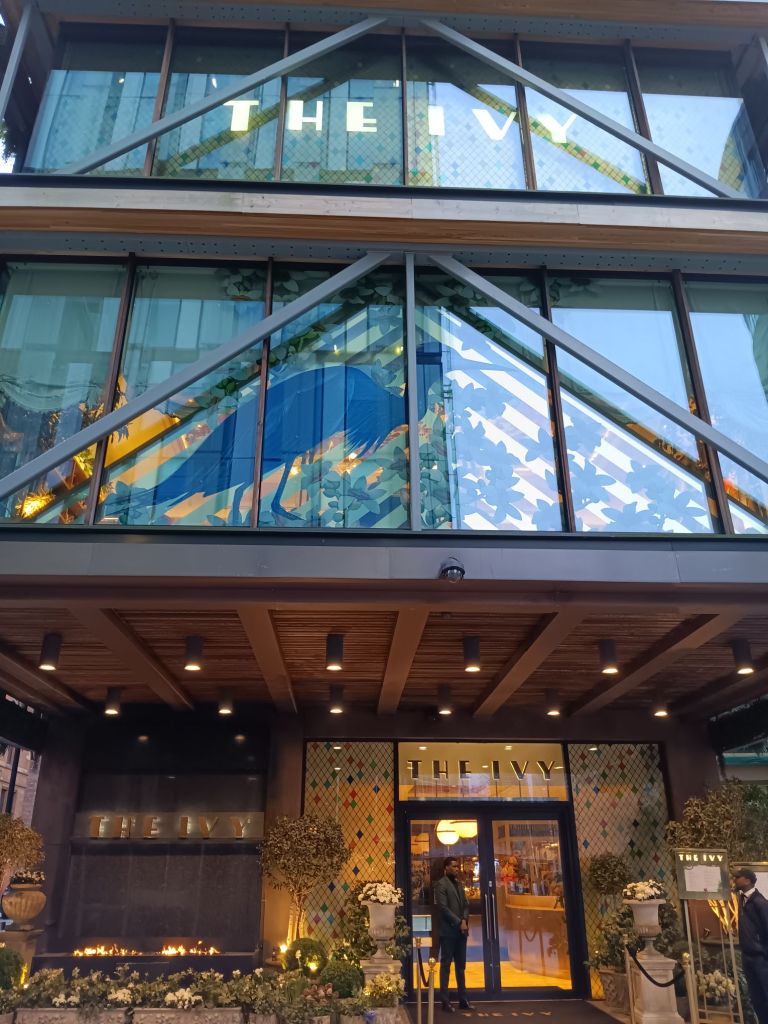
There is something truly Dickensian about all that Veneering guarded by welcomes looking like (after all it is Manchester darling) they might be clubland bouncers but for the house livery.. Coming upon a theatre from an age more proud in over-grand appearances that hide red brick behinds, certainly set thevtobe of a city Iblike but can not love. Grand appearance, where it isn’t wearing away, as in the Opera House, always feels a bit pretentiously precious bruiting its usual fare of pantomime and Julian Clary, but that is so of London theatre land too.
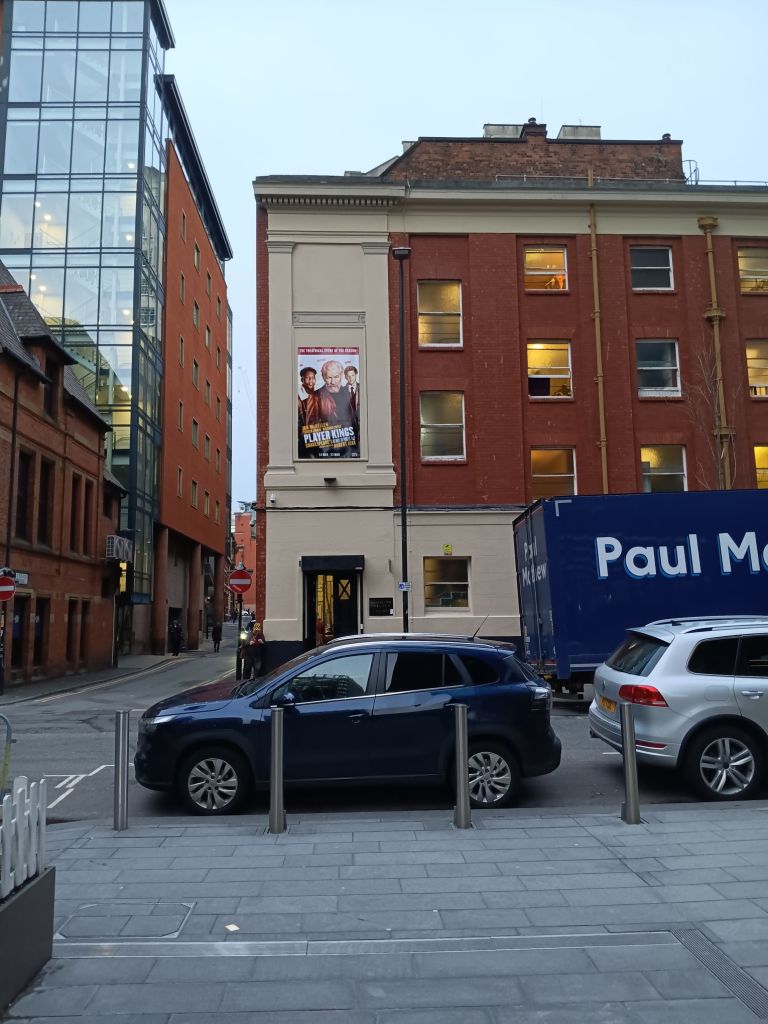
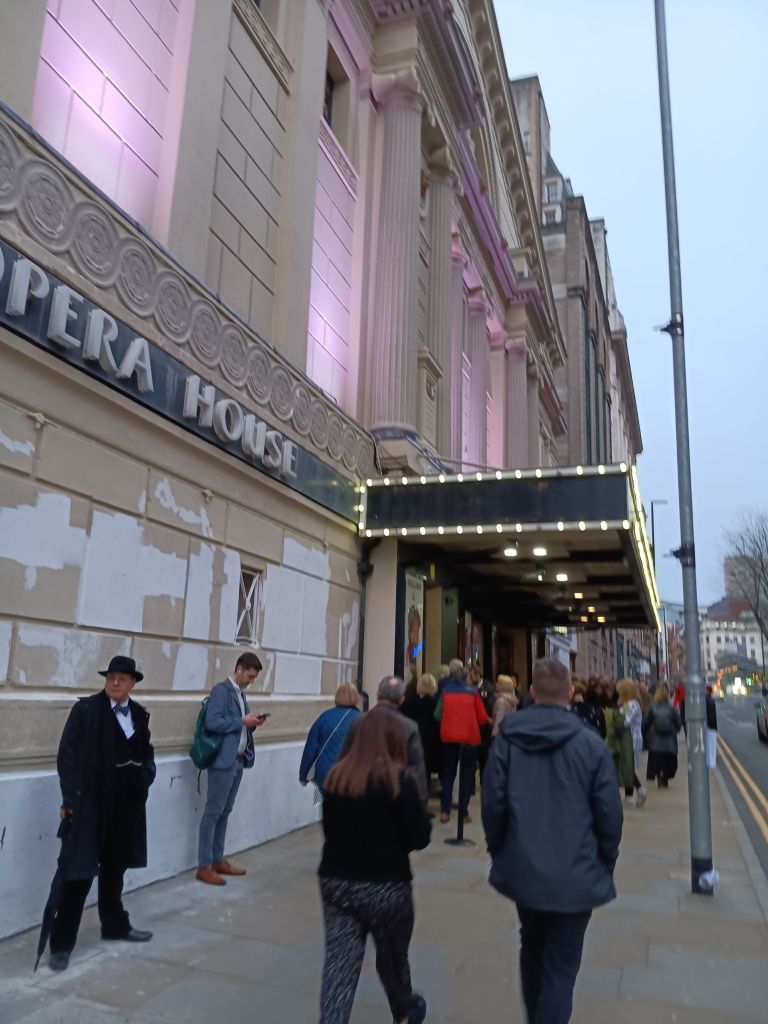
And the grandeurbof theatre crosses country too, sobthat from outside to inside, everything’s ant tendency to thinkbthatvspace is real and not an illusion of greater grandsire than exists beneath its painted surfaces. The people, though; they’re lovely with a pleasantness that has a core. A solid one, I thimk. Maybe not so the interior decor of their institutions.
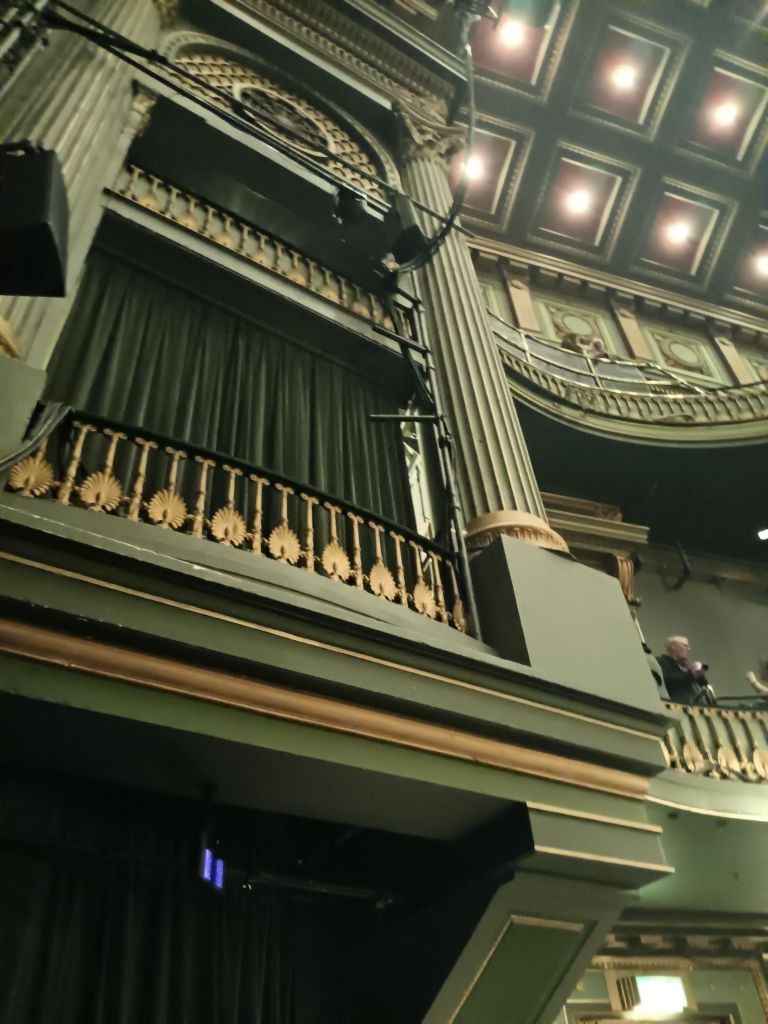
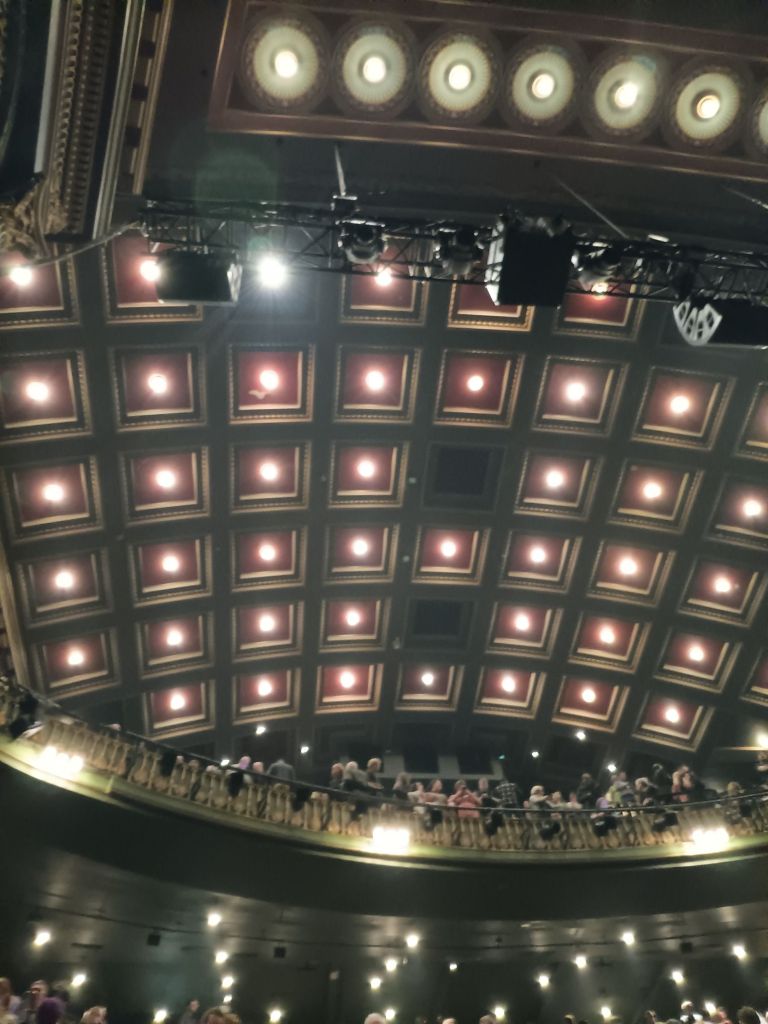
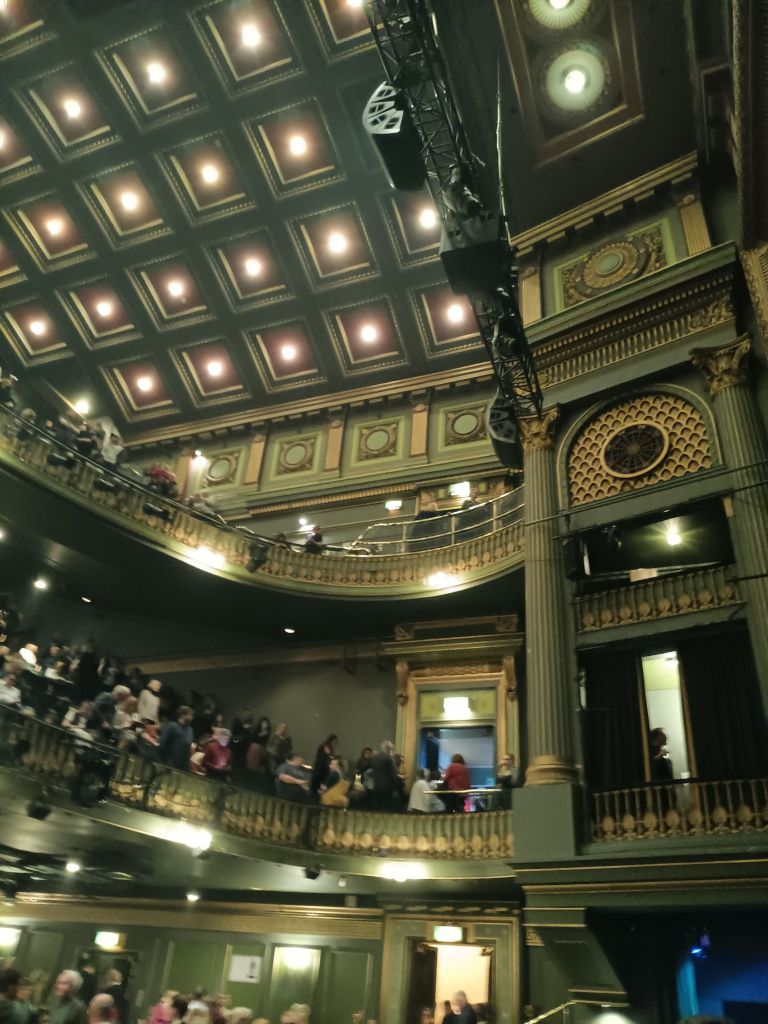
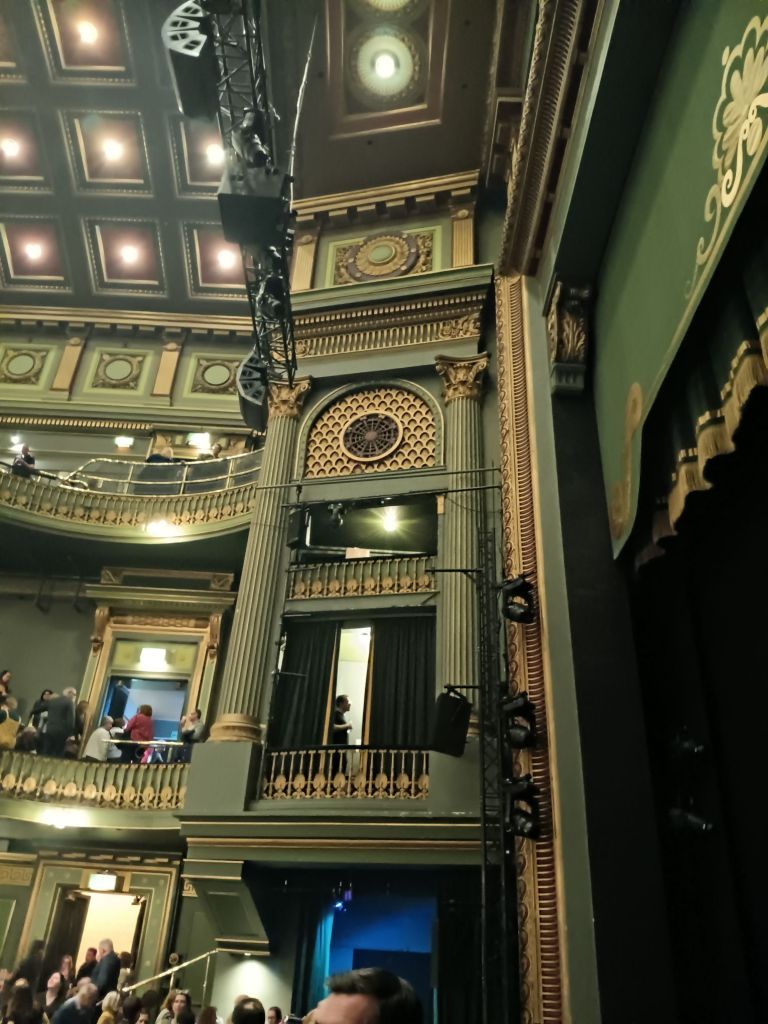
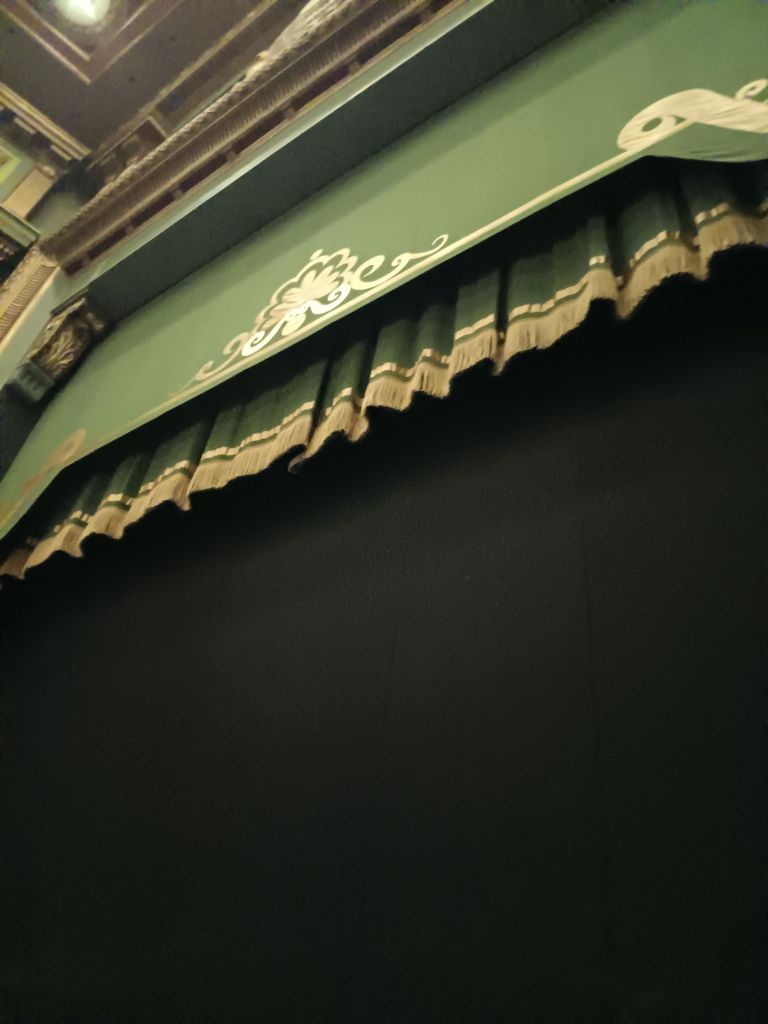

As for the function of the building. I will return to the brilliance of stage setting and decor because Player Kings did justice to a stage worthy of the term ‘grand, in its functionality and capacity for creative theatrical work. I will blog on this later because this production still sings hymns in my head and heart. For now, though, lying in bed tapping away, I need a break. What follows will be the summarised version of the day, in effect the return trip by the reverse direction, changed only by thinking and feelings about them. So long for now:

At least I thought only I could change the route back, but I didn’t count on fairly heavy rain and the need to buy an umbrella, at the nearest Primark, chosen for cheapness, I could find. From there, though, I found that Mosley Street intersects with Princess Streeat the Art Gallery overlooking Peter’s Square: how manageably small the city was becoming in my head, how much more was I coping and forgetting.
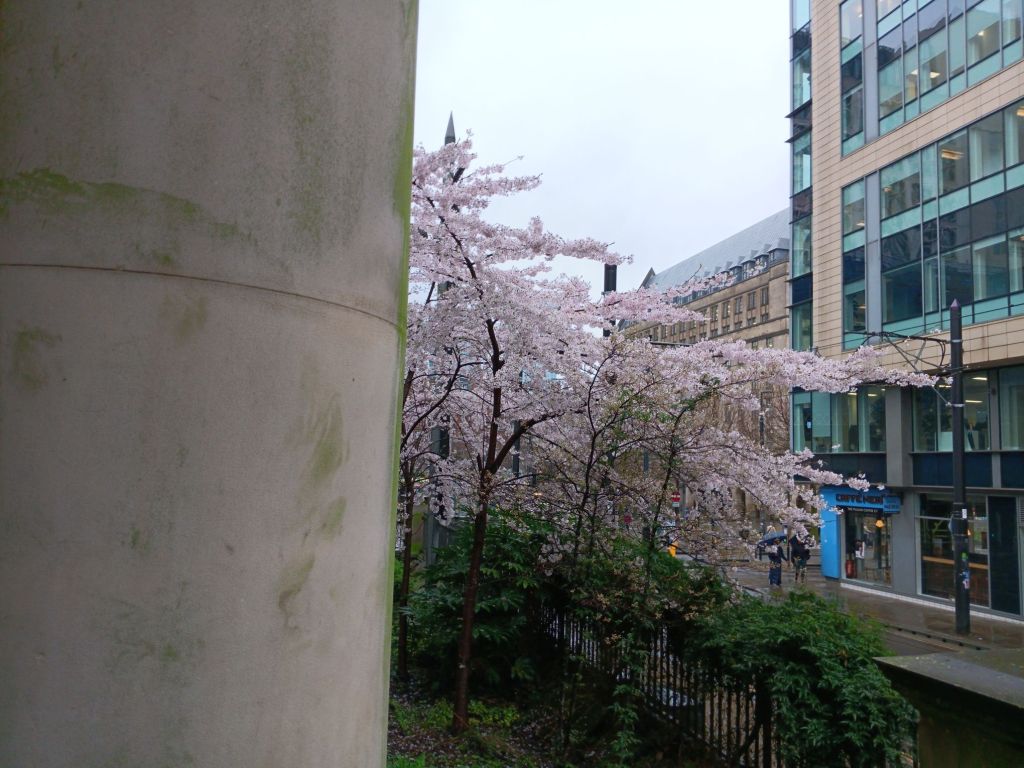
I wished, though I had booked an earlier train, for I found the City Art Gallery mid-refurbishment with its holdings small. I decided then to look just at what grabbed my attention and gave the fashion exhibition a miss as too triggering of my once fashion-crazy friend. And there was a lot to hold me.
The classic favourites that I have never seen in the flesh include J. M. W. Turner’s Thomson’s Aeolian Harp. Nothing so recalls Claude as this great painting, though the subject is so London-centric, the Thames from Rochmond Hill, where the poet James Thomson lived, holding himself ready to be called a precursor of English Romanticisn.
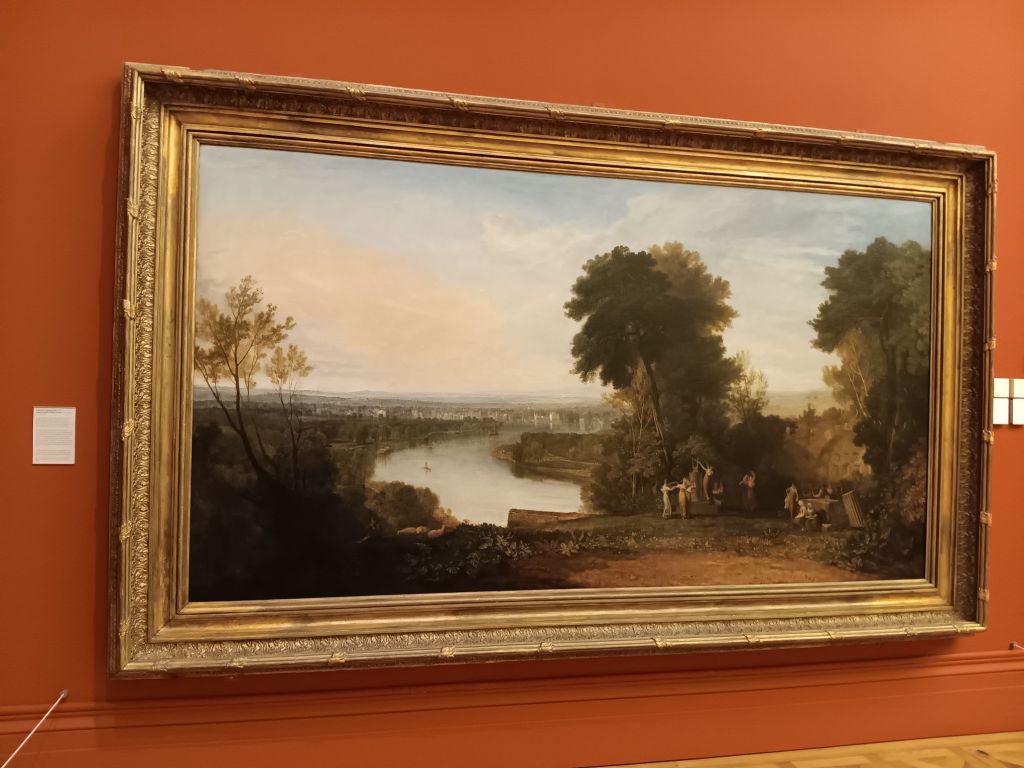
And such richness of recall this painting has not only of classical precedents but of Coleridge and Wordsworth, who made the Aeolian Harp a model of the creative imagination, a thing of artifice on which nature plays. Buy Turner uses the Harp too as a focus of human social play, a humanising of abstraction, perhaps tying him even more closely to Coleridge’s poem on the subject.
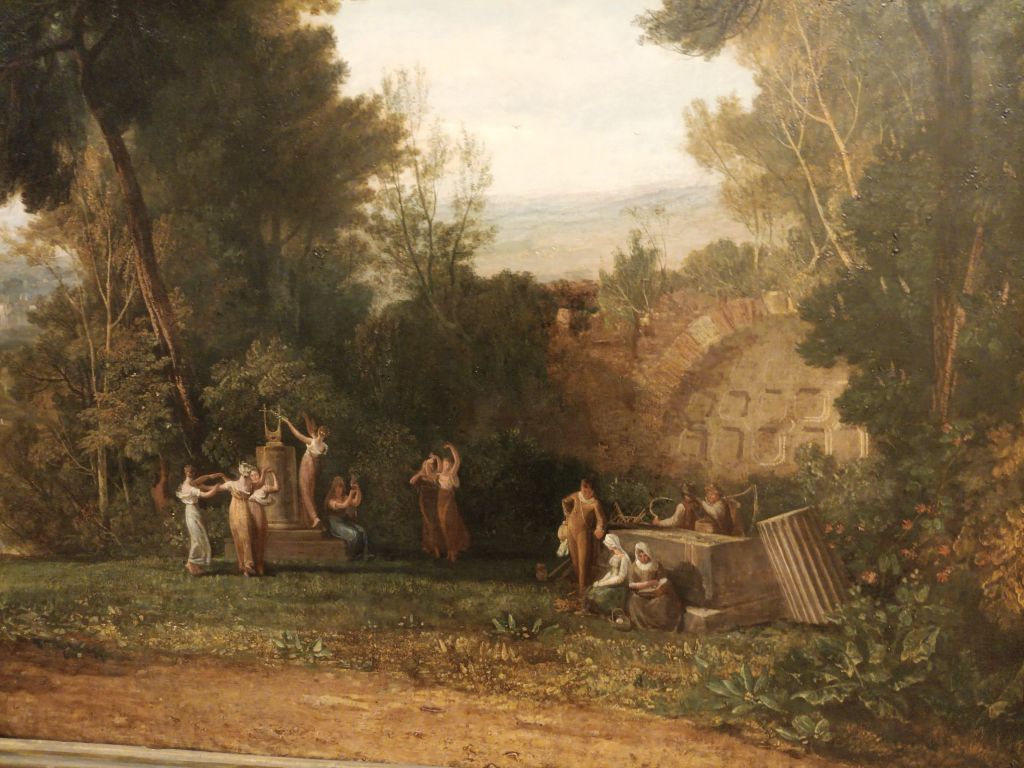
However, there is more to this painting, which uses not small reminders of articial pastoral like the shepherd below buy the grandeur of that view of the Thames which Walter Scott had made an icon of political union and natural beauty in being the end of the cross-counyry journey made by Jeanne Dean’s in The Heart of Midlothian.

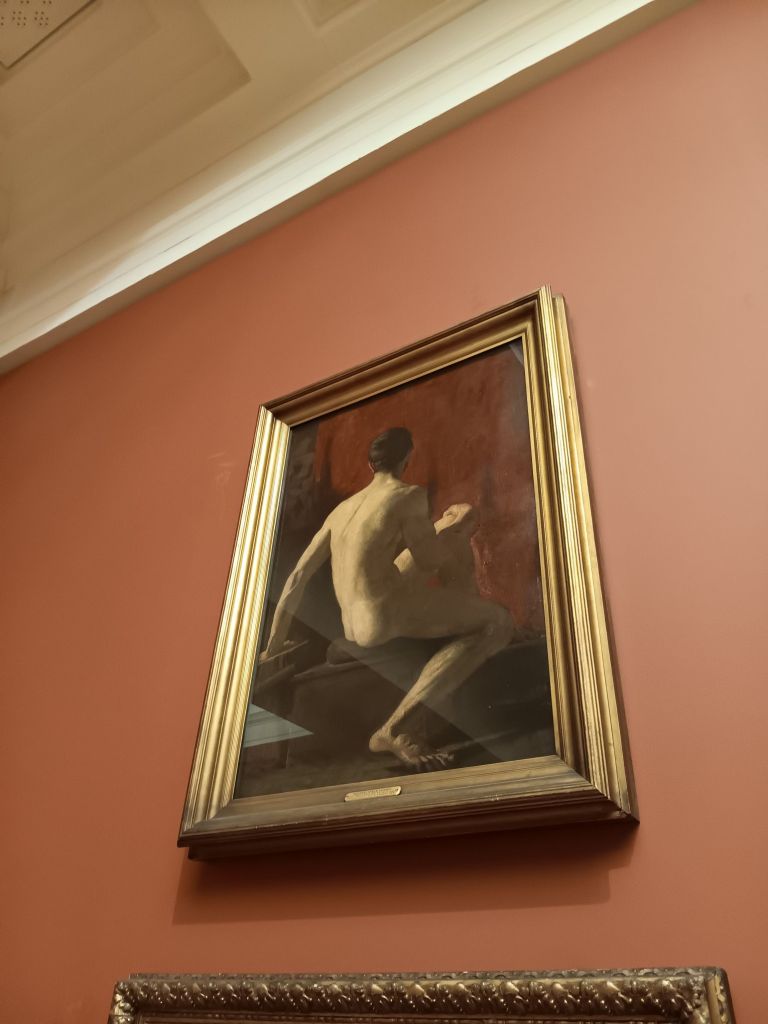
But less of history. I love the male nudes of William Etty, and Manchester has a beautiful Seated Male Nude. For a long time, Etty was feted as a painter of robust and fleshy female nudes, and Sotherton Manchester example has an interesting history, for it was painted on material with such female Nude sketches on its rear. William’s true preferences for his guardsmen models, often scouted by himself, will out.
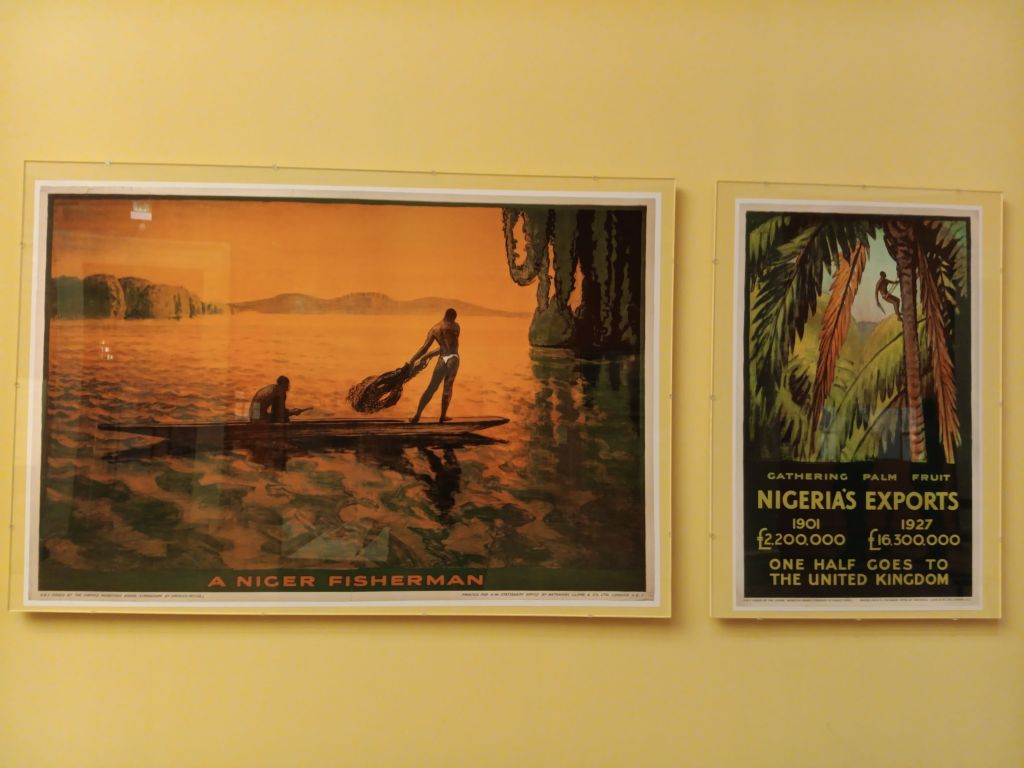
But there is another beauty on this rehang. The deliberate intersecton of themes allows the issues of the politics of oppression and resistance to appear across the rooms. It is great to see Imperial thees paced in a history of colonia repression and false entitlement f the White Wrst together with its lip ex uses of being of benefit to ‘natives’. Trade is actually a means of exploitation and benefits mainly to the power advertising itself as a flag of generosity.
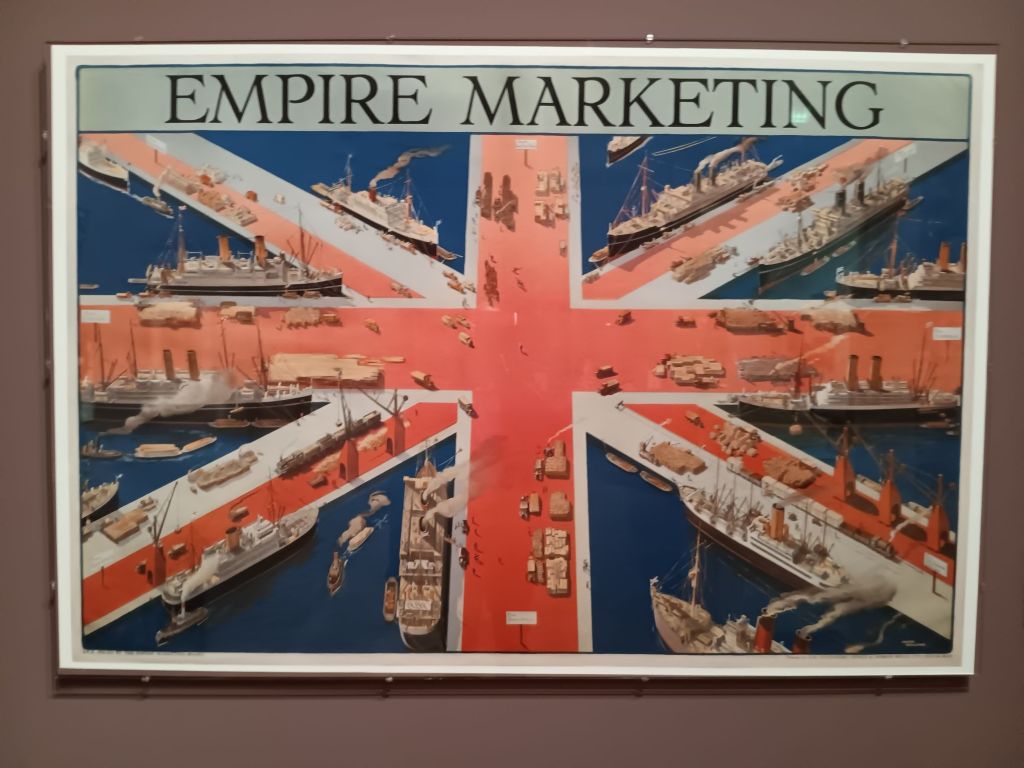
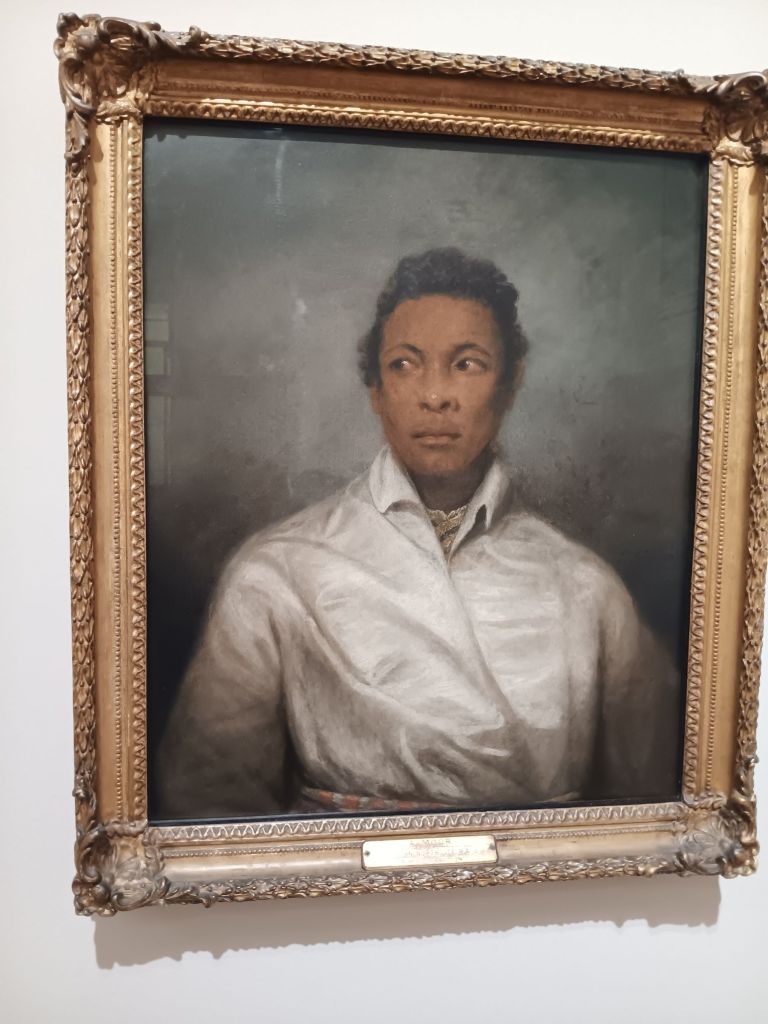
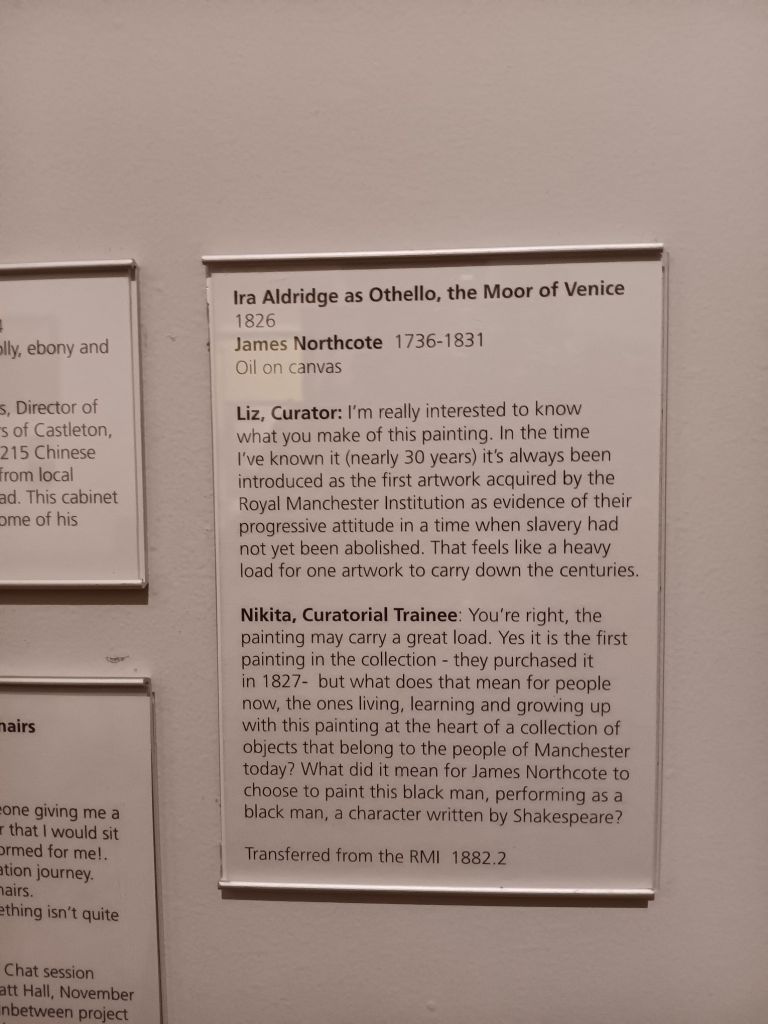
So wily is colonialism that the curators are brilliant in their discussion of the nuance of a painting meant to bruit Brotish free-trade resistance to slavery but choosing an ideal image of a Black man acting a fairly racist stereotype in a play by the Great White Bard. The definition of racism in modern Manchester might lie in that delightfully Frank discussion between young curators.
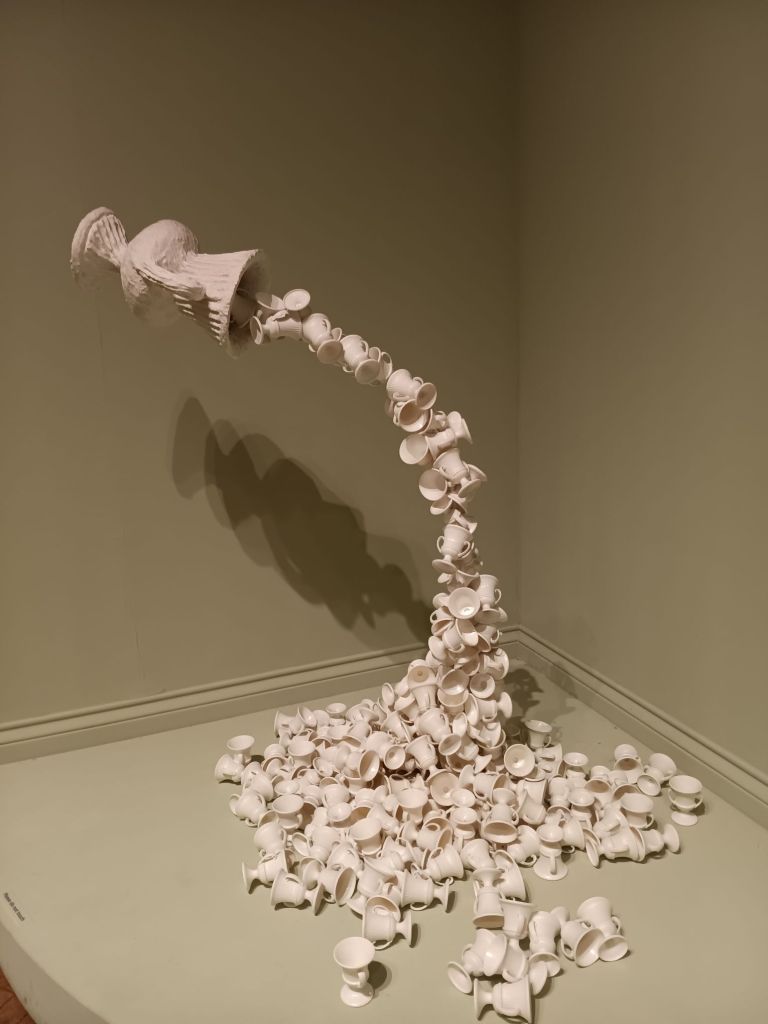
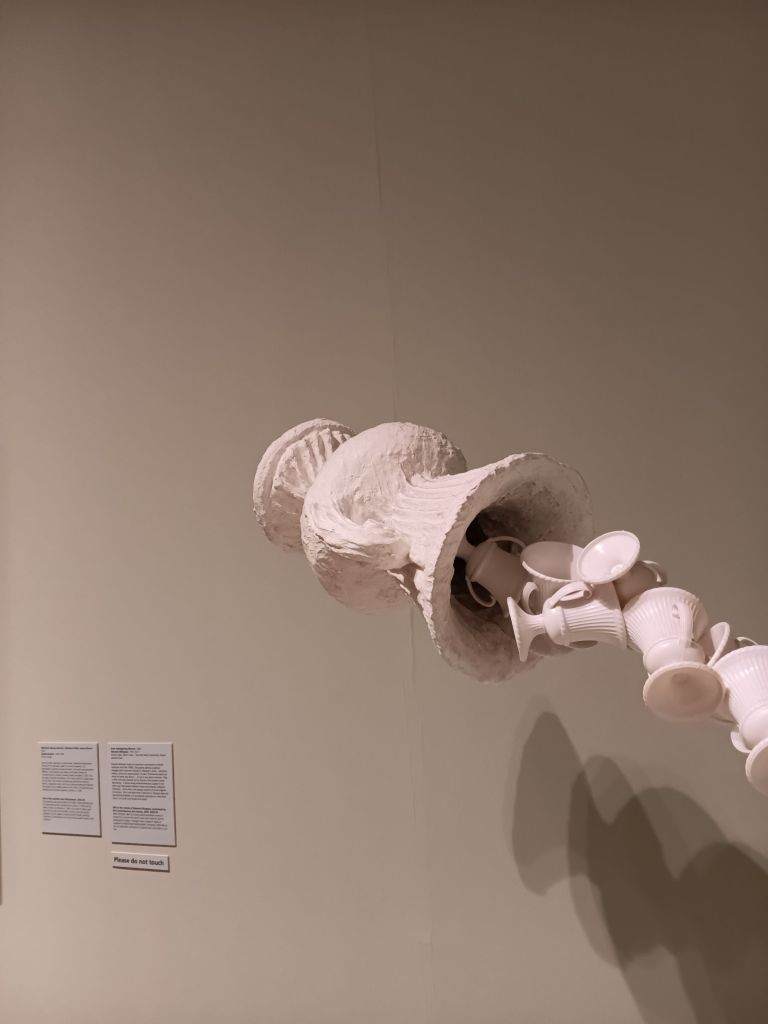
As those few rooms come to an end, I delight in two pieces, which take common objects in their time and make them ironic and beautiful, andvnot just conceptual in their effect. Greek vases became a modern throw-away commodity in 1985, when this puece by Edward Allington was made, if reproduced in plastic units. Together, they can make an ugly idea of the spillage of plastic waste beautiful. They do that not because each badly copies the idea of a Grecian Urn so bruited by Keats, but because as an assemblage, they show the beauty of the dynanic flow of pieces and the pattern of ordered and the random their spillage makes.

What too can we think about art based on different ways of looking at a Dyson vacuum cleaner and a modern interior lamp making itself pass as an arc of illumination more ‘proper’, if it is, of Art.
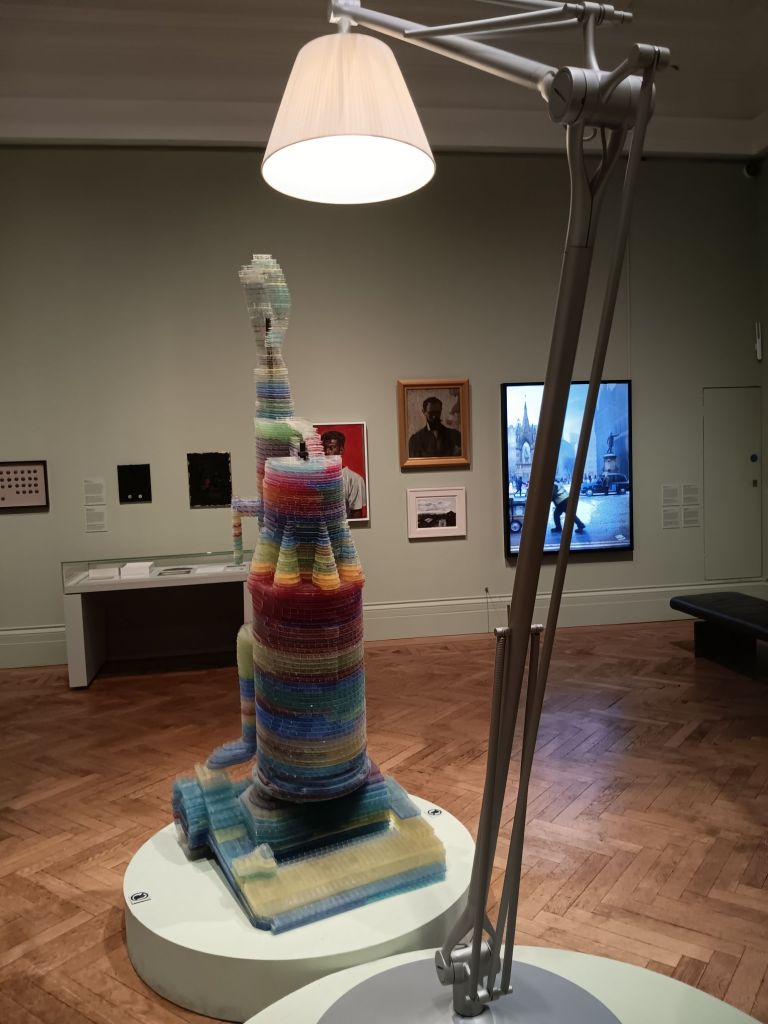
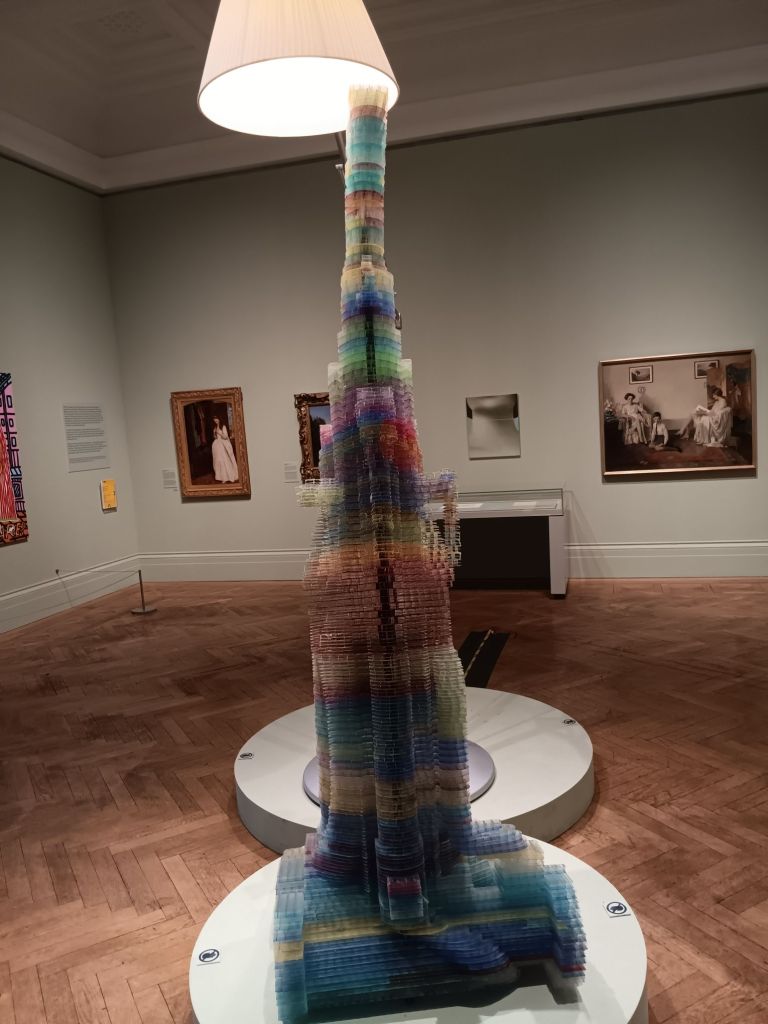
But I found it as beautiful here the way in which the art in curatorial assemblage also emphasises the portals and layers of a museum’s internal architecture. Ot has a beauty of a kind, never intended, but that is greater than what was intended.
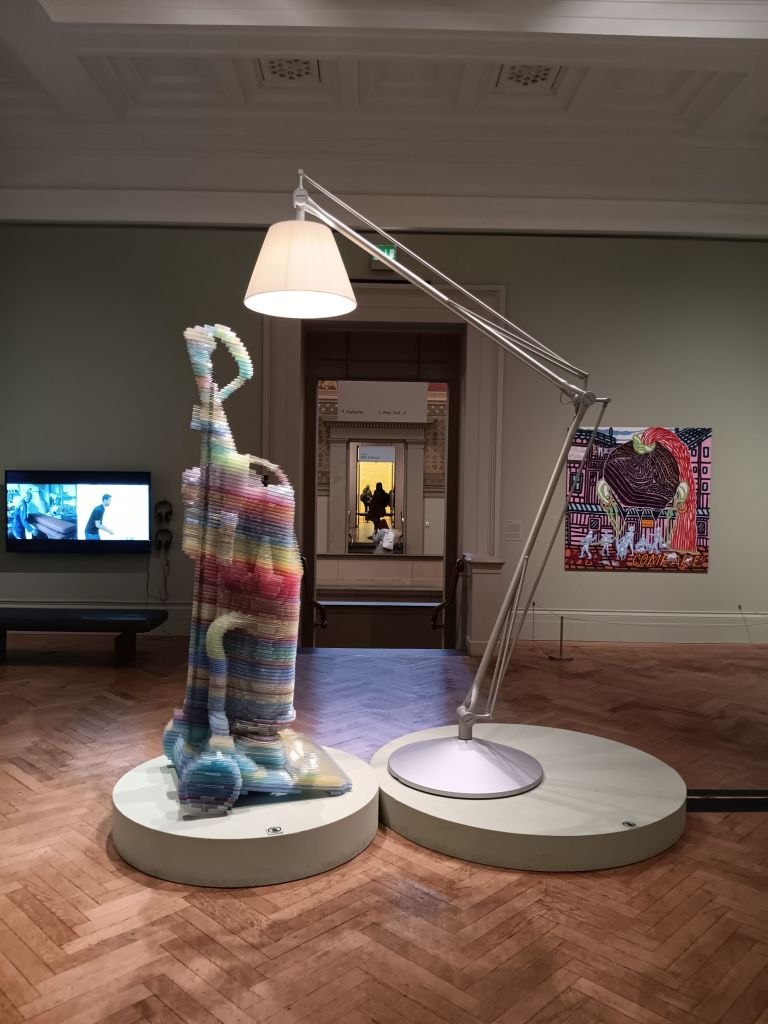
For the portal leads to such unintended beauty in layers of meaning.
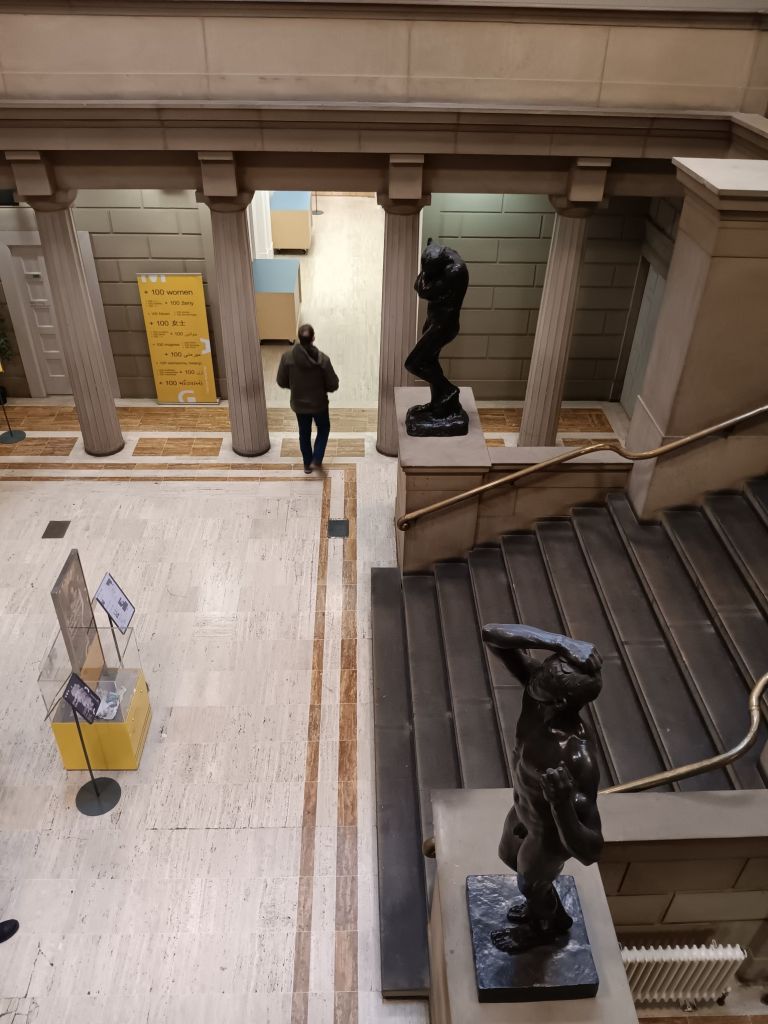
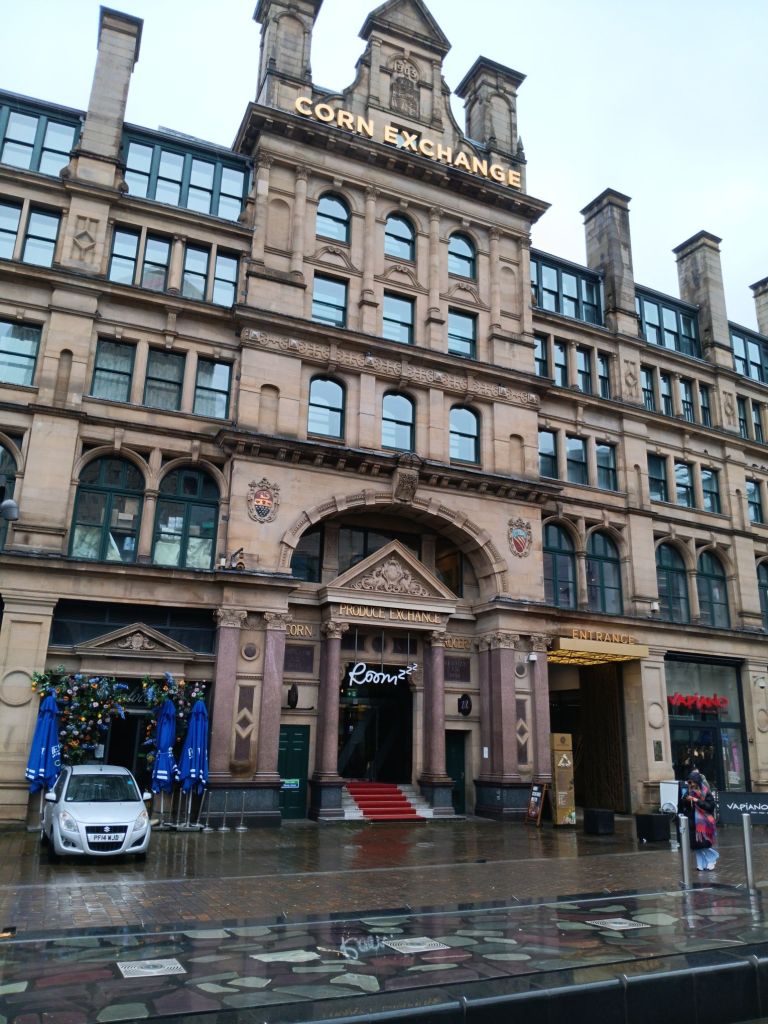
Out into Princess Street and back via Cross Street, the Royal Exchange, and the Exchange buildings that emphasises something more confident than is the brutality and visceral self-defence of late capitalism, that is Manchester.
And then lunch at The Real Greek, where they gave me an Alpha and Omega pint glass. And then back, this time to take a photograph confidently that babbled o’ green fields just before Huddersfield.

So, of cross-country trips, I can say surely say that my journeys are, like my prose and maybe my life, full of meandering diversions and errors, that keep me busy and keep me learning.
But I have my Alpha and Omega glass.

With all my love
Steven xxxx
 Steve_Bamlett_blog