I wrote a blog in preparation for this show. You can read it if you wish at this link: https://livesteven.com/2023/10/29/this-blog-is-my-preparation-to-see-the-retrospective-exhibition-on-the-work-of-marina-abramovic-at-the-royal-academy-the-first-held-there-on-a-female-artist-in-london-on-22nd-november-i-prepared-by/.
Some things I guessed but got wrong. On entering we are first confronted by The Artist is Present (2011) which fills an entire room. But it is, in the bodily absence of stills as I predicted, but of a large number of looped videos on each side of the room space through which we walk. There is a still however of the se of the original performance on the wall immediately above the space between left and right screens as we enter the room.
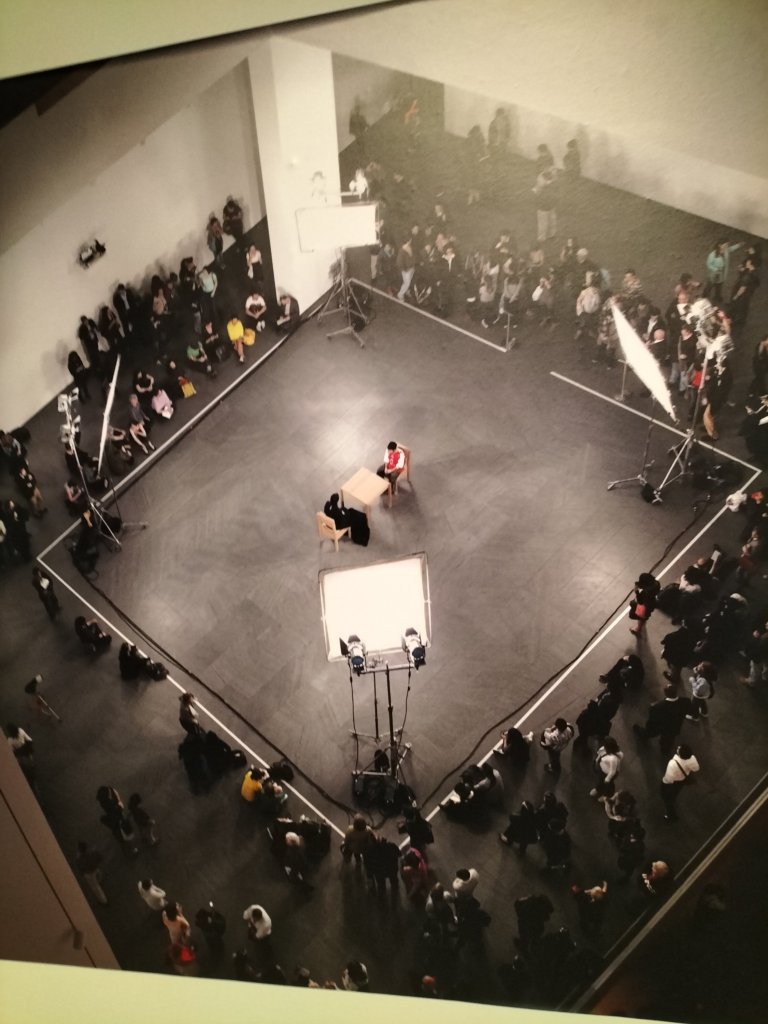
As we enter, there is a bank of screens on the left, each showing the videoed response of one individual to finding themselves, by their own informed consent of course, sitting across from the mute and impassive presence of the artist but for a few reflexive eye blinks. Of course each person saw only the artist within an unenclosed rectangular space except for a marked white line regulating the audience from spilling into that space, with a gap indicating where participants entered the space as we see above.
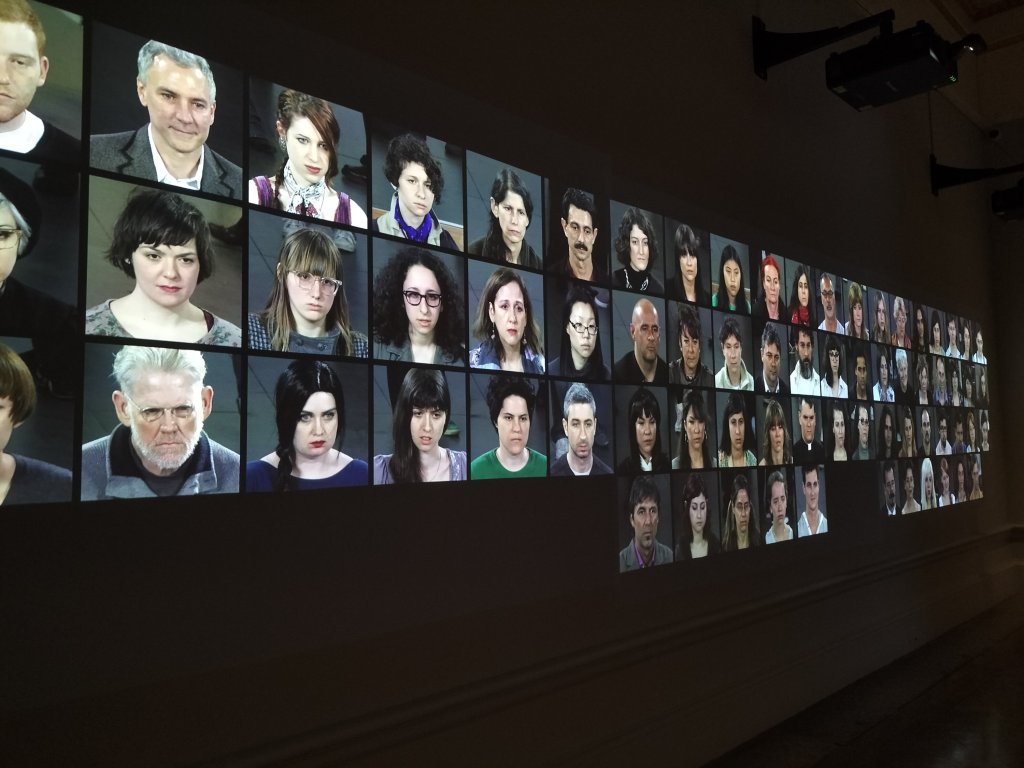
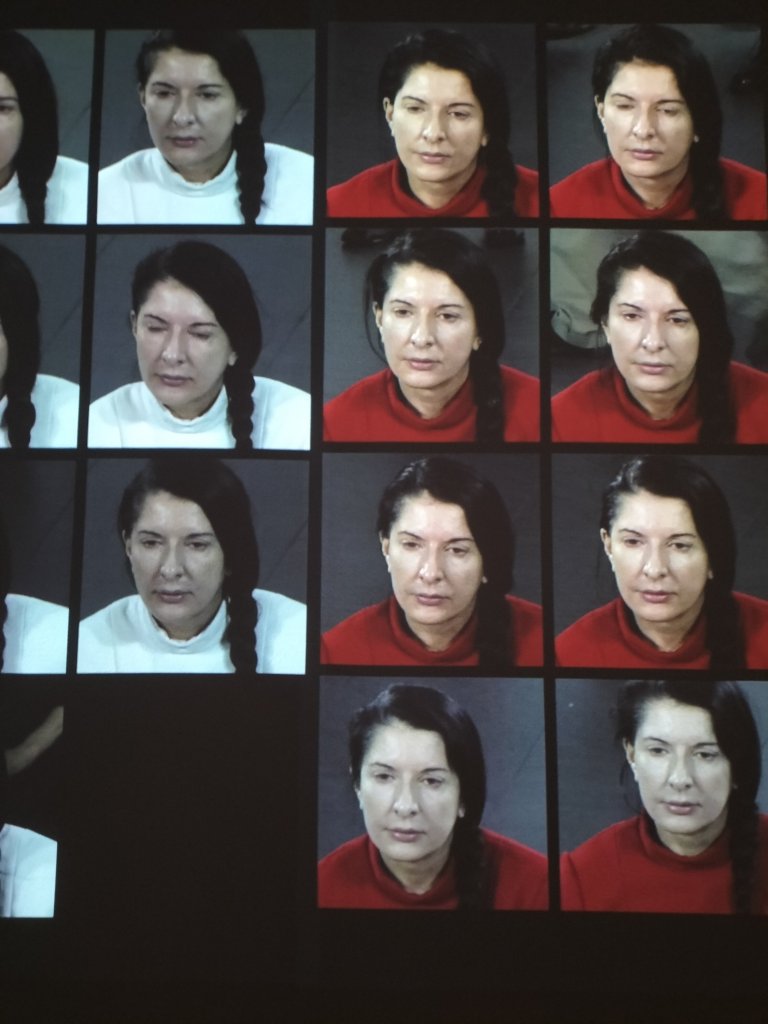
Across the room the face of the artist on an equal number of screens ‘faces off’ each of those individuals. However, because the occasions were necessarily over a long period with breaks for the artist, she sometimes wears a differently coloured dress. Those breaks are made to look largely if not totally regular, on the whole with clear dividing lines.

The artist’s face has a practiced holding of controlled expression, as these two examples show.
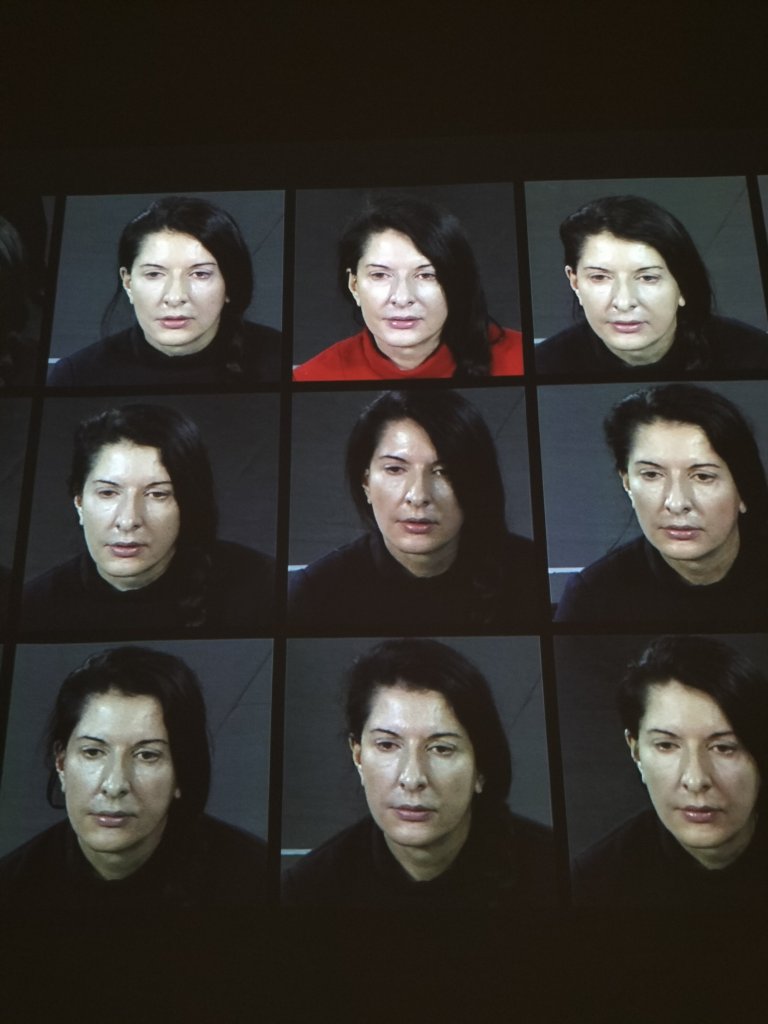
In contrast, the audience members show that they are not so prepared and each attempt holding the artist’s relatively unvarying attention on them in very different ways. Here are two examples.
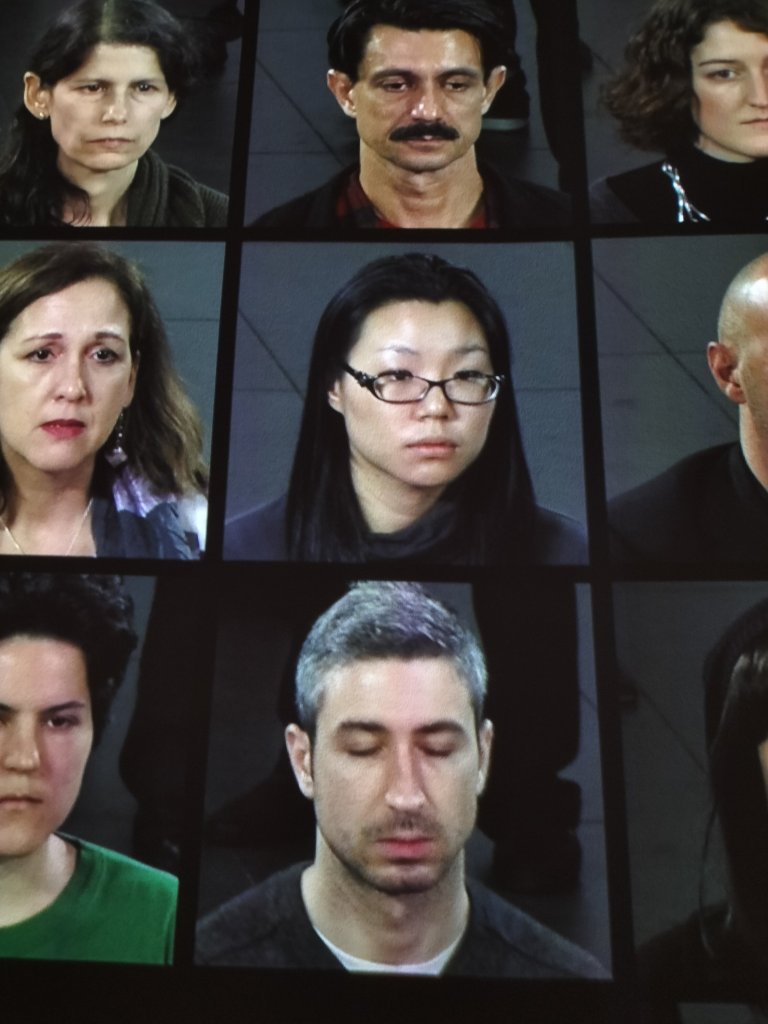
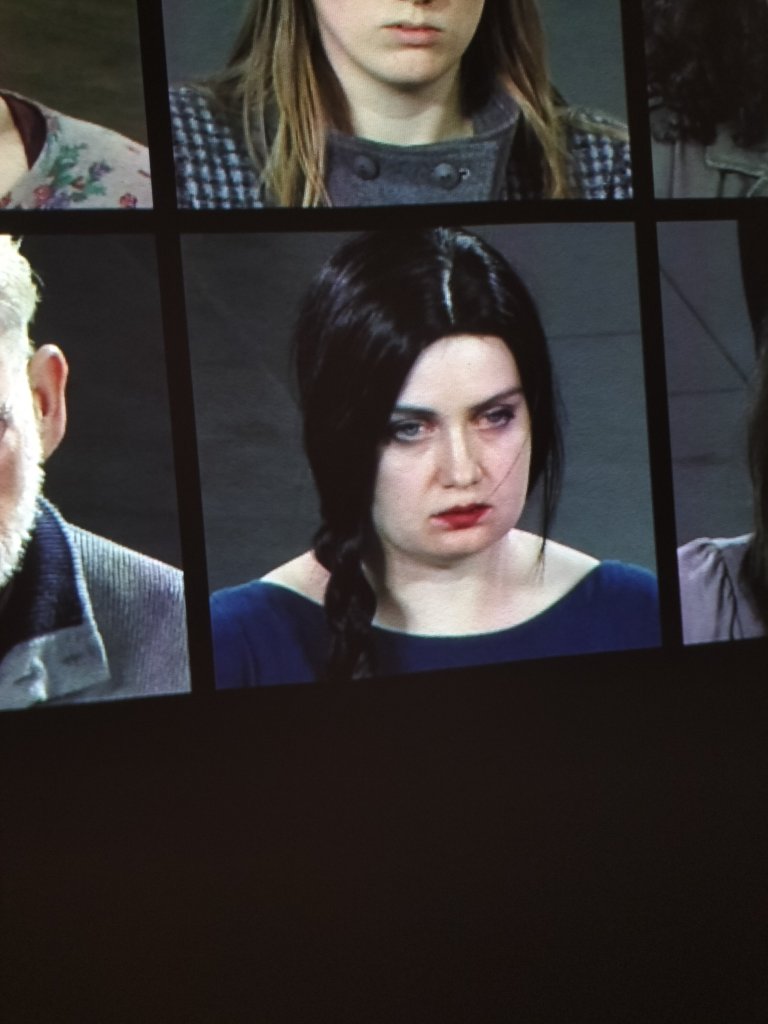
Even for us to look at these examples must raise different issues for each of us, depending on our attitude to the facial expressions of others when these are relatively uncontrolled and may involve tears, distress or different kinds of evasive control (closing eyes, or attempting to hold a facial expression mirroring the artist’s).
I found this moving but not in an unexpected way. And this really was my experience throughout. I felt little added to my appreciation of the artist or the art other than the fact that I had experienced a closer, larger-scale and more dynamic representation of something I felt I had already understood, as much anyway as I wished to do so. I was moved, impressed but not bowled over, as I really had been by Guston.
And thus it was with the next three rooms, though again they were impressive. To see the items as real objects on a similar table as that used in the work Rhythm I, especially next to large stills of their use on her. Her deliberate humiliation could be sensed, but the table had a marker line so that we, as a new audience, could not touch or see them close.

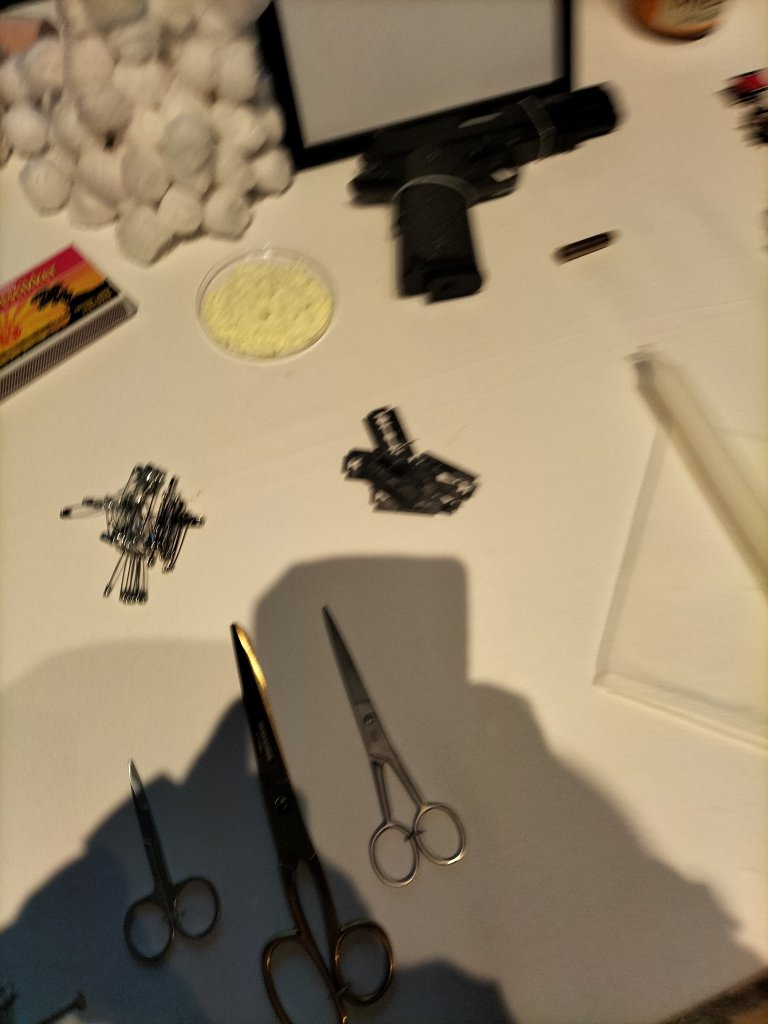
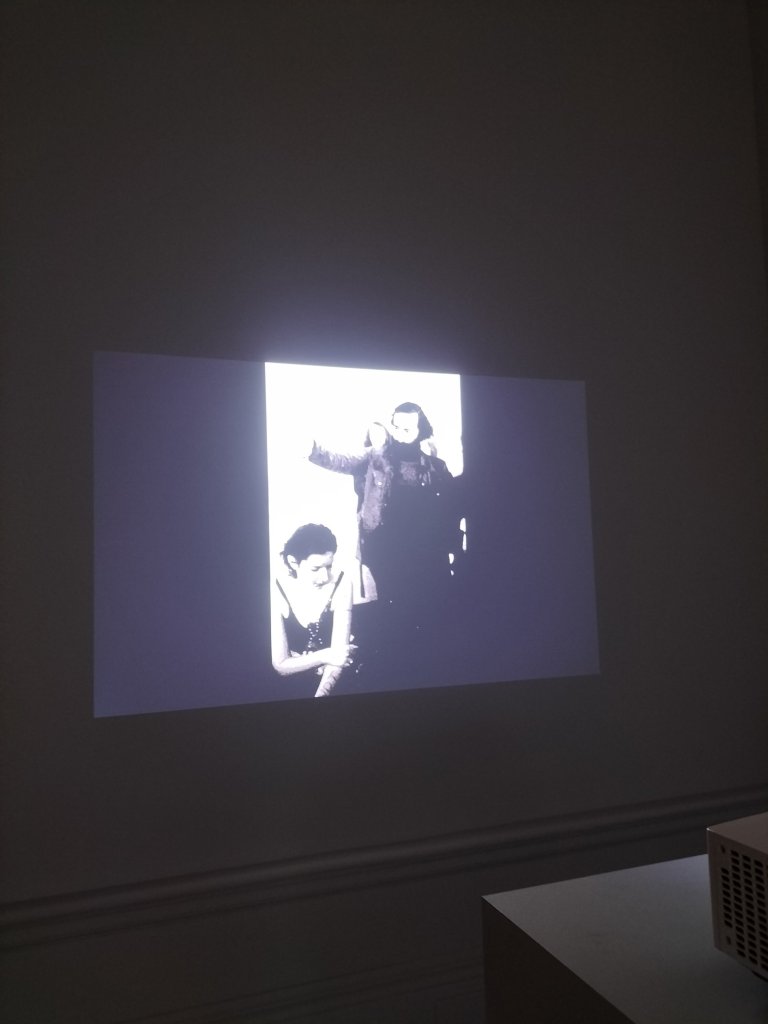
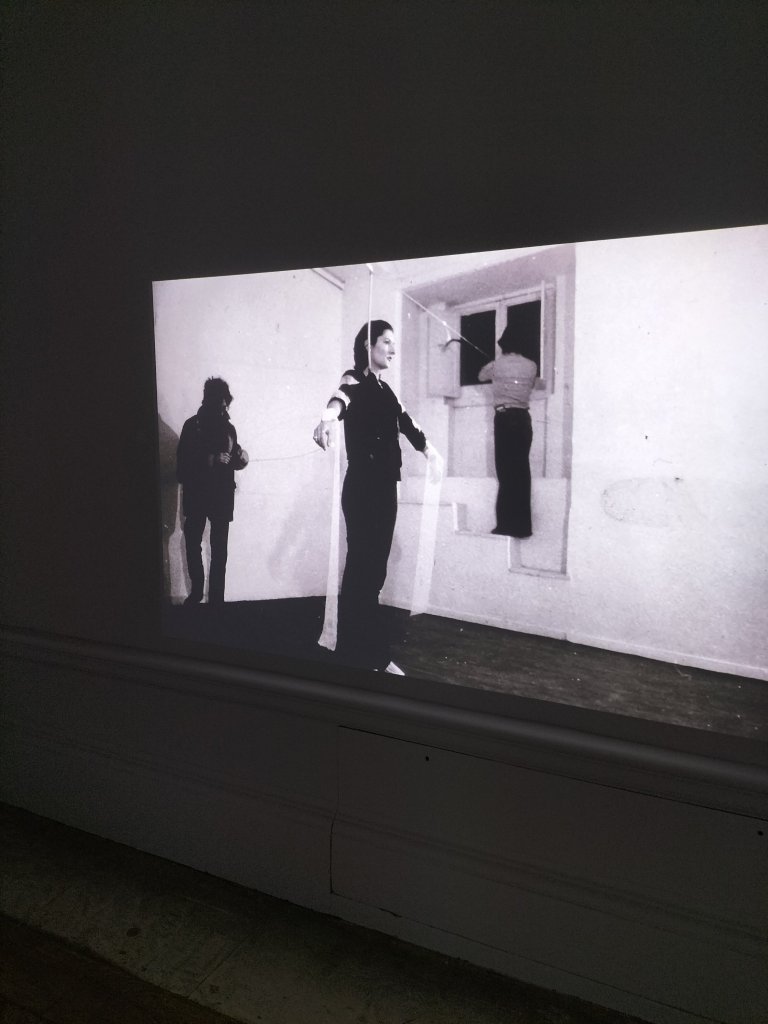
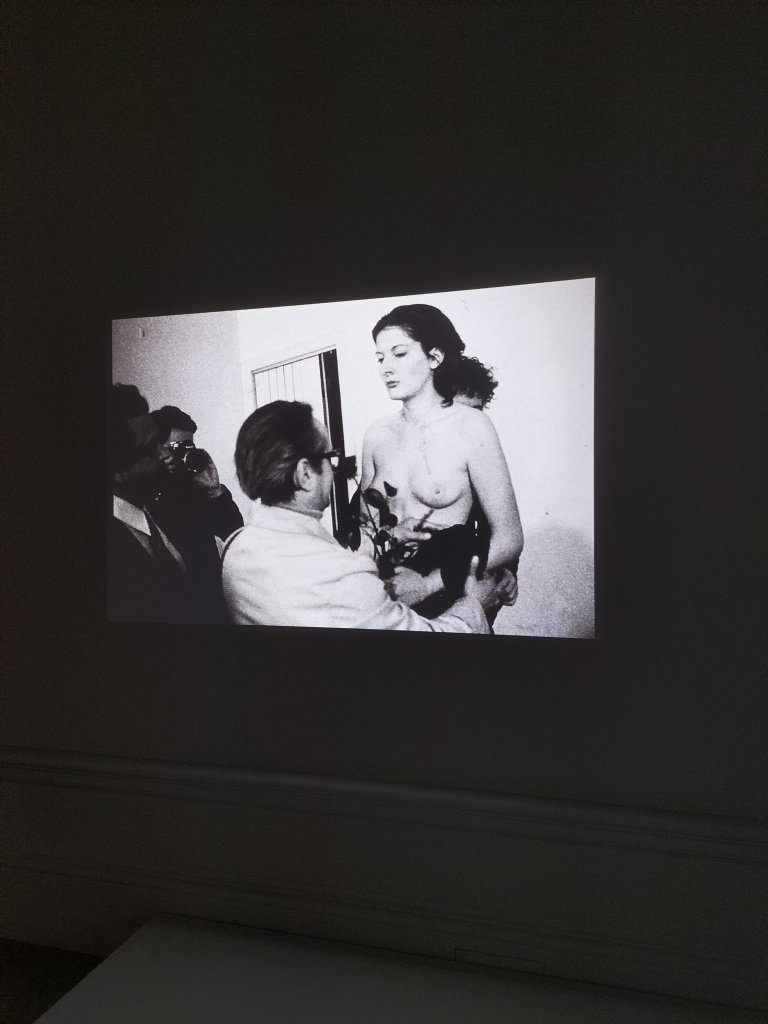
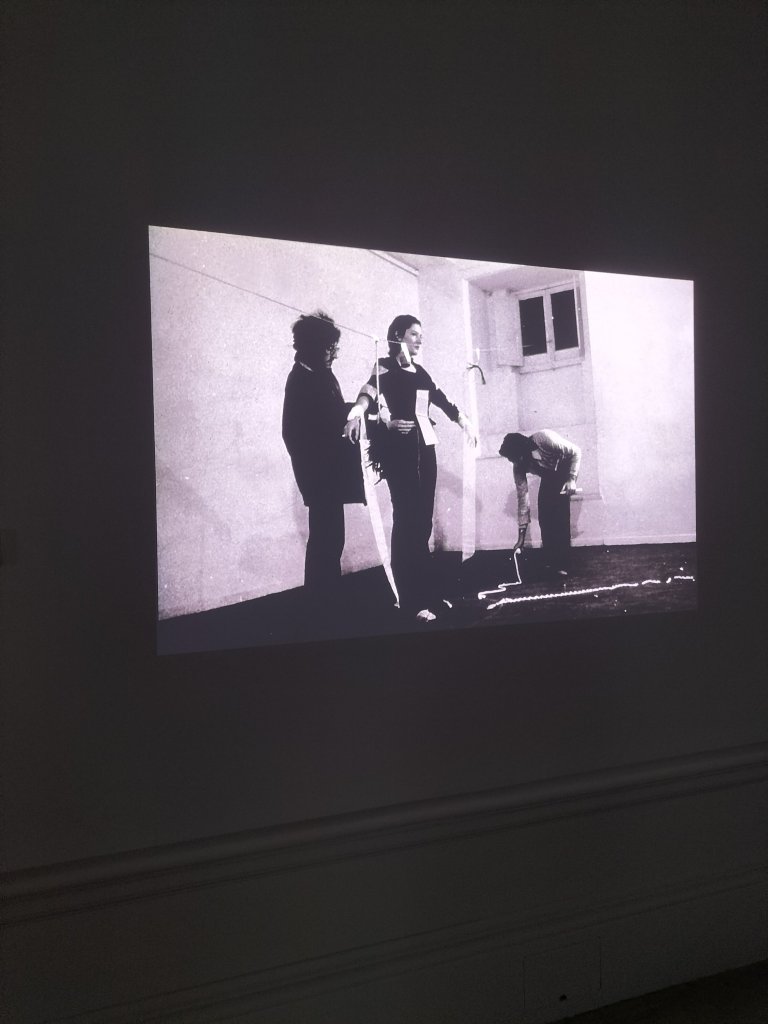
The work I knew least was even more ‘sanitised’ by the health and safety considerations, which I described in my preview thus:
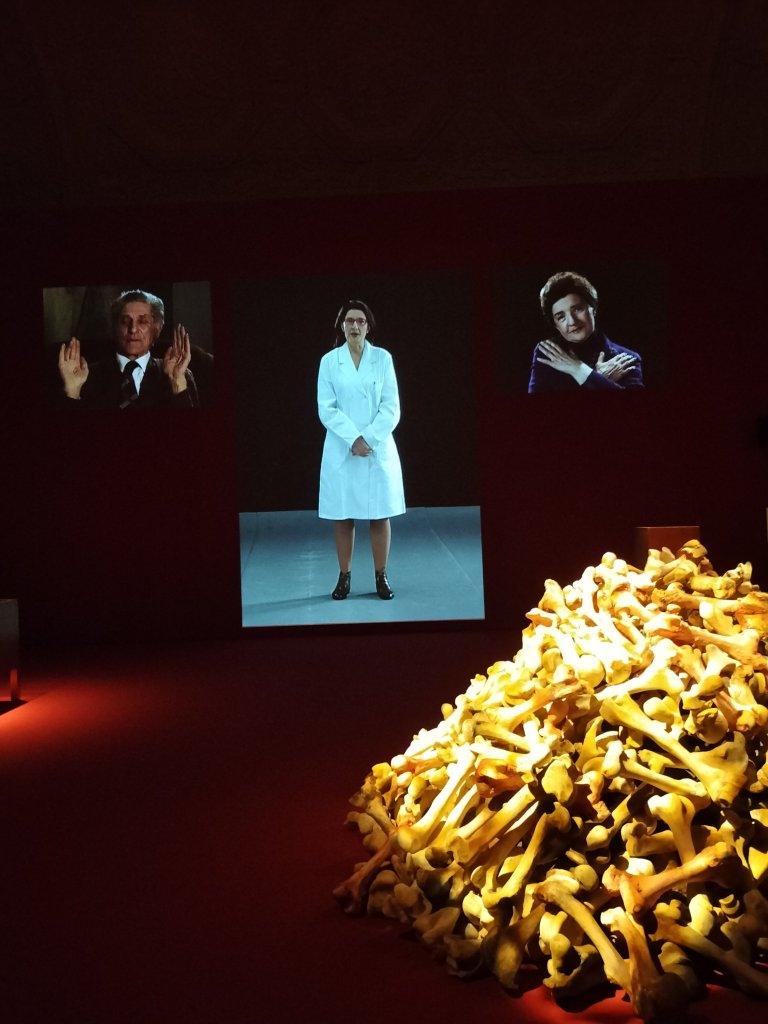
The same might go for the 1997 work Balkan Baroque, in which Abramović sits on a pile of bloody and smelly cow bones cleansing them of meat remnants, partly observed by substitute parents on film. Clearly this work must be represented in the exhibition because Svetlana Racanović has an excellent essay on the work in the catalogue.
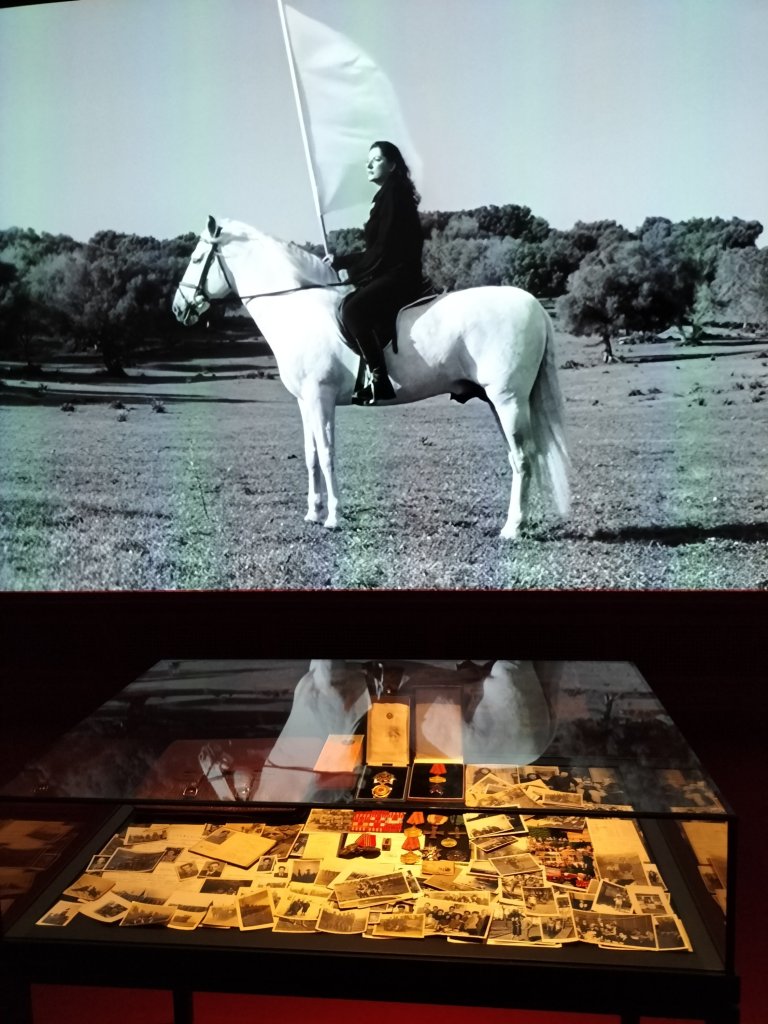
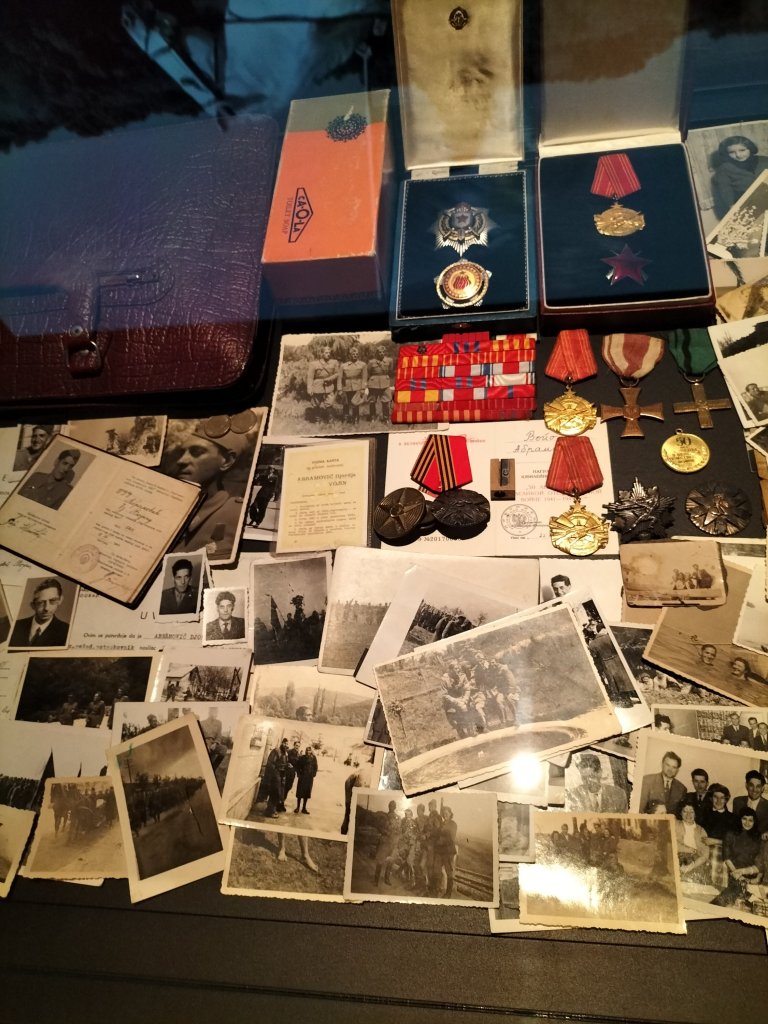
The pile of bones is uninhabited, has no-one bloodied or active on top of it, and has no smell at all. Indeed it even looked artificial as if coated if real or actually simulated. The material relating to her Yugoslavian Communist leader father, from the hegemonic Serbian ruling group of course, was impressive to see as was the display of Communist nationalist loyalty against which the artist’s ambivalence clearly reacts if impassively. The film of both mother and father moved but I was not in the moment of a performance ever.
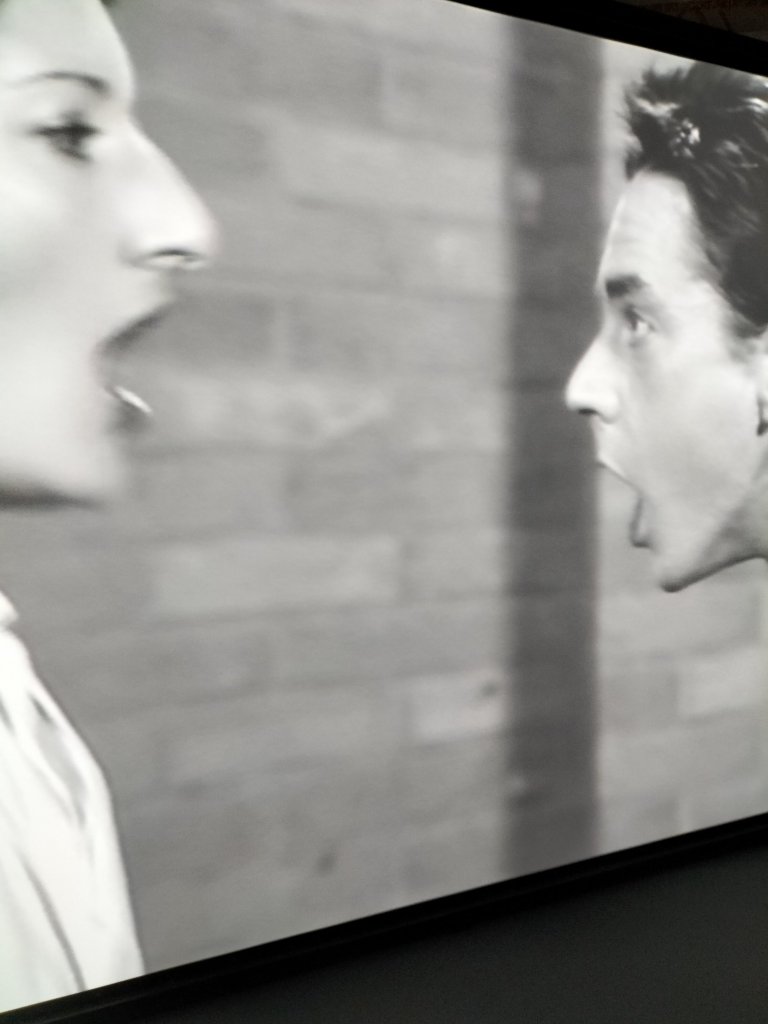
The next room had huge impressive videos of the performed confrontation, involving exchanges of verbal, passive and violent, (in the form of mounting frequency of slaps) between the female artist and her male partner partner. However, I feel it detracted that this was in the same room, in a far too adjacent space to the first live performance I saw, that of Imponderabilia.
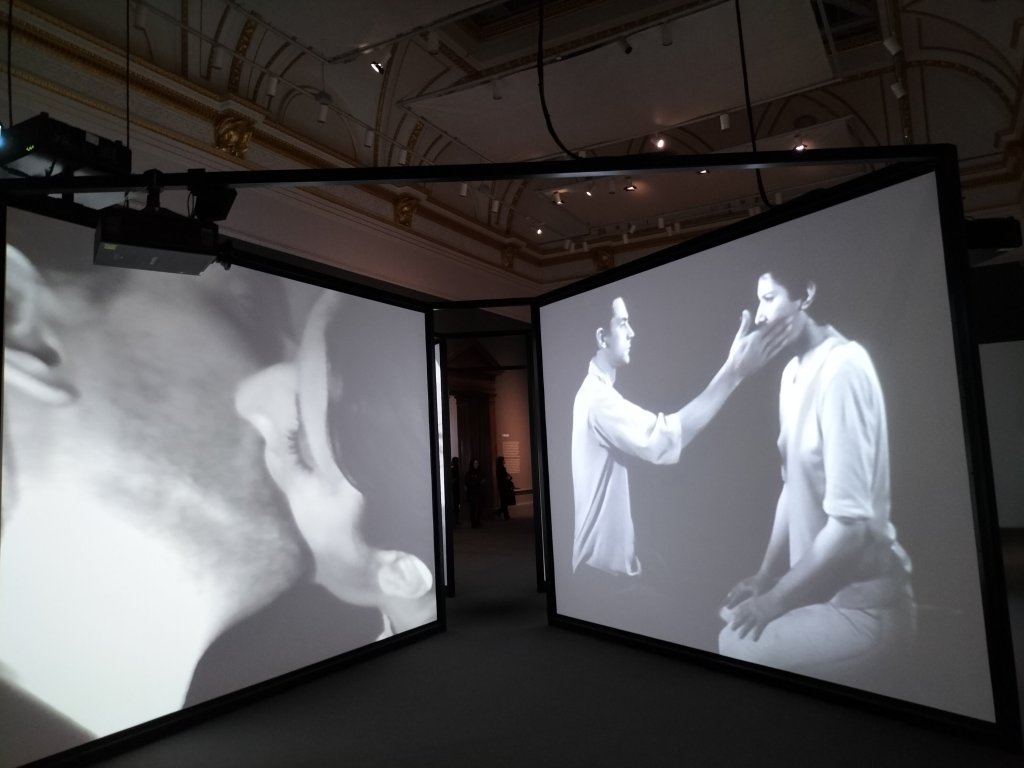
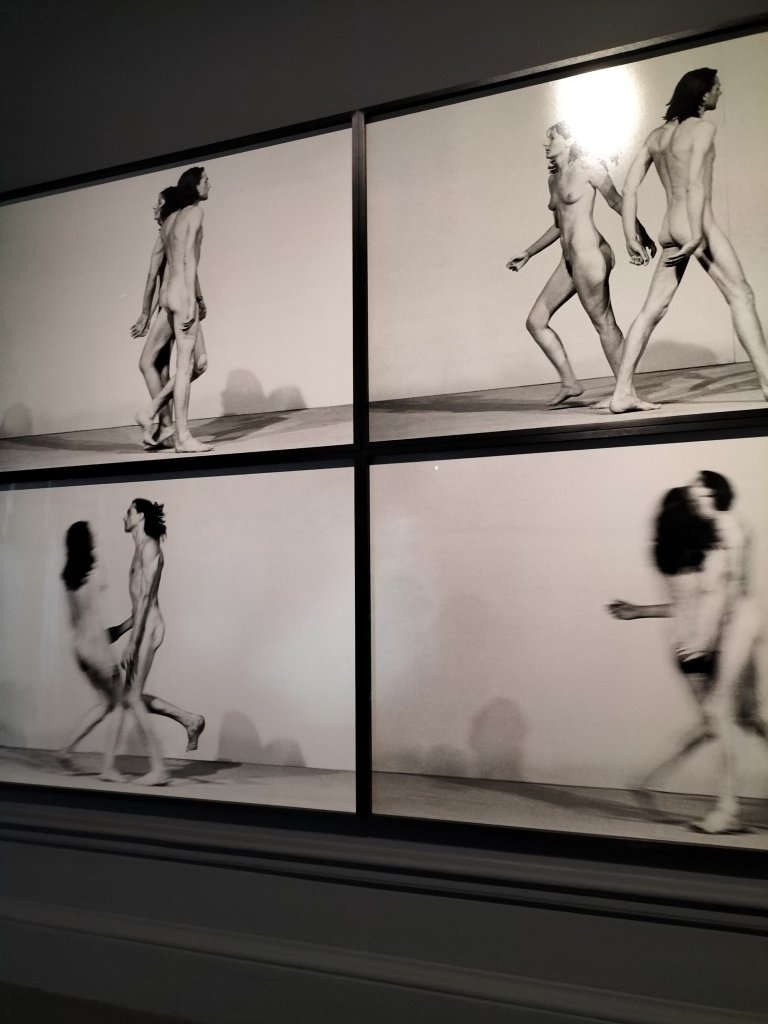
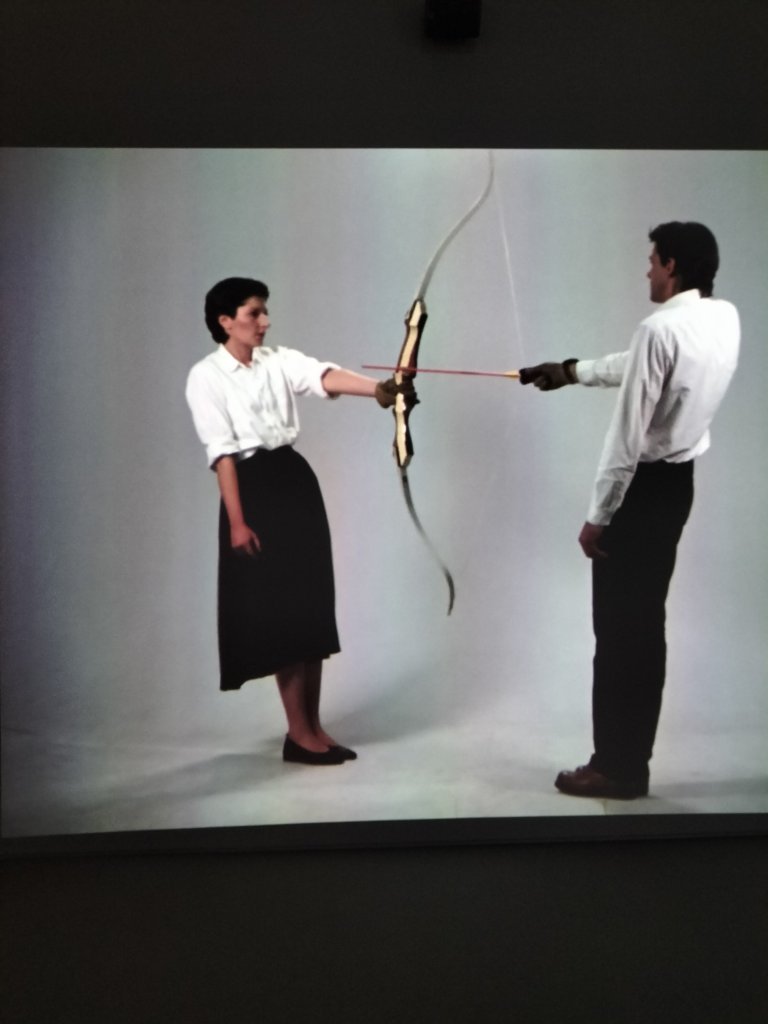
Unable to photograph the artists who substituted for the originals I. Imponderabilia for obvious reasons of privacy relating to the actor-artists, I felt I must experience it but was not overwhelmed, mainly I think because of the overwhelming surveillance of the performance and the constant reminders and instructions regarding protocol. And if they were necessary, it may be because the art no longer is necessary or is no longer art but a thin simulacrum of something that once was art.
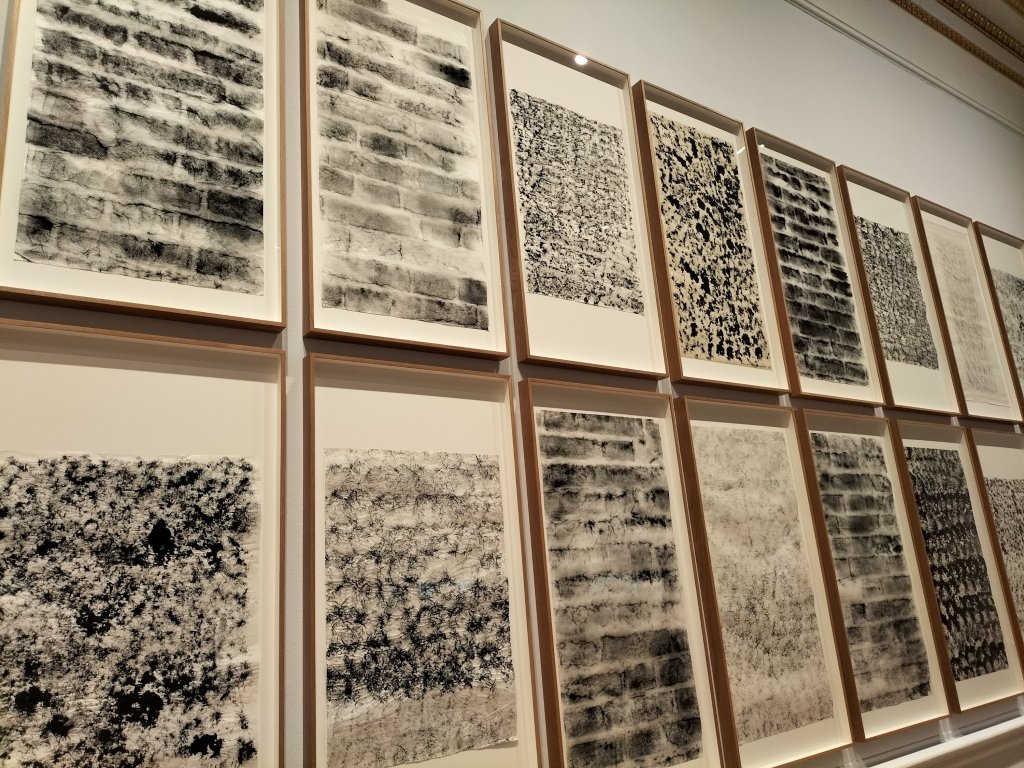
The Frottage art followed and the pots from the China Wall work (see the earlier blog for more if interested). They far from disappointed because they are already representations in my knowledge from reports in books’ especially the pots because of their size and the obvious haptic nature of their subtle unsimilarity. That is the kind of reaction you get from seeing the art yourself, but it was not as clearly there in other things I saw.

In what follows the Four Crosses were equally impressive seen because of their size and effect in the huge rooms given them in the Royal Academy with its wondrous overwrought doors. In one of my photographs I inadvertently captured a nun seeing those pieces, who was happy to remain in the shot.
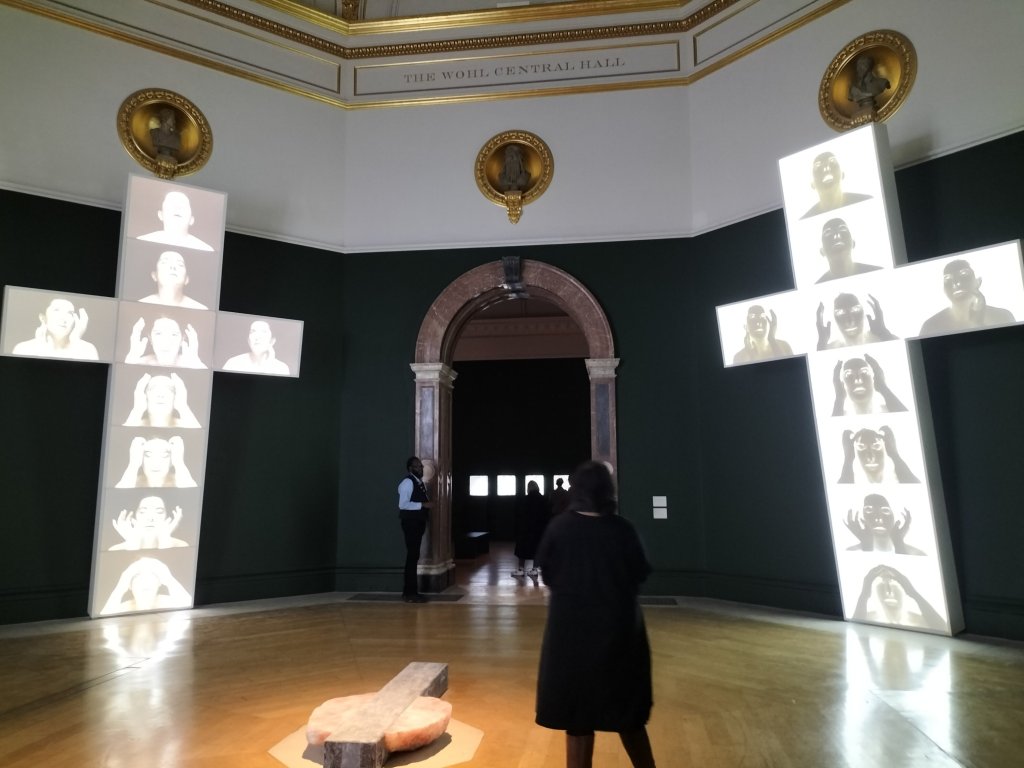
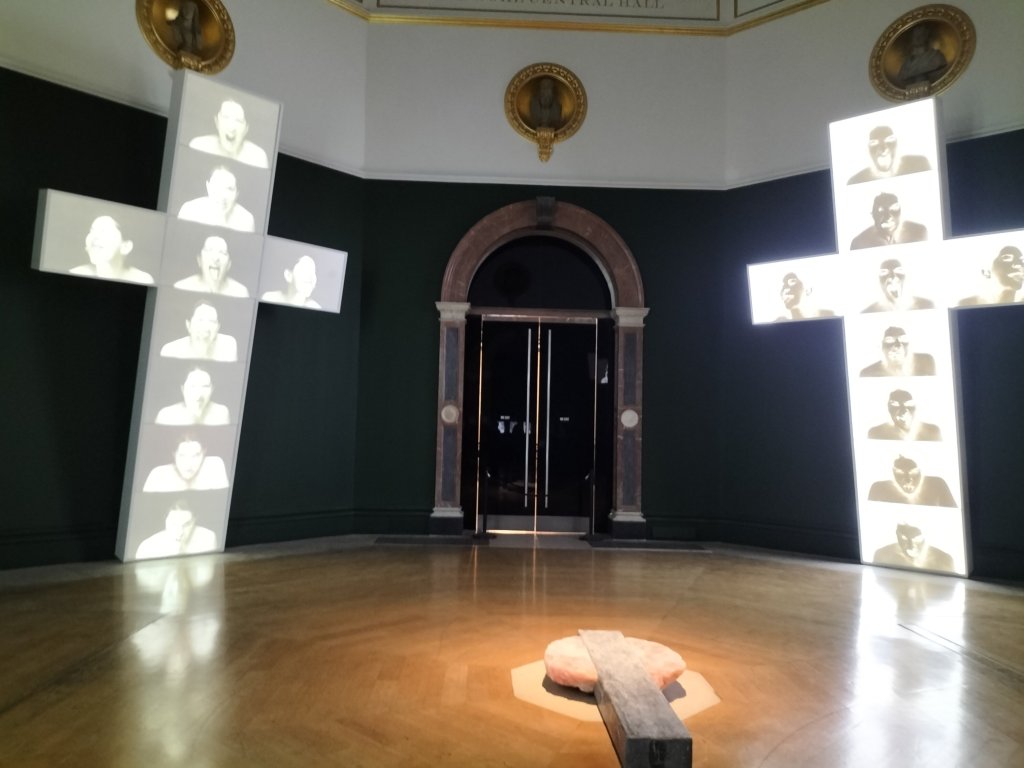
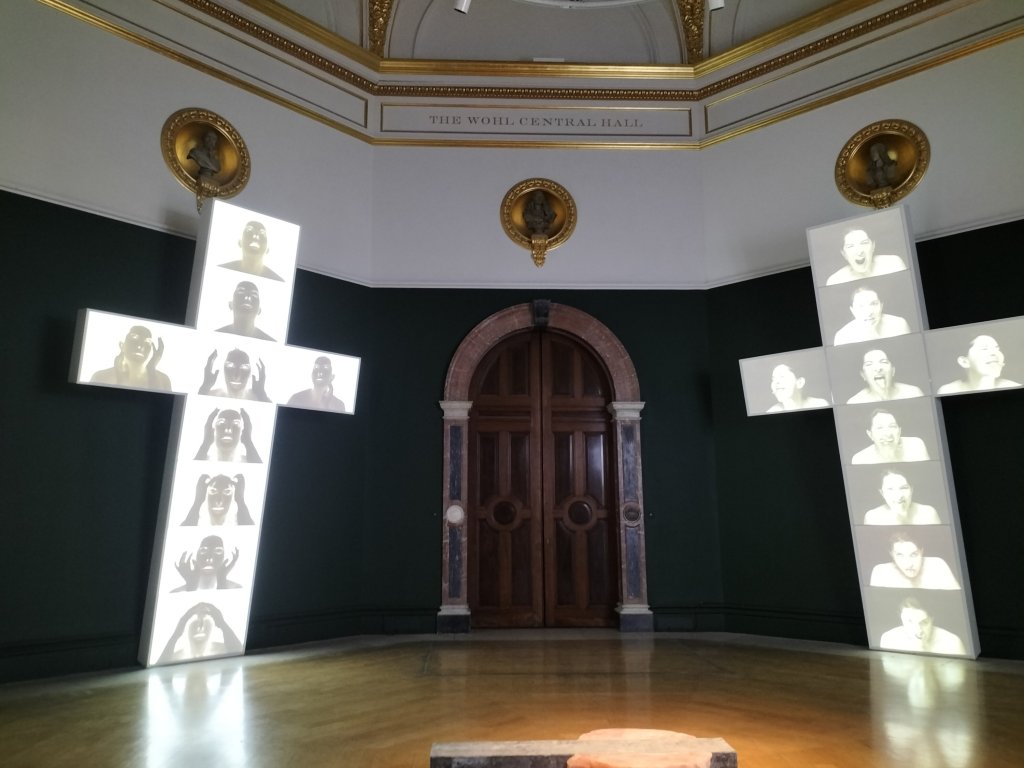
I cannot correctly comment on the text for I would repeat myself. Let the pictures speak because the plastic art is impressive, especially in the three dimensional capture of difficult fractious facial emotion. And, yes, I did pass through the light portal
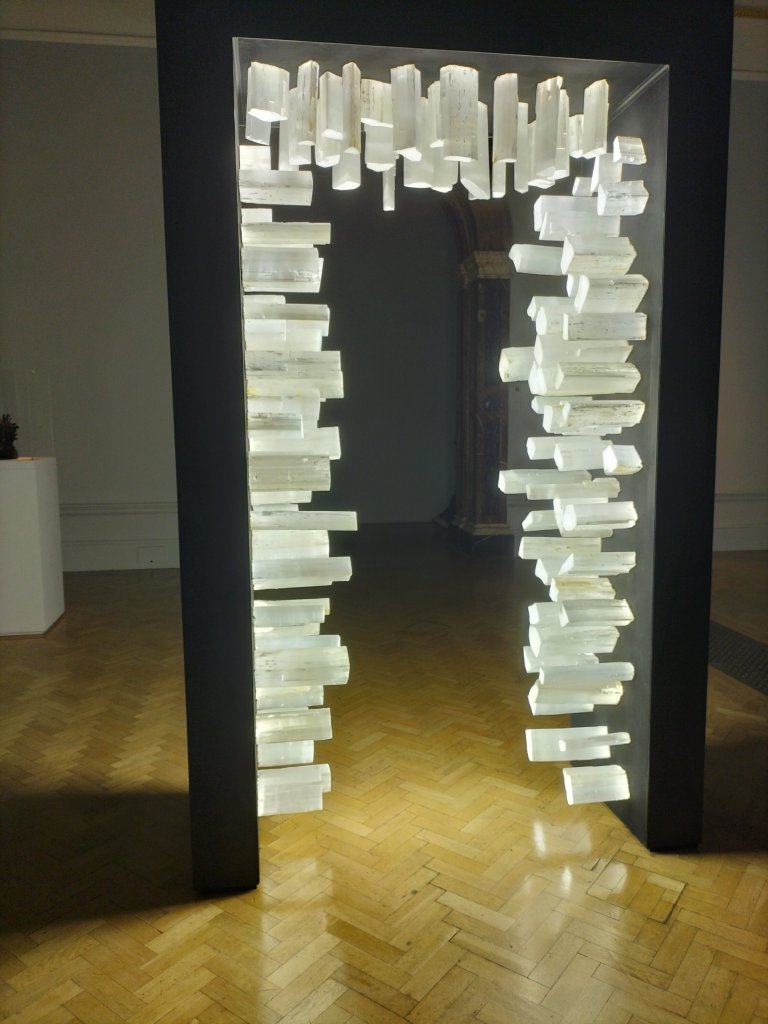
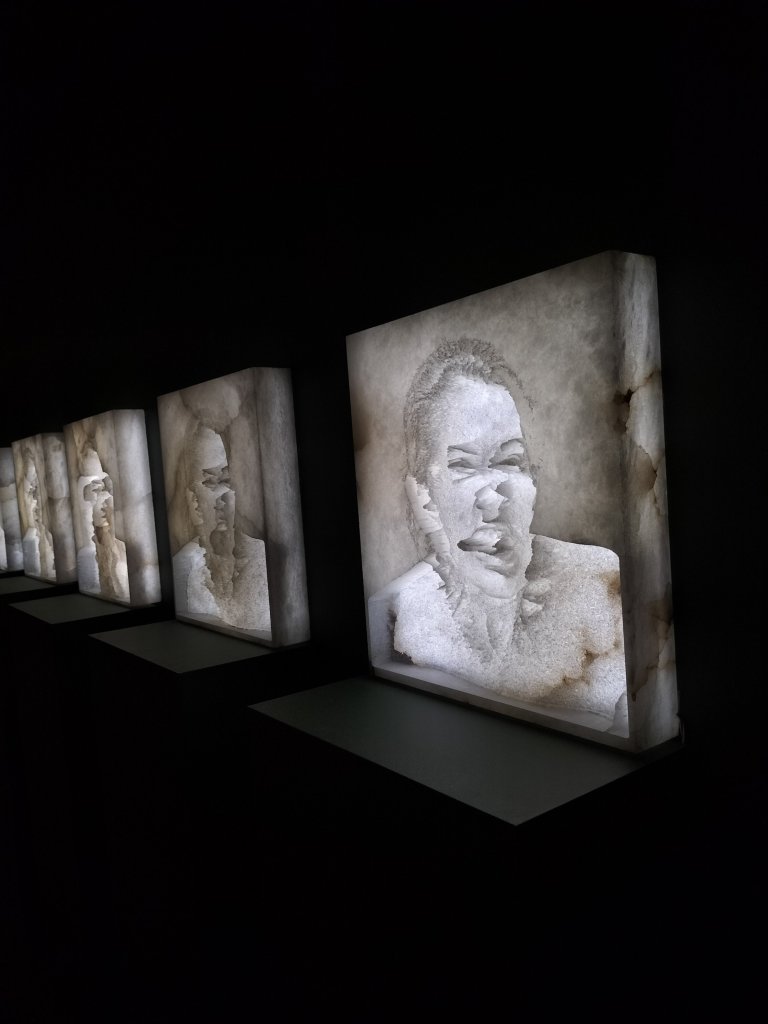
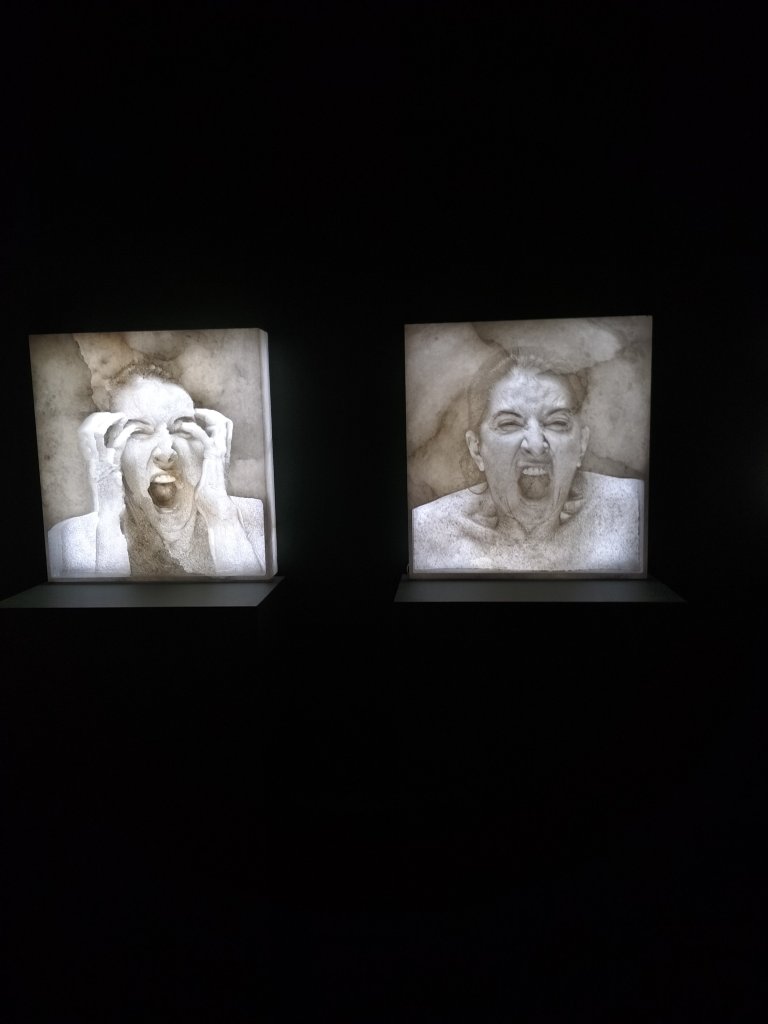
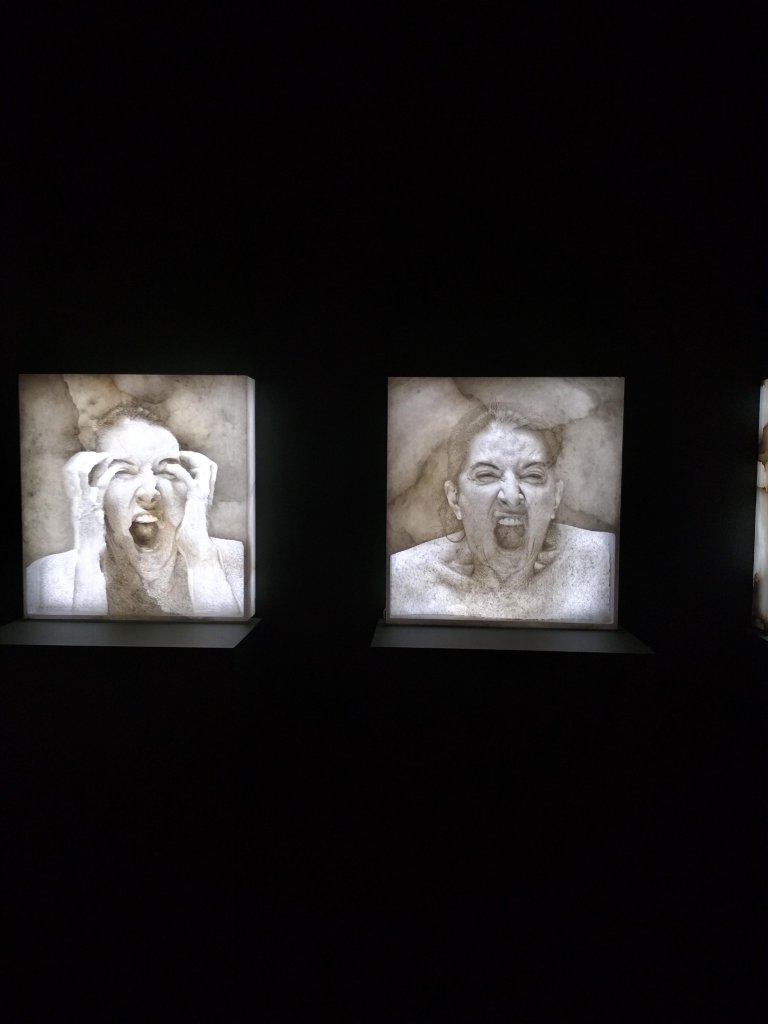
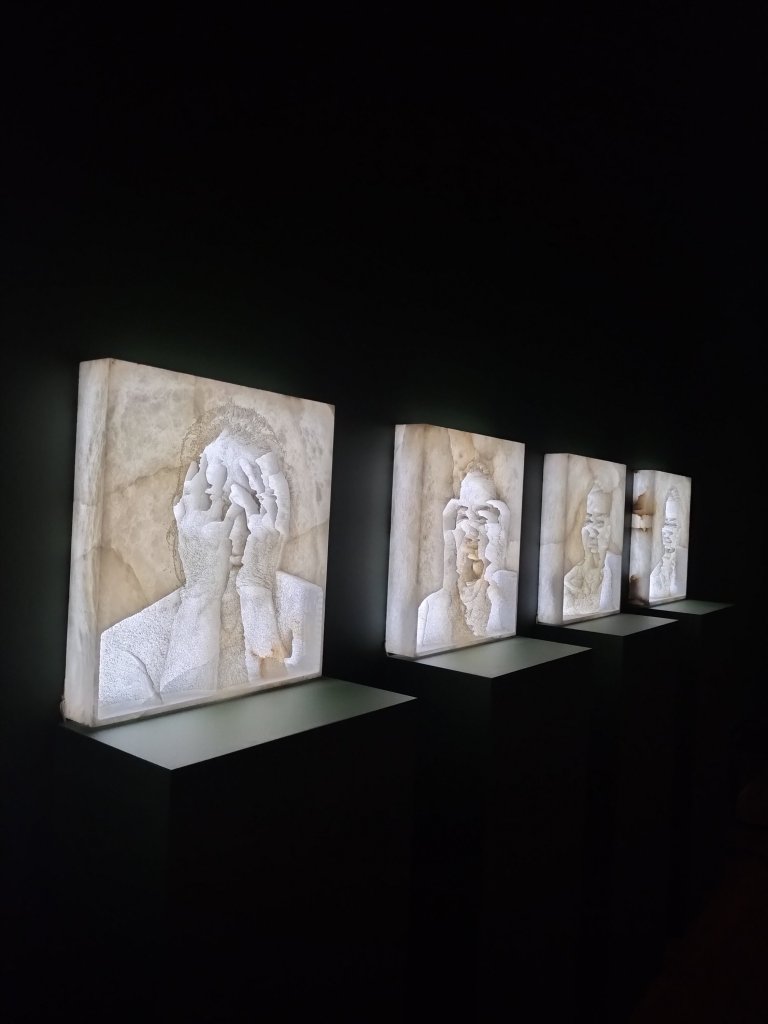
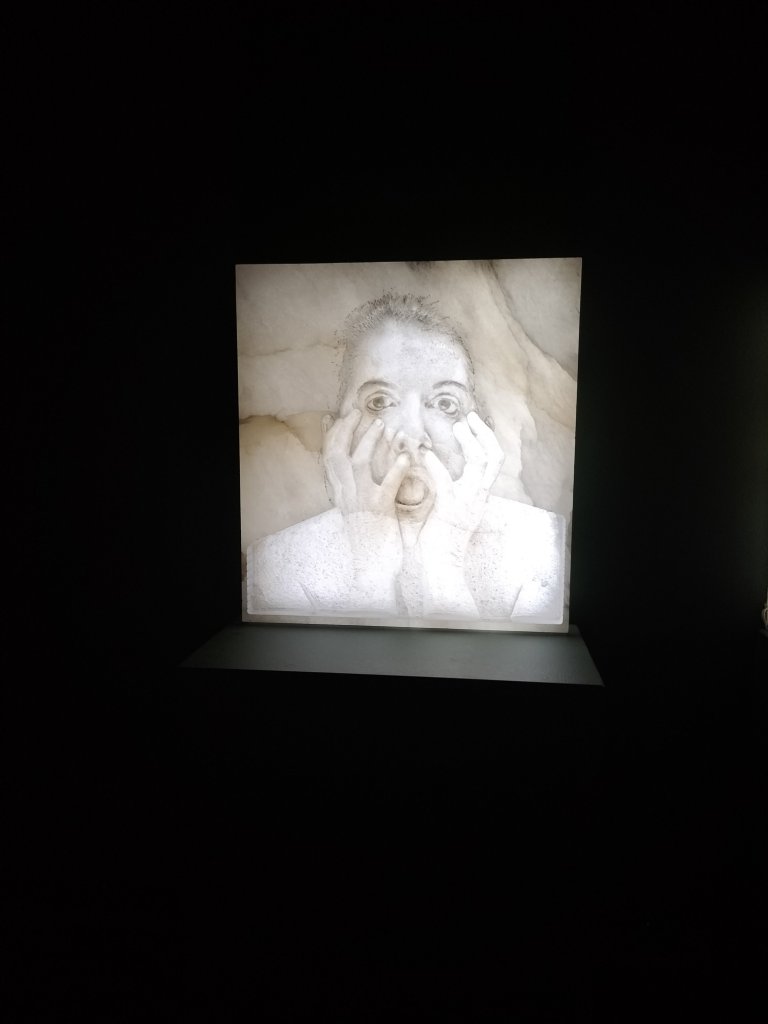
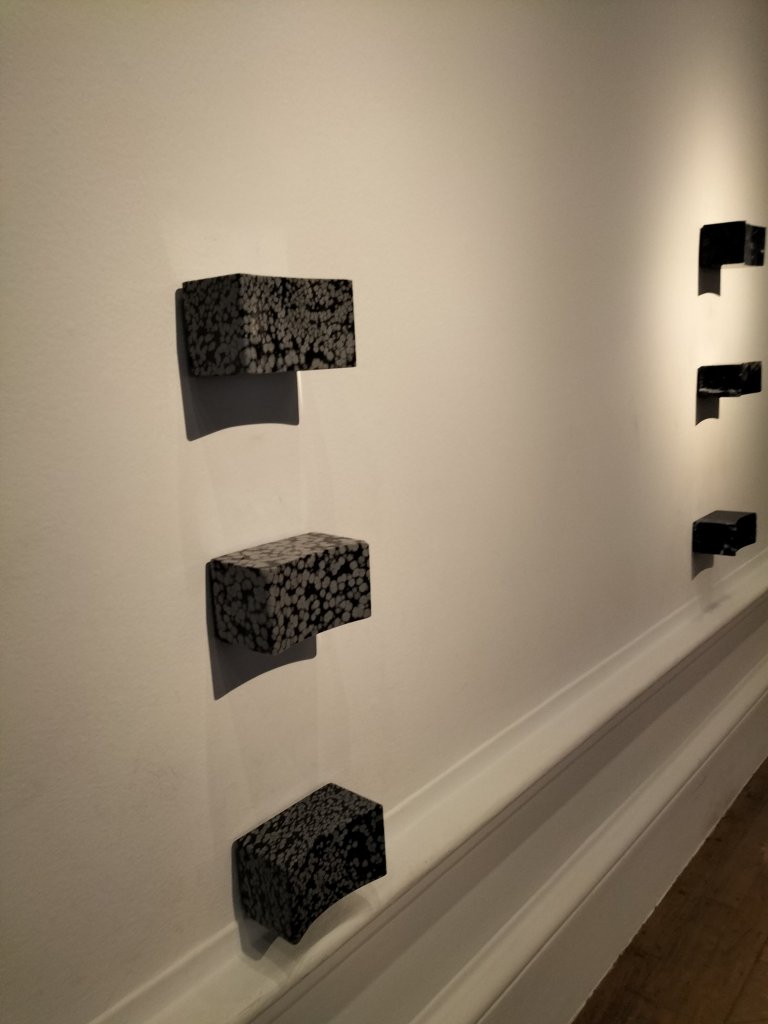

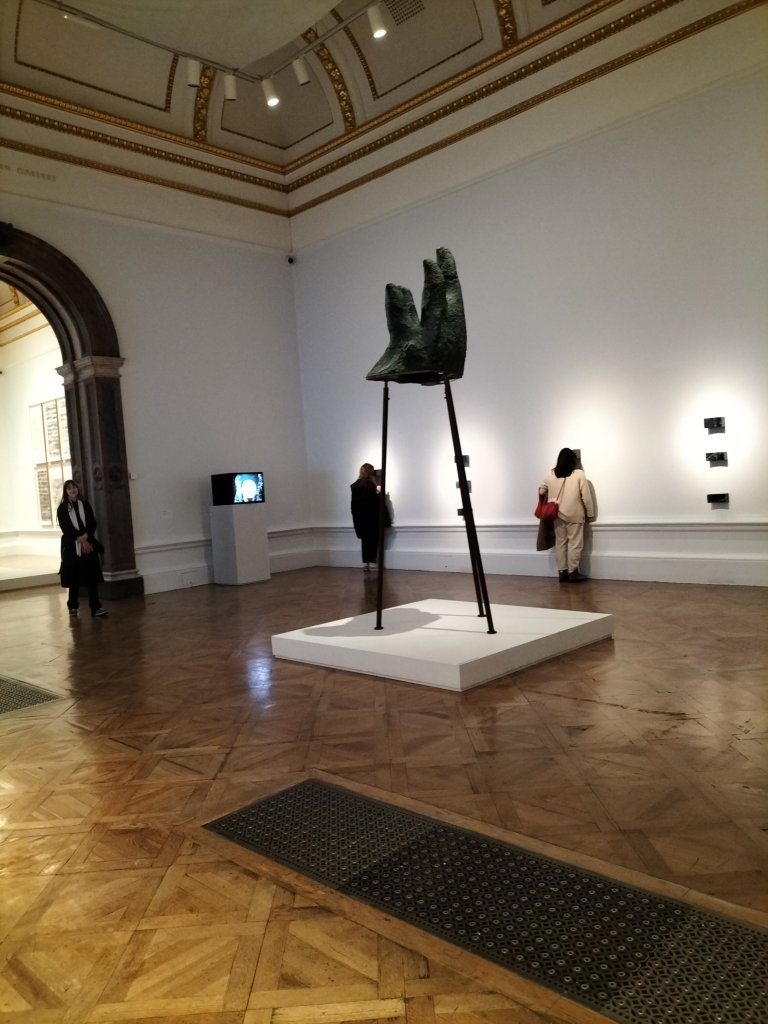
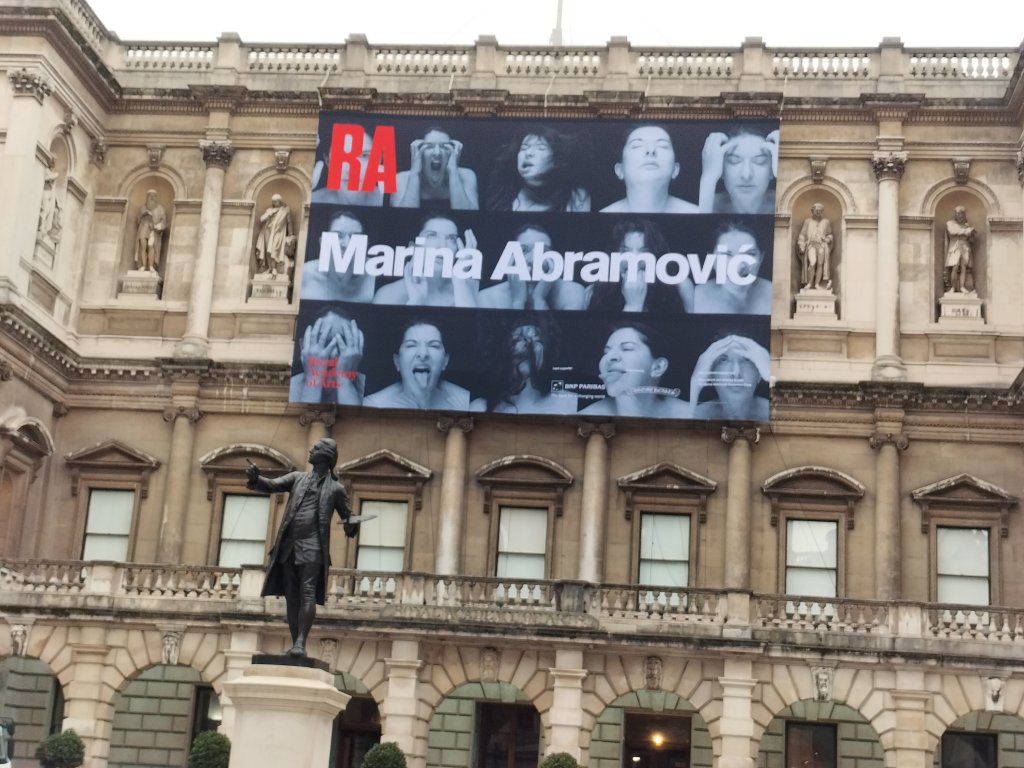
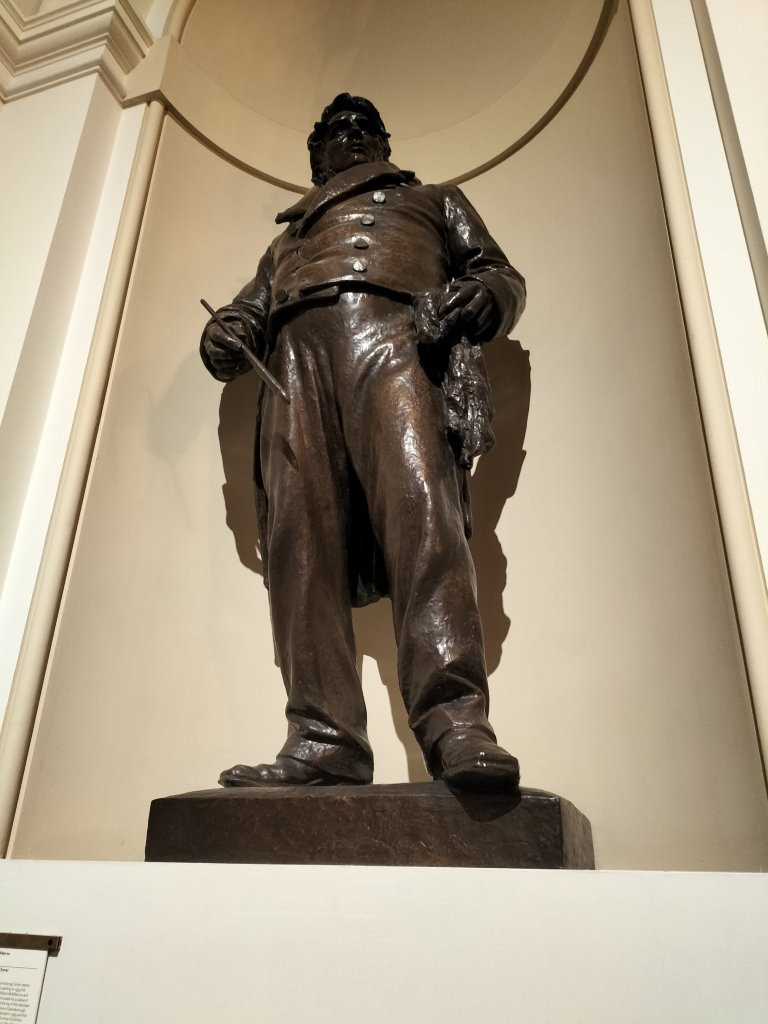
But perhaps if my energy has been underwhelming, please see it if you can for it fascinates conceptually..and for another reason, Going through the portal of the Royal Academy it is wonderful to see the niches male worthies on the top frontage of that August patriarchal building, and even the statue of a hero like Turner. It is wonderful because they seem disrupted by Marina’s angry face versions amidst them on the frontage. Let this only be a beginning and not just in modern performance and / or conceptual art.

With love
Steven
 Steve_Bamlett_blog
One thought on “Marina Abramović: but essentially the artist is absent. The conceptual pitfalls of a beautiful show.”