
This blog could appeal only to those who identify in some way with the view that only what Romain Felli calls ‘environmentalist, democratic socialism’ is the ‘best hope for reducing climate catastrophe and maintaining freedom within a nature – irreducibly both biophysical and social – which is complex and divided’, and even then perhaps it won’t thus appeal. (1) It is a big ask to expect that this audience can be reached by a blog and perhaps to find sufficient people who recognise ‘nature’ in the way Felli does or accept that its operation is either ‘complex’ and ‘divided’. The view that the world can be addressed simply issue by issue is probably the source of most of the bad politics that dominates Western democracies.
The problem for people defined in the way above is that, it is argued that that approach, even if seen as desirable, is unrealistic because unpopular with voters and vulnerable to the power of agents of capitalist ‘solutions’ to problems such as most of the press and the regulatory force applied by world stock markets. This manner of seeing the world as an innate natural limit to fully socialist solutions birthed the many versions of Blatcherism, an attempt by Labour Leaders, but particularly Tony Blair, to attempt to use the neoliberal.mechanisms introduced to government by Margaret Thatcher but to do so in a way that was ‘fairer’, at least in the opportunities it offered the marginalised and structurally disempowered.
This is very much the current position of a very strongly top-down Labour leadership intent on a return to what Anthony Giddens called a ‘the third way’ supposedly midway between socialism and capitalism, though dictated largely the motivations of capitalism, especially the principle of endless flexible adaptation of forms of labour in the interests of growth. It continually compromises with positions set by global capitalism, having abandoned for instance, very soon its commitment to ‘Green Revolution ‘, which anyway was only ever about a dream of ‘sustainable growth’ in which even it no longer believes, in tandem with the dismissal of this idea in the Tory Government, after the demise of Boris Johnson.
Felli does not even try to tell us about how we get to the ideal he calls the best hope for a truly green politics. His remit is merely to explain how supposedly green policies supported even by the third sector (Oxfam comes in for major criticism in relation to its commitment to policies of microinsurance I line with major investment bankers who profit financially from it) came to be beholden to a belief in market solution to climate catastrophe.
In the formation of the view of the importance of growth and flexible adaptation, Felli shows how early signs of oncoming catastrophe such as the famine in the Sahal came to be blamed not on global warming but on the failures of the ‘inflexible’ peoples of the global South, unwilling and perhaps incapacitated from flexible response to changing economic circumstances such as those caused by the expansion of deserts. They would eventually be seen as those who were perhaps constitutionally (for this in some forms was a racist theory) but certainly politically – because committed to national social welfare thinking of the supposedly benevolent aim of colonialist government – incapable of dealing with uncertainty, including climate uncertainty. (2)
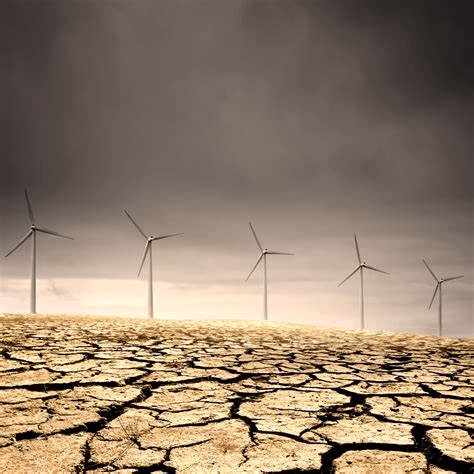
In later theories this theory in explanation of global inequalities in response to catastrophe was spoken about as a deficiency of resilience (3) in these people and social economies, later still described (by Homer-Dixon (4)), as an ingenuity gap. Poor nations and their peoples lacked the moral fibre and consequent cognitive flexibility induced by the hardships and inbuilt uncertainties of unregulated capitalism, it was thought – as if this was a law of nature fighting against the impoverishing effects of imposed socialist thought. This argument led to the widespread privatisation of the provision of water supply Felli says, even though water is a basic right of human welfare in socialist and humanist thinking. (5) Even the thought that we have basic human rights to goods considered universal is, after all, a cause of ‘inflexibility’ in circumstances of unexpected and maximal scarcity. Social welfare is thought of as a means of ‘blockage’ to both resilience and ingenuity in the face of disaster and was, it could still be though, the cause of distresses from ecological change and uncertainties.
In developed nations this implicitly racist theory could be used to see sub-cultural populations as themselves the problem. Felli has a chilling description of how in the disastrous flooding caused by Hurricane Katrina of New Orleans in the USA in 2005 the Heritage Foundation saw the problem’s cause of devastation in the disordered non-resilient lives of its Black populations, and hence denied the efficacy of state intervention when what was wanted was the building of resilience and ingenuity in that community. One Professor of the study of environmental justice, Robert Bullard recommended a plan “to destroy Black New Orleans” (Jamie Peck 2010 (6)) by ensuring depollution help went to gentrified (white as a result of pre-structured advantage) areas and poor low-lying housing (largely inhabited by black populations) were demolished ‘to protect the swamp’.
In all the worst excesses of political thinking reported here, though possibly the y are still implicit, are of less concern to me than what Felli calls the ‘depoliticisation’ of the green agenda, and associated with some specifically Green politics (if not all) and the pretence that this agenda can be a response provoked by merely a consensual humanism. This pretends that all problems in the world stem from global warming and looks for general national solutions ‘without understanding that it is precisely (internal and external) power relations that determine different individuals’ and social groups’ differing vulnerabilities, even within the same territory, especially along the axes of class, gender and race’. (7)
The present leadership and think tanks of the Labour Party are in a conundrum themselves. A depoliticised green agenda was precisely their ‘green revolution’ agenda, now dropped like a hot potato in favour of announcing that ‘economic growth’ will enable a response to all problems at a later date, a growth fenced round with provisos about reform of the labour market bound to lead to limitation of regulation in the interests of fair wages. Some people in social media who support Labour whatever that means in practice believe that its leaders should say anything that gets them elected and then address the issues in power. That sounds awfully like the Johnson agenda for winning power, and, even despite that it is certain that what is said before an election will bind the government elected and that no holding onto the belief that effective change this is a ‘two-parliament’ task will ensure that second parliament, even with a landslide win.
Recently I toyed with Green politics to find it much as Felli describes it. It is not the answer unless it is also a democratic socialist politics that will utilise the state to both address ecological catastrophe (requiring a revision of our elision of the idea of growth with the objectives of a maximally unregulated free market and the interests of the current distribution of capital of every kind) and enhance freedoms within a framework of human values and rights. But to return to Labour (I will still vote strategically for Labour where and when necessary) when it tries to pretend the political GOOD can only secured by its own power regardless of policy and without a means of at the least reforming our constitution in a democratic direction would be foolish.
So that is my position. I don’t hold it dogmatically. I can however see no hope though when even calling for a ceasefire in a grossly unequal war in the Middle East is seen as beyond the capacity of a party for humanity and analytic grasp and convinced it must ape Tory policy in this regard. But if anyone can help here, I am willing to hear. I expect though I will again be unheard (I expect that since I write to think about my own position primarily) or if I am heard called a ‘nob’ and a ‘Tory facilitator’ by people who call themselves ‘centrists’ and think not at all beyond one rather incapacitated leader of the Party.
With great love
Steve
(1) Romain Felli (trans David Broder) [2021: 159] The Great Adaptation: Climate, Capitalism and Catastrophe London & Brooklyn, USA, Verso Press.
(2) ibid: pages 59ff.
(3) ibid: pages 75ff.
(4) ibid: page 75ff.
(5) ibid: page 87
(6) ibid: (cited) page 92
(7) ibid: page 133
 Steve_Bamlett_blog