Max Porter’s Shy has its ‘eyes closed, / waiting for another day’[1]: A blog on Max Porter (2023) Shy London, Faber & Faber.
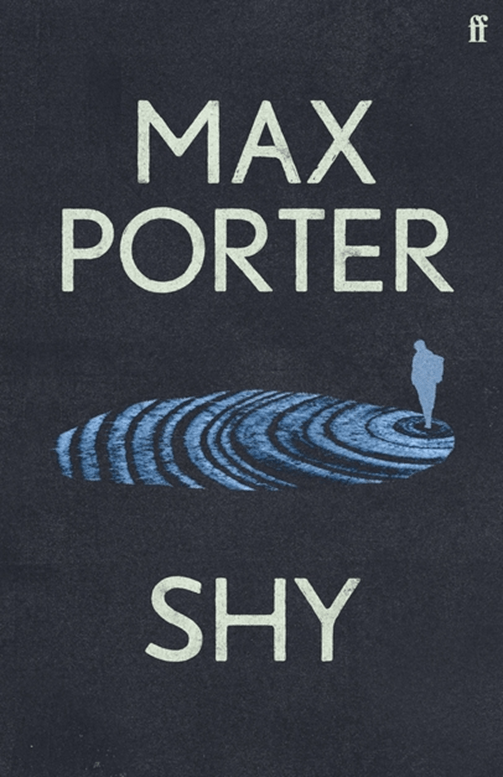
Book cover
I was looking forward so much to the new Max Porter work, even more so from the enthusiastic ‘blurb’ commentaries that many writers give to the work, praising its ‘visceral authenticity’ and claiming that it ‘pulses with lived experience’. These are words that are appropriately applied to Porter’s earlier works after all, and on these I have blogged as enthusiastically as have the professional reviewers. But the final words of the novel cited in my title do sum up what I feel about this latest work, which fails the test of both the claims I quoted from blurbs, above. This book is, after all, too kind to social workers and counsellors to be true to the experience of children placed in their care.
Houman Barekat in The Financial Times sums up my feeling about the book as a well-meaning attempt to recreate the experience of a teenage boy using services but one which does not convince that neither the experience nor the language of a teenage boy have been captured, as they are, for instance in Lanny. Barekat says the book is: ‘The story of a troubled young man has its heart in the right place — but not much else’.[2]
This is, in my view a damning judgement for nothing is more harmful at the present moment of history than attempting to tell the story of a group of people so marginalised and degraded by the present state of children’s social care than their present populations. It made me long for books like Jenni Fagan’s The Panopticon or Derek Owusu’s book Losing the Plot about the troubled relationship with his own and his biological mother’s mental health (about which I blogged – see this link). In both cases the writers have genuine ‘lived experience’ to call upon in the organisation of the care system. I do not know if this is the case for Max Porter, but if it is, it is not conveyed by this book. In both the other books the writing is as experimentally playful, as in this one, but it serves to thus realise the issues raised about the consciousness of oppression, even the positive nuance of a community of the oppressed, that is so this from Shy. Barekat gives hints that ring true for me too about the false tone of this novel – where empathy is often just expressed so is seems to be merely sympathy: emotion likewise turns into sentiment and character into type, even sometimes stereotype. Here is Barekat:
Shy wallows in nostalgia for a time when he and his mum were close — “before everything became a fight”. … Shy is a comparatively [to Grief is a Thing with Feathers and Lanny] a straightforward affair — the odd trippy dream sequence is about as strange as it gets. … Shy’s litany of frustrations culminates in a lament enumerating his personal insecurities: Porter’s heart is clearly in the right place, but the story feels flat, its protagonist more like a stock type than a rounded character capable of eliciting the reader’s empathy. … Who or what is being ventriloquised? On the one hand, the third-person narrator’s occasional use of “him” rather than “he” (for example, a sentence begins “Him and Benny” rather than “He and Benny”) is faithful to the stunted grammar of adolescence; however, the moral and emotional insight evinced by Porter’s storytelling is that of a much older person — evoking the understanding parent or social worker rather than the wayward teenager. There’s a whiff of condescension in this recourse to cutesy language — a kind of emotional button-pushing typically associated with exploitative memoirs and cheap romances. … The result is that rare kind of dud — a novel that feels simultaneously undercooked and over-embellished.[3]
This is tough love in a critic but so needed in this case. And other critics don’t significantly differ in their judgement, though they word it in a kindlier way: Anthony Cummins in The Observer summarises thus: ‘the sense grows that the book amounts to an open-hearted exercise in style, reverse-engineered to show how society fails young men’.[4] Kevin Power in The Guardian is more positive but is correct to say the book ‘ends in a dollop of pure sentiment’ and that it ‘as a whole feels unbalanced in various ways’.[5] It might have been better had Power meant by unbalanced that the book’s prose captures the feel of ‘experienced madness’ but he does not I think. He means that Shy is a factotum for a theory in social work or counselling practice, and, on such a serious and deadly subject (the deaths being the completed suicides with which this book plays games) this won’t do.
I can’t very happily review this for I lack balance. It reminds me of ideologies in professional care like positive psychology and the practice in care situations of inducing ‘enforced cheerfulness’. Most people who have truly experienced services, from whatever perspective, could truly find much of value in these well-intentioned ideas.
I can only imagine that when Porter decided his final lines and words would be, it was a writer he felt that this book leaves him still with:
eyes closed,
waiting for another day[6]
For Porter is a great writer when he is not pounding a theory of recovery. Even the calligraphic effects here are numb and meaningless, so unlike those feats of visual and verbal imagination in Lanny. Supernature in the form of two dead bloated badger corpses barely comes near the effect it has in Lanny either. In the end a dead badger is as dead as a proverbial dodo and two badgers more so. We too often feel Shy is, as he thinks about himself during the up-stage of his suicide attempt, just ‘him dicking about on the shadowy stage of his stupid drama’. The voice that produced the metatheatrical metaphor has lost its grasp momentarily.
For blogs on the books by Porter I love – see the links below. He needs to revisit their inspiration and find a new form, for in this book he stereotypes himself and innovation has become another ‘Porter’ with no passion or point. Sad!
All my love
Steven (in social work teacher mode).
[1] Max Porter (2023: 122) Shy London, Faber & Faber
[2] Houman Barekat (2023) ‘Shy by Max Porter — a paean to misunderstood youth’ in The Financial Times online (April 7, 2023) Available at: https://www.ft.com/content/7bfe5440-87ac-45be-8175-94395fcb5636
[3] Ibid.
[4] Anthony Cummins (2023) ‘Shy by Max Porter review – exhilarating portrait of a lost boy in 90s Britain’ in The Observer online [Mon 3 Apr 2023 07.00 BST] Available at: https://www.theguardian.com/books/2023/apr/03/shy-by-max-porter-review-exhilarating-portrait-of-a-lost-boy-in-90s-britain-grief-is-the-thing-with-feathers
[5] Kevin Power (2023) ‘About a Boy’ in The Guardian Weekend Supplement, p. 57
[6] Max Porter (2023: 122) Shy London, Faber & Faber
 Steve_Bamlett_blog