‘“…Whoever told you he was a faggot is lying …” … “Or Crazy” / Crazy. Yes you’d have to be crazy to think that. And we all remember what happens to the crazy.’ ’Re-(Queer)-Positioning the literary question of who writes and what is gay writing.[1] This is a blog reflecting on the appropriation of discourse about ‘homosexual’ in classic literature. It concentrates on Harper Jameson’s (with W.A.W. Parker) [2020] The Waste Land Jamul, California, Level 4 Press Ltd (a fantasy novel relating to an imagined life of T.S. Eliot). With brief mention of William di Canzio’s (2021) Alec New York, Farrar, Strauss & Giroux (a retelling and extension of E.M. Forster’s Maurice).
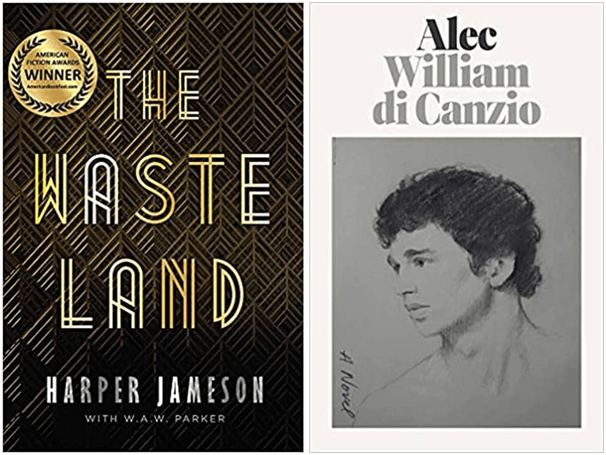
If you thought there was no need to reposition accounts of the art produced by queer (or even reputedly so) writers during the time in which such writing was you need to remind yourself of how some very recent biographers attempt to tell their story giving it a very literal straight edge, as was the case with Robert Crawford’s long and over-familiar (given the remit to preserve the case for ‘Tom’s’ (he calls him Tom throughout) being an exclusively ‘straight’ character) biography of that poet’s younger life, from which the evidence of his well suppressed queer experience, if there was any, belongs.[2] Even when this is not a writer’s remit, sometimes as in the latest biography of Francis Bacon, biographers can choose to go a long way to reduce the supposed significance of a honestly and outward queer life to insignificance in understanding their artistic production (follow the link to see my take on this in this case).
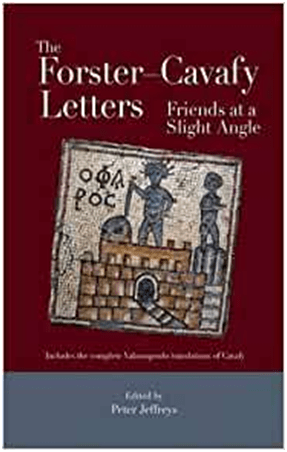
In some cases of course writers (both in their ‘private’ lives and in the public closet) cannot receive this treatment since the ‘private’ evidence is now public, not least in E.M. Forster’s case his novel Maurice, written in about 1914 but not published until after the legalisation of sex by ‘consenting adult’ males in ‘private’. Forster’s life and work is now inevitably linked with queer history and has been written (by Wendy Moffat at least) with great sensitivity to its queer content.[3] Hence William di Canzio is not adding to knowledge about Forster in writing his novel (freely using dialogue from Forster’s original) but seen from the perspective and life-story of Alec Scudder, the ‘gamekeeper’ with whom Maurice Hall has sex and then falls in love and from whom Alec says (in both novels) ‘we shan’t be parted no more, and that’s finished’.[4]
This new novel tries to infuse some realism over that hope – in a rather overlong section on the consequences of their class differences to their service in the First World War and its consequences, for instance, in ensuring there is a long parting of their ways. Di Canzio also writes into the novel a character named ‘Morgan’ (Forster himself) as a friend of the new couple as well as ‘Ted’ (Edward Carpenter) and George (Merrill), the latter’s lover in their Sheffield (Millfield) cottage. It was to a touch on the bum by the latter that Forster attributed the genesis of Maurice, although clearly di Canzio feels the actual characters of a living Maurice Hall and Alec Scudder can be fantasised as its true progenitors. In Chapter 38 ‘Morgan’ reads out a poem to the lovers, assembled and reunited again at Millfield by Cavafy, whom the novelist had met in Alexandria. The poet isn’t named and it seems certain that this is one of the many places where pre-knowledge of E.M. Forster’s life and emergence as a queer icon in literature, alongside Cavafy, is already known to the reader. Even characters like the rather awful aristocrat, Risley, from the novel are reborn and made more empathetic than any reader who knows the original novel can believe, though it too balks at the severe injustice suffered by Risley.
My conclusion after reading Alec was that is a pleasant reading experience but that its fantastic inventions of meeting between actual and fictional characters seem everyday in the end and to serve little purpose. Even the portrayal of Forster seems slightly arch and titillating, as he gets excited by memories of Alexandria where British colonial rule has caused more rather than less queer liberty so that, ‘on the streets, boys and men were flirting with one another’. [5]This is not the case with Harper Jameson’s The Waste Land, which has an epilogue especially designed to point out the fantasising liberties Jameson has taken with the facts of Eliot’s biography and the anachronistic connections between events which are factual but in different sequence historically, such as the association of the British Union of Fascists by Vivienne made at a time in this novel, when that Union had not yet been formed and events that are imaginary. The character representing Eliot in this ‘Epilogue’ (not the ‘Mr. Eliot’ or ‘Tom’ of the rest of the novel whom are virtually Jameson inventions) says to Jameson (although this dialogue too is obviously a fantasy):
“… this is not how it happens! This isn’t how any of this happens! It’s not how it happens with Vivien. It’s not how it happens with jack … and that’s because there is no Jack”.[6]
Yet Jack interacts with characters drawn from real life but made either more contiguous to Eliot’s life or more agentive in ways not supported by ’facts’ than they were. Of the first type I mention here is Bertrand (although not everyone will realise this lascivious and predatory bisexual player, who uses the Eliot marriage as a means of sleeping with both partners separately and together, to be the philosopher Bertrand Russell) who conveniently lives in a flat under that of Eliot across the street from the Bank of London (the latter standing in for Lloyd’s where Eliot actually worked). In the second type is Ezra Pound, whose agency in suppressing any knowledge or evidence of Eliot’s love and sexual feeling for other men is crucial in the novel but not supported by solid facts.
What strikes you immediately about the fantastic and heavily invented stories or story revisions and anachronisms in The Waste Land but not Alec is that they are functional in changing the nature of what one is reading – turning it from fictionalised biography to a kind of queer parable. This is especially the case in the role of Ezra, who functions as an embodied symbol and agent of the closet – that principle of secreting queer identity and / or behaviour, as in this scenario, when Ezra leaves Eliot having set up a visit to the ballet at which Eliot can be introduced to the ‘well-heeled men’ who run the literary establishment (in poetry at the least) in Britain (named the British Poetry Society in the novel)[7]:
Mr. Eliot and Ezra exchange another handshake, but then Mr. Eliot pulls him in for another hug.
“Handshakes are for gentlemen,” Ezra intones. “Hugs are for hand-maidens.” Ezra cocks his head to one side. “Do you understand what I’m telling you”.
Mr. Eliot swallows. Yes, he understands what Ezra is saying all too well. Even at the ballet, there’s no place for men like him. So, he must become something different. …”.[8]
Jameson, who poses under the name ‘Alfred’ therein (a kind of ‘double’ of ‘Tom’, shows too in the ‘Epilogue’ that Jack is not a real man but an amalgam of many men Eliot may have loved and / or had sex with: “… There were many Jacks, we weren’t there? And maybe a few Jacques”. Eliot, as he is imagined by Jameson says of those many Jacks, “I don’t want to talk about them …”.[9] These deliberate exclusions of purported queer experience are symbolised in Tom’s love of Jack and their encounters in parks and at the door and within the ‘Pansy Club’. They are indicated, when, after Ezra’s warning, Tom refuses to hug Jack but gives him a handshake instead. When Jack is excluded from a ‘well-heeled gentleman’s club’ and it is not only Ezra but Tom that ‘drag Jack out of the club’ because as the maitre d’ says the latter is ‘a homosexual’. But, of course, that is not the issue since the novel hints that men like Bertrand and Ezra too have engaged in sex with men (even with Jack himself) but that Jack is an open homosexual – one who refuses the closet. As he is dragged out, Jack makes the point that ‘half the men in this club are homos’. The important thing is at this point, with his place in the literary establishment at risk, Tom enters the closet dragging Jack and all knowledge of him with him: ‘His presence isn’t welcome, that’s clear. The last thing they want is a queer’.[10]

Thus I think we can conclude without too much surprise that this novel aims to become a parable that examines why the literary establishment, not only in London in the 1920s, but now too hide queer perspectives under demands for factual evidence, even when the closet was already a means many queer persons used to hide and eradicate accessible evidence of queer behaviour, some of which are indicated in this novel, such as the use of Polari, the invented language of queer men in the period, spoken, as one character says, ‘to one another with no one else being the wiser’.[11] Even the text here makes it clear that Polari is only one method of secreting facts that were literally dangerous for men, and not just in the sense of being criminal before 1967, if openly known, for Eliot thinks, ‘Every club has its secrets’.[12] And this is true too of the clubs of ‘well-heeled gentlemen’. We are even taught to translate the favoured linguistic marker put on gay men with small penises: ‘Nada to varda in the larda’ (Nothing to see in this man’s packet – the place wherein sit his genitals).
In this context, it is instructive to see how critics interpret what small and ambiguous evidence there is – which has long been done regarding Jean Verdenal to whom the Prufrock volume was dedicated. One can see how very little is stretched here but it is important to remember that this is not enough to say that there was nothing of queer interest in Eliot’s life and poetry, especially the latter. Not, I think just because of the pornographic unpublished work quoted too in the novel.[13] It is also for the long sections from the major work so cleverly also inserted, as in the case of the Preludes quoted in full in Chapter 14, where ‘the other masquerades / That time resumes’ seemed so specifically about a world that refused to acknowledge your most loving and caring feelings to a friend in my youth in the 1960s.[14]

As Charles Green says in his review of the novel many queer male readers born at the time of legal suppression of queer sexualities have resonated with the feelings in a great poem like The Love Song of J. Alfred Prufrock ‘in its depiction of a man afraid to express his true feelings’. This novel need not tire us out with academic niceties on either side of the debate about Eliot’s sexuality, making instead as Green calls it ‘an alternate history of Eliot’ from’ biographical and literary hints’.[15] We are to expect then not so much a factual story as a counterfactual one, where the imaginary feels of empathy between individuals that grows out of ambiguous words or things said where diversity in meanings overwhelms any possible singular, but superficial, interpretation of a statement. In such worlds Eliot’s inner life can be explored by making his characters such as Madame Sosostris, the fortune-teller, or Prufrock himself can stand respectively for mental agencies of fearful predictive anticipation or the urge to be respectable and therefore repressive of self and others selectively. They tell of the ‘vacant lots’ of Preludes or the later detritus of the Thames flowing through The Waste Land (the poem by Eliot): ‘The colors of his imagination are usually so bright, so vivid, but now they’re dark, muted, impenetrably slick’.[16]
The beauty of this approach is that the playful level of the novel’s take on Eliot’s complex subjective life can include fantasies that are both beautiful and haunting as well as those grossly crude, like the world of the Colombo in the unpublished verse. It is a story which places aspiration of queer escape from a constraining normativity on the level of parable: ‘people who gaze toward heaven while trying to escape hell’.[17] Take, for instance, chapter 13, where queer sexual invitation is fused with a high level of the world’s statements of the imaginatively transcendent on Jack’s bookshelves: a library to which Tom only wants to add The Upanishads. It’s a good chapter which refuses to enter the realm of physical sex and stays with the subjective before reality is discovered. All queer men will recognise the brilliance of the chapter ending on the cusp of Tom’s initiation by Jack into receptive anal sex, where the tenderest romantic moment meets, in a brilliant play on the word ‘tender’, the earthy brute and visceral reality of an experience that is invariably less than simply romantic:
It’s a tender moment, but then jack pushes Mr. Eliot back onto the bed.
Mr. Eliot needs more tenderizing.
“Don’t thank me just yet.”[18]
And the fantasy level at which the novel operates is also present in its insistent use of hidden rhymes that create the effect of verse lines struggling to emerge from the prose or assonance that makes the surface look and sound of words as important as meaning. It creates a sense of what is almost parody of ritual chant. This is all the more poignant in terms of the regret voiced by ‘British Poetry Society’ members in the novel that Eliot’s poetry does not use regular rhyme at line-endings. It gives a kind of farcical comedy, for instance to this ‘sex scene’, stopping us from wanting or needing to realise the viscerally sensual:
But Jack exits the bathroom ready to be a good host, ready to be a good boyfriend, ready to be what Tom needs most.
…
Tom, a man with aplomb, a man whose confidence is a bomb, a man who has exploded Jack’s heart.[19]
There is a pathos even when rhyme gets to be expected but is denied as in the explosion of Jack’s ‘heart’, where the silly rhyme that urges the word ‘bomb’ is realised as an extendable and painful metaphor.

I like this novel, and for other reasons as well than those stated here, but this reflection has gone on too long. However, the handling of Eliot’s misogyny (as undoubted as his anti-Semitism) is dealt with here in ways that do suggest something amiss that needs addressing in the queer novel that focuses so much on male sexuality alone. The fate of Vivienne (who becomes Vivien for Tom) is collapsed into a shorter historical period, her madness is allied to suppressed sympathy for fascism (even down to wearing uniform) that is historically anachronistic as well as speculative and her sexually predatory qualities, in the last instance, over-emphasised and dealt with, in contrast with Tom’s, unsympathetically. There is certainly an attempt to make her a victim of patriarch, but it may be over-subtle, as in this sentence where the word ‘manhandle’ alone does all that that work of suggestion:
Vivien claws at the attendants, so they strap her in a straitjacket, manhandle her into an ambulance.
“My poor wife has suffered a mental breakdown,” Tom tells the tribunal.’ He’s tense, but his tone is relaxed’.[20]
To be absolutely fair, Jameson shows us here something appalling in his fictional Tom, and the factual Eliot, I believe, but is it enough to rescue the terrible stereotype into which Vivienne plays herself into the hands of men more conniving than is she. But even here, I am unsure how much this is weakness. I would need to read it again with more attention to that character.
I really recommend this novel. I loved it.
All the best
Steve
[1] Harper Jameson (with W.A.W. Parker) [2020: 255f.] The Waste Land Jamul, California, Level 4 Press Ltd
[2] Robert Crawford (2015) Young Eliot: A Biography New York, Farrar, Straus and Giroux
[3] Wendy Moffat (2010) E. M. Forster: A New Life London, Berlin, New York, Sidney, Bloomsbury Books.
[4] Maurice Abinger Edition 209.
[5] Morgan speaking in di Canzio op.cit.: (2021: 318)
[6] Jameson (2020: 268f.)
[7] Ibid; 121
[8] Ibid: 104
[9] Ibid: 269
[10] Ibid: 130f.
[11] Ibid: 146
[12] Ibid: 147
[13] Ibid:207 (well-hung King Bolo), 217 (Colombo and his cock).
[14] Ibid: 100ff.
[15] Charles Green (2021: 40) ‘The Unwritten ‘Love Song’: Review’ in The Gay and Lesbian Review Vol. XXVIII, No. 4 (July-August 2021) 40f.
[16] Ibid: 29
[17] Ibid: 29
[18] Ibid: 94. (My italics).
[19] Ibid: 163 (My italics)
[20] Ibid: 253
 Steve_Bamlett_blog