‘ All those patently depraved, noxious, flaccid, gross, womanish beings, perverted and imperfect in moral nature and in even their bodily tissues. Those homosexual legions that are the straw-chaff of society; …’.[1]: Sex/Gender politics and the enforcement of oppression from within. The horrible roots of the LGB Alliance in the early ‘gay’ novel – reflecting on Edward Prime-Stevenson’s [ed. James J. Gifford] (2003) Imre: A Memorandum (first published 1906 in Naples) Peterborough, Ontario, Canada; Broadview Press Ltd.
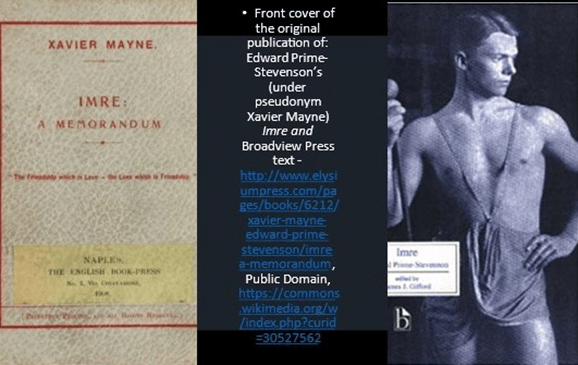
I have just finished the novel Imre: A Memorandum in an attempt to learn much more about how queer lives were treated in early writing of the period in which the term ‘homosexual’ was being elaborated into meaning. I hated it and was going not to blog ion it until I learned of the Charity Commissions decision to accept an application from the LGB Alliance. This betrays every principle of inclusion for which the word ‘charity’ at its best ought to stand. So I decided to widen the blog to show how what is detestable in Imre is precisely the repressed state of the gay community represented by the LGB Alliance. I wish so much the Charity Commission would reconsider support for a movement based on hateful exclusion not the widening of mutual understanding between diverse groups.
The world I recognised as a person engaged in gay activism in the 1980s and 1990s is changing fast as different forces come to the fore. Personally, I have watched with concern the growth of a group based on exclusionary principles from within the broad range of the inclusive queer community as it was then and is now. It was that broader range of community which was at the heart of the events of that community’s empowerment including the Stonewall uprising. The ideological mission of this exclusionist group (called the LGB Alliance to exclude the ‘T@ (for transexual) of the LGBT movement) is based on the selective exclusion of certain groups from the notion of gay identity and the lesbian, gay and bisexual community. LGB Alliance see community as an entity contained intellectually within boundaries within the concept of ‘sexual orientation’ which exclude diversities experienced around concepts of sex/gender. They express themselves in their website thus:
We believe that attempts to introduce confusion between biological sex and the notion of gender are harming LGB people. One way to protect same-sex attracted people is, for example, to encourage organisations to record numbers of LGB employees separately to numbers of transgender employees.[2]
The aim of LGB Alliance is and always has been to valorise the concept of ‘biological sex’ as a fact recording a binary division of human animals into male and female, thus making a statistical norm appear to be a record of ‘biological’ truth policed by psychosocial concepts of what is considered ‘normal’. In most of their popular statements the valorisation is reduced to one differential – the presence or absence of a penis being raised to a fundamental sign of that norm. The facts around variation in other sex-markers is relegated to discourses of the abnormal, disordered and/or diseased. It is a means of radical reaction to trends in contemporary biology that questions the hierarchy of signs used to determine gender and to enforce segregation, at the level of legal and socio-cultural action, on a community once united across diversities in which the relationships between sex and gender are seen to create fuzzy boundaries between the binary of male and female, so much so that it is seen as a series of continua across very different embodied and psychological markers of sexual identity, such as the presence and absence of breasts.
In the 1990s and now the gay community has been in some ways in conflict around some of these issues, although a iconic concept of a rainbow alliance of diversity has sought to illustrate the fact that difference is essential to identity, so much so that the latter on its own will always be a marker of some kinds of exclusion, the building of boundary walls between what is ‘gay’ and ‘not gay’, for instance. In the present day this tension has sought to establish itself institutionally and the LGB Alliance is the heir of strands at the margins of feminism, such as ‘radical lesbianism’ and ‘radical feminism’ (misnomers in my view) which have asserted that supporting the human rights of transgender men, women and non-binary people is harmful to gay and lesbian people. They claim that the right of men to love men and women to love women are threatened by ‘gender confusion’ because those sex categories are seen as less rigid than ideology and law can make them. But this is just to stand against the complexities of truth itself.
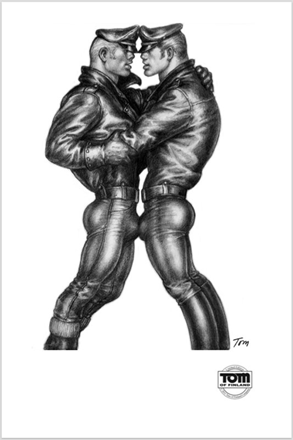
Some expressions of this at the level of icons occurred in the trend to the male clone in queer history and to rigorous sexually iconic expression of sex inside the gay community such as those of Tom of Finland and the cultural of cloning. Yet softer versions of such role-play have claimed radical potential, as in the tradition of ‘radical drag’.
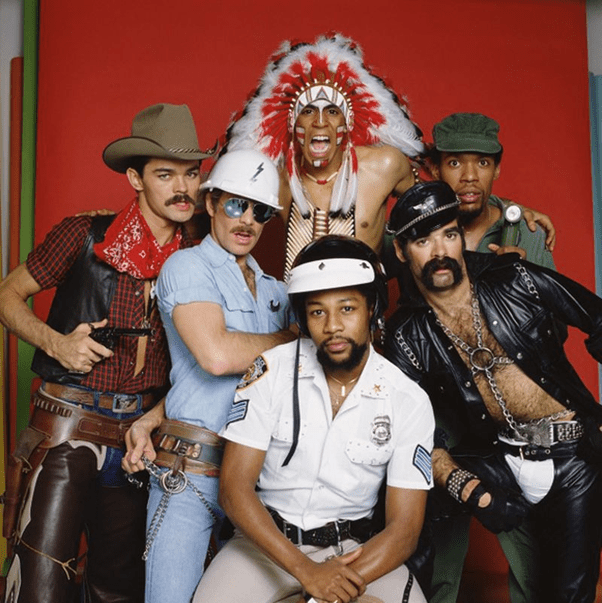
As a cultural icon, remember, these movements included the Village People (that link is to their beautiful video). But this was a stage in which the movement merely played at the range of role options opening up to gay people I believe. The Village People dressed in a range of masculine stereotypical costumes and enforced, as it were, our consciousness to recognises how much of sex identity is merely that – theatricality and another form of camp, the equivalent of ‘radical drag’ but more fun.
At this level of play, different belief systems between what constituted sex and what gender could cohere in a workable arrangement, even at the micro-level of personal relationships. Not so now, it would appear. Gender confusion ‘harms’ people whose romantic and sexual lives occur in single-sex we are told, although the harm tends to be unspecified except by very extreme analogies or false syllogisms, false in their premises as well as their logic, such as the following: All men are violent, All men have penises, People who have penises are all violent.
But unfortunately what LGB Alliance represents is not new. It was present in some of the political divisions of the male gay movement, though never quite as virulent or irrational as now in its defence of exclusive categories. It is understandable that male self-esteem – trained into believing that it can prove itself only through the ability to demonstrate male sex-markers, and to valorise them the more evident they are, both in the physical and psychological role. This is of course in part the source of the anxieties of men about penis size but also anxieties about muscular body cultures. It is not something likely to go away either as a trigger for intra-masculine anxiety or intra-masculine desire. But to call for support for this relational trait of some people in the queer community from the law, the operation of institutions and through powerful social taboos and sanctions at the level of social-cognitions is surely a massive betrayal of not only non-conforming people but of the science that show the importance of variation in the establishment of norms. Norms are meant to shift.
The quotation from Imre cited in my title is a fine expression of the degree of self-divided identity provoked by hatred sourced externally and internally to the person that has long troubled development in the gay community and its relation to heteronormativity. Some people see it as the source of the concept of homonormativity – a refusal to give up the stereotypes of sex lest we become strange to ourself, more flexible than we are comfortable with being with difference to norms in others or ourselves. Psychologically it is extremely reactionary. And Imre is a novel that expands and expands on this theme in its long discussions between two men who only gradually recognise each other as ‘homosexual’ and exclusive lovers.
Both men are named ‘masculine’ and their masculinity described through various selected traits of physical, and cultural items of clothing and how clothes are modelled. The later are made to appear more than just contingent to the physical: ‘The collarless, unstarched shirt … was unbuttoned at the throat: the sleeves rolled up to his shoulders, in unconscious emphasizing of the deepened suntan of his fine skin’.[3] Physical and cultural emphasise a visible masculinity varied only by racial characteristics; not in fundamentals but giving a kind or ‘orientalist’ edge to the American male’s desire, felt before it is known, for the Magyar characteristics of the Hungarian superman, who is the eponymous soldier of the novel, Imre. Race somehow has to get mixed into the broth as another apparently genetic basis of fundamental norms and will allow the narrator to identify true homosexuals (non-effeminate ones) as themselves a ‘Race, the Race-Homosexual’.[4]
I had been longtime enthusiastic as to Hungary and the Hungarians, the land, the race, the magnificent military history, the complicated, troublous aspects of the present and the future of the Magyar Kingdom.[5]
The need to focus on sex and sex characteristics – a troubled sexuality unable to accept that diversity is not only a fact but develops through pushing norms on to and into future emergent states – is stressed throughout the novel. Indeed the only equivalent in modern fiction I can think of is Philip Hensher’s A Small Revolution in Germany, about which I have already blogged. That latter novel also looks for its ideal of masculinity in the traits of some ‘other’ cultural background, although like Prime-Stevenson only in a white cultural background. The injunction and sanctions of manliness are asserted and their assertion frequently illustrated. Imre has just to hint that he feels he is merely ‘playing soldier’, in the manner let’s say of The Village People, when the narrator finds ‘himself voluble’ in his challenge to Imre’s desire to leave the army and become a musician: “… Imre! Imre! Instead be a man! A man in this, as in all else. You trifle with your certainty of a career. be a man in this matter!”/ He sighed.’ And to be a man is to conserve the status quo as ‘a prop and moral element in the State, …. Honour and country are eloquent for a soldier always’.[6]
It is no wonder than that feminised homosexual men are presented as a threat to patriarchy itself as the concept of the truly ‘Race-Homosexual’ is elaborated and grounded in biological fact:
… thousands, thousands, hundreds of thousands, of such human creatures as I am, have not in body, in mind, nor in all the sum of our virility, in all the detail of our outward selves, any open womanish trait! Not one! It is only the ignoramus and the vulgar who nowadays think or talk of the homosexual as if he were a hermaphrodite. … We plow (sic.) the globe’s roughest seas as men, we rule its States as men, we direct its finance and commerce as men, we forge its steel as men, we grapple with all its science, we triumph in all its arts as men, we fill its gravest professions as men, or we plan out its fiercest and most triumphant battles as men. …[7]
Sometimes I suspect that this is a passage from the ritual for admission to the LGB Alliance as written for the male counterparts of it by J.K. Rowling, rather than an outdated colonial-era novel written by a defender of the global patriarchal status quo. But there ya go! But to be serious, there is something that is deeply reactionary in all this. It is as if a contract were being made between gay men and the powers that currently be, that would trade for the freedom under the law of a self-constituting ‘Type’ of Homosexual (and ‘type’ is a word used in Imre for what the narrator and the Imre claim themselves to be).[8] the rights of those not tied to the maintenance of society as it is, those who challenge more basic social norms. For Prime-Stevenson these are those ‘homosexual legions’ of the unworthy that must be cut out of the ‘race’ in order thus to purify it:
… good for nothing except the fire that purges the world of garbage and rubbish! … the painted male-prostitutes of the boulevards and twilight-glooming squares! The effeminate artists, the sugary and fibreless musicians! The Lady Nancyish, rich young men of higher or lower society twaddling aesthetic sophistries, stinking with perfume like cocottes. …[9]
Is the race of homosexuals to be ‘gold or excrement’?[10] It depends on how well the golden few excludes people it has determined to be so much organic waste material. The rhetoric is that of the race purist, or at least the eugenics movement, and the ideology is that which roots itself in antagonism to the perversion of nature – marked of course by ‘confusion between biological sex and the notion of gender’ or the very existence of transexual life-choices. The language of exclusion has always unfortunately found a home in the heart of the oppressed and marginalised too, so complex and intersectional are contradictory are the parts and roles which make up identity truly understood.
I think Imre: A Memorandum therefore has things to teach the queer community and its politics. However we inscribe this novel in our history. It is NOT the first gay novel from the United States, for instance, though it is a definite advance on Bayard Taylor’s Joseph and His Friend of 1870 on which I have already blogged (use the link to read it) in that it explicitly stands against the choice of heterosexual marriage as a way forward for homosexual men. It is a psychological novel in that it uses Gothic motifs of closed rooms, corridors, doors and windows to symbolise the need for openness in men to each other in its extended metaphor of the Castle of Self.[11] Formally, its method of gradual disclosure of both men to each other follows a pattern of gradual permissions to each other to share their inner selves, and more importantly, in terms of the queer novel, the offer to each other of their external selves – their bodies. These are important themes since they locate the need for such strategies in the oppressions of a heteronormative culture with severe sanctions guarding its defensiveness to otherness of feeling, imagination or action. This, for instance is how it sums up the ‘special reserve’ of Imre: a degree of passing as that which he isn’t by adopting fictions of oneself that others wish to believe of you.[12]
The paradox of living to oneself while living with everyone, the doors of an individuality both open and shut. could no further go than in his instance.[13]
Yet for me the importance of ‘secrecy’ in the handling of relationships in the novel is part and parcel of its insistence on excluding the ‘loud’ and blatant gay man or one who refuses to conform when this is needed, at least outwardly. It is these latter people who are to be excluded because they lack the reserve which proves their sex and excludes those who will not conform to that ‘natural’ ordering of things in the binary divisions of persons into male or female. Of course gender theory will not quietly accept this binary as ‘natural’, ‘normal’ or even ‘biological’. All that is a myth of exploded folk myths that pass for ‘science’. Consider this tortured sentence capturing the empathy of one natural man, who is also gay for another such where knowledge of each other is lacking. What the narrator sees in Imre before they exchange confidence is the potential of:
… the deeply buried mystery of a heart’s uranistic impulses, the mingling in the firm, manly nature of another inborn sexual essence which can be mercifully dormant; or can wax unquiet even to a whole life’s unbroken anguish -![14]
This is the tortured reality of the LGB Alliance which enforces silence on exclusion on anything that challenges the notion of what it means to be a ‘man’ and not a ‘woman’. And it is gender theory that does precisely that – making the concept of ‘sex’ perceptible as more truly complex as an identity category than it seems to the eye primed by ideology.
Yours Steve
[1] Prime-Stevenson [ed. Gifford] (2003:86f.).
[2] From the mission statement of the LGB Alliance, an organisation that aims to exclude diversity from the range of possibilities associated with homosexuality and/or gay identity. Available at: https://lgballiance.org.uk/
[3] ibid: 111
[4] ibid: 86
[5] ibid: 48
[6] For the quotations from this exchange see ibid: 75 – 77.
[7] ibid: 85f.
[8] For type see ibid: 83
[9] ibid: 87
[10] ibid: 88
[11] ibid: 49 – 51
[12] ibid: 59
[13] ibid: 51
[14] ibid: 64
 Steve_Bamlett_blog