‘This was the burden of the soft ones: to suffer in all but silence because the whimpering that slipped through the lips was inevitable. … he cussed the heart that knew not how to protect itself from the rift’.[1] Redeeming the ‘soft ones’ from the hard and fractured history of oppression and resistance. Notes on Robert Jones Jr. (2021) The Prophets, London, riverrun.
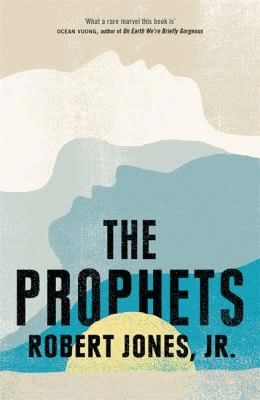
Jones’ first novel has largely been well received and warmly praised, although this blog concentrates on an exception to the praise in many reviews that seems to me symptomatic of an ideology in Western writing about what qualities characterise best practice in written prose. The praise Jones receives is however just and points out innovative strengths in the work. For instance, its narrative and lyrical presentations of ‘the evidence’ of the queering of norms as much longer tradition within the history of African governance and domestic life are applauded and likened to Toni Morrison as well as to African foundational myths of the relationships between power and love. Again applauded is its attribution of many of the harder and more violent aspects of the culture of resistance to the brutality of white supremacist ideology as a powerful but not an exclusive framework of explanation of this hard view. There is even more wisdom about these issues yet to be unearthed in this wonderful myth-busting and myth-making novel, wherein black culture is translated by white people inti their own containing principles of entitled ownership of culture.
Witness, for instance, amazing perceptions that sometimes arise from the development of complex and sometimes difficult metaphors that people derive from their own awareness of the qualities of their oppression. I cannot, for instance, easily develop the ideas in the quotation below but they are clearly central to the author’s project. Another reason I cannot develop them as thought, however, is because the metaphor is pre-rational, deliberately more expressive of the phenomena of cultural oppression than aiming to build a consistent explanatory discourse about the genesis of inequality of power and relationships of oppression between races.
… he didn’t have to be able to read to know toubab were blank pages in a book bound, but unruly. They needed his people for one thing and one thing only: To be the words. Ink-black and scribbled unto the forever, for they knew there was no story without them, no audience to gasp at the drama, rejoice at the happy ending, to applaud, no matter how unskilfully their blood was used. [2]
For me, this passage is more about first groping to find a perception and then an expression of what it feels like to be dominated by a culture that feels as if it can not only own you and the meaning of your experience but also interpret that experience to meet its own interests. We see this again in the relations between a white gay man and his relations to black ‘models’ in Timothy, the slave plantation owner’s son. He uses apparent artistic ends to justify a selection of the black man upon which he imposes his open version of queer sexuality. Jones presents art as it might have felt to its nineteenth-century black subjects. When Timothy first chooses Isaiah as his artist’s model (as a first step to choosing him for his bed) other potential black people show the suspicion with which such a move should be met:
Some of the other Negroes watched from behind trees … . But they kept their distance. Timothy saw them. They stayed behind as if fearful that they would get sucked into the painting and, perhaps, have to contend with two places from which they couldn’t escape’.[3]
But all of this is not my main interest in this piece. I intend to try to show how my response to the writing in the novel, with its liminal or fuzzily edged metaphors differs from that of recent critics. My suspicion is that those critics speak from within a domain limited by the consequences of an ideology of writing inside modern literary criticism and craft wisdoms. That ideology I’d assert, since an intention to ‘argue’ would set up too much of a challenge to a lone literary wolf like myself, is unable to respond as fully as necessary to innovations in queer myth-making, of which Jones is a new master. I will start with an example of a good review of the novel from an exceptional critic, Holly Williams, which nevertheless contains a restrained expression of exception taken to the novel’s prose style.
Jones has a knack for a proverb-like turn of phrase (grief is “wet in the eyes, trapped on the tongue, broken in the palms”), and his descriptions have a rich, distinctive vividness: backs are “juicy with the marks left by whips and disapproving glances”; wildflowers burst in shades of blue “perfect enough to hurt feelings”. The same layered detailing is applied to the characters’ emotional and spiritual lives – memories and magic, visions and voices thicken their experiences, and make his storytelling ripe and heady.
At times, this can be overdone. There are too many convoluted metaphors tangled in their own imagery. Its lustrousness is his writing’s great strength, but there are still places where less would be more.[4]
The statement that ‘less would be more’ is an important ideology in contemporary writing. For, although Williams is right to characterise the prose’s oddity in the way she does, I think describing it as ‘layered detailing’ is inaccurate. Indeed if anything it is characterised by something that is the opposite of well-observed detail, even in the examples she quotes. Its images combine together with too little attempt to achieve precision of writing with either vividness (that awful word), sharpness or precision. Nowhere do we get an imagery based on achieving the effects of an ‘objective correlative’ in T.S. Eliot’s, terms. Williams makes the point by talking of written sentences ‘tangled in their own imagery’. This might suggest that metaphors implicate each other too much and that therefore the boundaries between each metaphor and its particular effect on meaning and emotion is too vague. The colous of blooms described as bursting ‘perfect enough to hurt feelings’ is purposefully imprece. The objects in are never more than on the threshold of becoming. Their liminal life hanging between visual, animate, and emotionally subjective descriptions is in the manner of what used to be called ‘purple prose’. But a rich purple is the colour of Maggie’s and Samuel’s skin – and perhaps the only sign of their suspected consanguinity.[5]
Purple is an important colour in this novel, as are boundaries that get crossed, tasks that get ‘overdone’, as if they had some other meaning than that in their original intention. In brief, I think I would say that this characteristic of Jones’ language is totally appropriate to the liminal phenomena he describes – objects that might be subjects, outsides that are insides, darks that are lights, nights like days and the dead that are alive and vice-versa. The quality of purple prose is based on its refusal to be true to objects or accept the myth of objective vision, always seeing things in the act of becoming another thing – in meaning, action, or emotion. It is not only that phenomena are liminal, or because their fuzzy edges refuse the command not to blend with something other so that their imbalance between the effects and intentions of appearances and actions made by characters. Let’s take as an example from an early description of Ruth Halifax. Missy Ruth is the mother of the white slaveowner and the surname is primarily that of her husband, Paul’s, mark of self-possession, of course. Her first visit to the barn contains, but then fails to contain fully, the odd goal of her wandering; two young men in a space not, for instance, uncontainable by the word ‘barn’, just as the barn cannot contain entirely the ‘forbidden things that light couldn’t bear’ like the sexual nature of this white woman. The barn – down to its constituent objects – blends into its metaphors and similes:
Ruth then came upon the barn doors – the lips – which were ajar like an impatient lover or a distasteful hunger, and the glowing was in there. All she saw was the radiance that contained itself and also become part of the inner landscape. As she inched closer, she saw that dim shadows had also made themselves a part of the quiet festival hidden in plain sight. She touched the door, expecting it to have the moisture of bated breath upon it, but while it was warm, it was also dry.[6]
That the perception of the barn door as somatic – as lips on which the breath of anticipation and stimulated excitement sits – continues uneasily through that paragraph is obvious. And it is so, not just because we are used to seeing vision as a means of projecting the inner vision or point of view of the character, because Ruth’s sexual fantasies about black young men are clearly not entirely available to her full consciousness either here or later when they ought to be obvious when she imagines the curves of the slave Samuel’s young body not only clothing the night (that ‘wore him well’) but her own cold body: ‘wearing Samuel closely, like a shawl or beaded necklace’.[7] Why is that necklace ‘beaded’? In one sense this exemplifies the ‘layered detailing’ mentioned by Williams. In another it is a hard moment where the metaphor tears itself from dependence on simple meaning or emotional simplicity, just as Ruth’s emotion and her whole body, even the sag of her breasts, ‘had to let loose’ from the stricture of the status of a white woman and the influence of her husband and her husband’s mother, Elizabeth; the latter in Ruth’s consciousness has become the identity of the plantation and ‘Big House’ she titularly now rules.
Only Ruth see the plantation under the name of Elizabeth. For others it is more appropriately named ‘Empty’, and this play with names is yet another play with the potential of things to have metaphoric status as a place where slaves are stripped of independent vision and where Isaiah, on first sight, ‘couldn’t make out anything but a dim light from the Big House’.[8] Sometimes these words for things like a plantation owned by the Halifax family describes feelings and thought. This is my favourite example since it foreshadows the cognitive and emotional failures that make Samuel a man full of indescribable potentiality for action: ‘Empty was all Samuel had ever known’.[9] It is this emptiness that Isaiah fulfils. Samuel’s days ‘weren’t worth delineating until that boy came, the one with the dry lips and skin as black as the sun could make it’.[10] Isaiah fills Samuel too with his knowledge of Samuel: ‘somehow Isaiah still knew. knew him, more like it’.[11] And this filling is semi-sexual, a kind of hardness injected within Samuel.
Look, for instance, at this play with who was aware that Samuel’s trip to his master son’s bed bore not only sexual but the murderous intention of an axe. This sentence is probably the most liminal of all in the novel and meaning multiply out of evoked general contexts implied by a singular one. Thus to describe the hardness of the handle of an axe, that he takes with him preparatory to his assignation with Timothy, pressing in on his back, Samuel evokes the presence of a male lover, hard with desire behind him: ‘Samuel felt it then, stiff against his back, not unlike a lover, unyielding, too close, obliging or deadly depending on the wielder’s intention’.[12] It is not just that the feel of an axe and phallus pressing on the body can be expressed in the form of a near simile, but that each object exchanges with the other variously the qualities and meanings of their multiple usage. Most notably both axe and phallus can act as a weapon or symbol of some temporary or permanent power over another.
Personally, I am happy to see this latter reading as purely subjective in origin. After all, what act of vital reading isn’t a deep mining of the reading subject’s cognitive, emotional and physical experience? Samuel’s association with an axe partly rest merely on its use as a sharp weapon (in lieu of a scythe) by which he prosecutes a final sentence on a white queer man’s attempt to entitle himself to the meaning of the queer sexuality between ‘purple’ Samuel and his black lover.[13] But use of an axe in life-taking violence also has become associated in the eyes of his community with the more evident masculinity, with what I will call his ‘hardness’. Maggie sees Samuel in the vital transition to masculinity (‘Boy now Man’) since he, not Isaiah, is the ‘one with an ax (sic.)’, and would be ‘firm’ in killing the pigs he also cared for.[14] In an even better comparison between Samuel over Isaiah, the axe too appears as one of a repertoire of hard inarticulate actions by which emotion is dealt with that distinguish a ‘man’ from his tender beginnings. It is in that tender domain that Isaiah lingers and from which space the latter calls to Samuel to likewise open himself to like tenderness.
Even in the dark, he could feel Isaiah’s calm anticipation, its steady, relentless tugging, coaxing him to open himself up yet again. But had he not opened himself up wide enough? No one else had known what it was like – what it looked like, felt like, tasted like – deep inside of him but Isaiah. What more could he give that wasn’t everything already? He wanted to hit something. grab an ax (sic.) and hack at a tree. or maybe wring a chicken’s neck.[15]
Th binaries here involve transitions between what is external and what is internal, what is closed and what is opening up, what is freely given up subjective feeling and what is a hard and decisive action. All involve relationship, although here without conscious purpose, between a man and an axe.
This association takes me to my main point that queerness in this novel is a disruption of the boundaries between such boundaries – opening up what feels satisfied to be closed under norms of behaviour, softening what would prefer to not give itself away offering only a hard surface to the view, And it is this binary of soft and hard that resonates with me in the novel and makes me feel that this novel opens up a world uncomfortable for some. How, for instance do we read the expression of Isaiah’s knowledge of the inside of Samuel? It is not an abstracted knowledge but one located in senses of sight, touch and taste. It registers moments when self knows another self through bodily sharing of the outer AND inner body, through penetrative feeling and tasting. For a queer male it is highly sensual form of knowing that is read here. Can I, as a reader, know how this is read in a heteronormative context by a non-queer male?
Softness is, in heteronormative paradigms, associated with femininity or feminine responses as hard is with the cognate binary masculinity. Even when ‘softness’ occurs in men, it is said conventionally that such men are showing their ‘feminine’ side, something Jung attempted to raise to the level of a modern myth to serve his time. To be totally honest as I write, I struggle with how the novel deals with this notion of softness partly because so much of my response is torn between the way it uses binaries, like soft and hard, to define a normative against which queerness is a subversion and modification. In these subversions both sides of the binary are complementary and necessary. But I also in part see the treatment it as mounting an ethical case for a preference for a project in which men, especially queer men, are urged to develop softness. Take, for instance that climactic moment where Isaiah realises that in a society enslaved softness adds to the pain of suffering, whether physical (that of the gash cut into his skin) or emotional (that of solitude) – it is in my title:
He knew that the pain would be harder and harder to bear. This was the burden of the soft ones: to suffer in all but silence because the whimpering that slipped through the lips was inevitable. Samuel must have been right he cussed the heart that knew not how to protect itself from the rift.[16]
Isaiah concludes, since this is surely his point of view, that Samuel is right about the need to harden to oppressions of all kinds. But is that really the ethical issue in the novel? Samuel has by this time dead. Had Isaiah chosen a ‘hard’ response to the oppression that cause his flight from Empty his chief option would be metamorphosis to an emotional stone that in its physical sense would cause him to sink to death in the river he must cross to any, even a limited, kind of freedom. Is being stone to circumstances a real option? That is the question of the chapter named ‘Isaiah’ near the end of the novel:
Be a stone. Please be a stone.
That was what some rocks said to some feathers, to the dandelion-wishes that floated about minding their , to the dandelion-wishes that floated about minding their own business before coming down slowly to land in some meadow and, after a time, take root. They wanted soft things to harden, for their own good, for their own good. But that left no consideration for the traveler (sic.) who had to walk over the terrain, left for no comfortable place to step. And Isaiah wanted to be that for Samuel.[17]
The entire paragraph is difficult to adjust in either its logic or tone. Take that ‘But …,’ in the last sentence. Surely this contradicts the sense we are building in the paragraph since it is only if the soft soles of the feet harden that a comfortable place could be found. The conjunction therefore to be expected is ‘And’ not ‘But’. I would suggest this uncertainty lies in the fact that the prose registers the complexities that remain in Isaiah’s desires, in what he ‘wants’ to be for Samuel. Nothing is finally decided about this question in this chapter and I would assert, since I cannot argue, that this is an important refusal for the socio-emotional lives of queer men, who will never transcend the fact that men are socialised to respond with hardness to oppression. This is especially the case for queer black men in a society that remains hard and racist in its proclaimed entitlements and where white queer men become part of the problem of oppression and not an answer, as the role of the very naïve Timothy, in this novel, shows. And the prose’s purple softness – evocative of apparently irrelevant contexts such as the vision of a child of either gender blowing the winged seeds off dandelion clocks, is part of this paradigm wherein a hard clear logical prose is eschewed for a softer purplish liminal quality. Indeed I think the project extends historically to women, who have been urged to distrust softness in some forms of militant feminism as a symbol of collusion with patriarchy, a point to which we’ll move later in considering women, especially black women, in this novel.

But first I think I need to establish that the dialectic of hard and soft is actually prominent in this novel, and in relation to sex/gender. Samuel is the character in whom this dialectic is established, although it is established relationally, in comparison to Isaiah, and in the following example from the latter’s perspective on the two men’s different views of the appropriate response to thinking:
… about the ways in which his body wasn’t his own, and how that condition showed up uniquely for everyone whose personhood wasn’t just disputed but denied. … Matching hard for hard did nothing but create wreckage. But being soft, while beautiful, was subject to being torn asunder by the harder thing. What other answer was there then but to be some kind of flexible? Stretch further so that there was too much difficulty in trying to pull you apart?
Samuel was a hard thing. … But some people thought hard was the answer and believed that rather than bend, you had to try to snap them in half because they were confident that you couldn’t.[18]
This is a crucial paragraph and it is part of the manner of how this novel works that when Samuel does rebel in the most violent of ways, this rebellion is expressed with the key word associated with inflexible hardness here: ‘Samuel snapped’.[19] But notice also how this passage takes pains not to tie the comparison of responses to oppression just to slavery, that is named as such and how ownership is consequently metamorphosed into a condition of any invalidated group in an oppressive society, whether queer or black people, or, I would also say, since this is a feminist position I understand, women. What we are left with is a dialectic that is the dilemma of enacting liberation in ways that are relative to each ‘soft’ or ‘hard’, where the ‘hard’ option mirrors the hardness and weight of oppression of the original homophobic, racist or patriarchal society, which will seek to ‘tear asunder’ that which opposes it if it is thus enabled.
Hardness is a male characteristic in heteronormativity, associated with other extreme qualities such as loudness. At base it also references a dominant phallocentric discourse, where male physical sex is associated with a hard phallus Jones even jokes openly about this when he describes Isaiah’s ‘gentle nature’ being forced to have reproductive sex with Essie, a female slave in ‘The Fucking Place’:
He tried, awkwardly, to put his limp self into her in-between that in no ways welcomed it, but they pretended they were full-scale rocking anyway. Hurt hard when somebody make you fuck your friend, they both thought later.[20]
Samuel at one point accuses Isaiah of weakness in delivering judgement against the toubab and being, therefore: ‘too much like a woman’.[21] Within a page of this ‘accusation’ Isaiah rightly turns back on Samuel the implication that women, especially black enslaved women are ‘weak’, except in their construction in white ideology. In doing so he must face a choice of returning arguments to Samuel in a soft or hard voice. The term used to characterise the hardness of conventional male argument is, appropriately, ‘assault’.
Samuel had never spoken to Isaiah in that tone before … . Isaiah took a deep breath, looked down at the ground, refusing to return the volume that had assaulted him. Instead, he spoke quietly.[22]
That power and strength is modelled on a paradigm of masculinity is powerfully resisted here. To be quiet is another ‘soft’ gesture, as in the production of soft sound in speech, and these binary contrasts hide a range of variation that the normative world refuses to see. For queer readers, this novel surely mythicises dilemmas by which males socialised in a heteronormative world negotiate both their self-perceived nature and/or preferences between aping hard men or inventing or prioritising softer alternatives. It is not just that Samuel’s insists, almost boasts in order to increase his self-esteem that he could if he wanted: ‘Make it with all those womens’.[23]
The ethical problem in this novel is, I think, not that men make a choice of being ‘hard’ or ‘soft’, in acts of rebellion, love or other interaction, but that they do not make secret or private their ability to value softness in themselves and the other, irrespective of sex/gender. Samuel turns loving or tender attention to him away only when it is visible to others: the refusal occurs as a repetition of ‘Not in the light’ twice in one public chapter.[24] Only in the dark, and largely only behind the walls and shadows of the barn do Samuel and Isaiah encounter each other gently:
They were in the barn and it was dark. Neither felt like lighting a torch or lamp so they just pushed out and covered it with the piece-cloth blanket that Be Auntie had made them, … Samuel exhaled and Isaiah broke the quiet with “Yessuh.” And that hit Samuel’s ear differently then. Not a caress exactly, but still gentle… . Meanwhile, Isaiah turned on his side to face Samuel and all his soft parts were open and free, tingling without shame. They looked at each other and then they were each other, there, both of them, in the dark.[25]
In an interview with Scott Simon, Jones has argued that the barn represents a ‘safe space’ for the exploration of queerness. But it is only safe because their love is heavily disguised and hence private. It even appears to them, well I would say only to Samuel, as a source of autonomous human action:
… they’re in there working, taking care of the animals and such, then no one has to worry about what else they’re doing. But in their own autonomy, they’re able to take back some of their humanity by showing each other that gentlest and kindest versions of love.[26]
It is not an ethical purpose of this novel, I think, to show acting in a ‘hard’ way is condemned in the oppressed as they fightback against oppression. It is still true as Isaiah realises after Samuel’s death that one should cuss ‘the heart that knew not how to protect itself from the rift’ caused by oppression.[27] But it is also the case that maintaining the pretence of heteronormative distributions between two ‘sexes’, supposedly as biologically determined traits of sex, is counter-productive in achieving change, not least in the socialised selves damaged by such ideologies. The crux of the matter lies in the beautiful passage immediately below, where the openings of the body to a lover are valorised, though Samuel still senses danger in them. For me this is as much about how queer men learn a tender sexual interaction (yes, I do in part read the openings and widenings below like that) between bodies, mediated or not by bodily orifices, as it is about sexual politics or the dangers of an Amos-like white man’s religion which, ‘called the color (sic.) of the universe itself a sin’.
This … made it hard to open your heart to feel a sense of loyalty that wasn’t a strategy. …
But Isaiah.
Isaiah had widened him, given him another body to rely upon, made him dream that a dance wasn’t merely possible, but something they could do together, would do together, the minute they were free. A dreadful thing to get a man’s hopes up that way. Hope made him feel chest-open, unsheltered in a way that could let anything, including failure, make its home inside, become seed and take root, curl its vines around that which is vital and squeeze until the only option was to spit up your innards before choking on them. Foolish Isaiah.
But how tender his affection.
This passage speaks to me of the ways in which a negative sexual politics has turned upon the imagery of sexual love itself especially in that awful metaphor of the way emotion becomes visualised here as something that might ‘spit up your innards’. Never has orgasm been imagined with such a level of twisted false awareness. Yet the passage is beautiful because of the ambivalence which balances this imagery with self-questioning.
If there is hope in this novel it is a sly hope that tries to see what Isaiah and Samuel actually do in the dark shadows of the barn, which is variously presented to us in voyeuristic scenarios in which different people, women and men, secretly spy on the couple. Rarely do they see, as we do once in these sentences, their bodies in contact as a kind of child-like play: ‘Finally, their navels touched. Breathing into each other, their bellies fluttered at the same time; sweaty, every time they inhaled, one’s flesh would peel from the other’s and it tickled. They laughed quietly’.[28] Compare this with what Maggie sees from her secret purview (‘twisted together as earthworms’ and grunting pig songs’).[29] Or with Amos’ extremely twisted heteronormative-religiose version of the same:
Man on top of woman: that wasn’t just Christlike … there was no suitable name for whatever it was that Samuel and Isaiah were doing, at least none that he could remember. … They weren’t women. Women were weak , and by God’s design. Nevertheless, by carrying on as though at least one of them was female, they threatened to only further diminish what Amos imagined was already diminished to death. For Samuel and Isaiah to wear their sex this way – dewy, firm, trembling, free – even under the cloak of night, was folly. …[30]
That Jones considers Amos to envy the two young men is clear to me if to no other reader. Amos reminds me of Tiresias concluding how much greater women’s’ sexual pleasure is than that of men, already a kind of cultural play at imagining the male narcissistic dynamics of loving a man that might drive many a ‘normal’ urge. In the end, I believe that slavery itself, as real as the barbarities it describes are, is also a metaphor for the bondage to any number of intersectional acts of oppression, complex and interweaving. The play in the novel in which men seek their African names as a means of escape from their imposed names in English is because the novel seeks an open alternative community for so many people in so many ways. Belonging to a larger network of persons can be little more for some than a sign of ownership by something alien like a culture entirely antagonistic to you, even if those names are in a way privileged as those of prophecy as are Samuel and Isaiah’s names. But it applies too to Ruth whose name is that imposed on her by her husband’s family. She alone knows Empty as the Elizabeth plantation, the name of her husband’s mother. Yet in more than one sense it is in fact only Empty’s space she occupies.
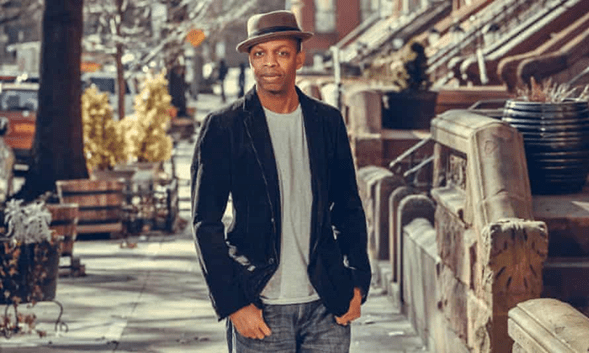
In a novel in which authorial empathy abounds, even empathy to the slaveowner Paul, which Jones I believe claimed to be the most difficult character to write, and his half-brother James, freedom of action or even, in the end, security is hard to find for anyone. It is easy to oversimplify the novel in order to give it a basis in rational argument about queer culture. González, writing in The Los Angeles Times, does precisely this I think when he concludes that the enslaved male lovers represent ‘conversations (and arguments) over timeless questions about agency, freedom and survival’ that ‘resonate even with the present moment’.[31] But this bloodless a-sensual assessment of the novel is not the one I read or recommend to other queer, and perhaps non-queer, readers.
This is a very great novel.
Steve
[1] Jones, R. (2021: 370)
[2] ibid: 370
[3] Jones. op.cit1: 188-190
[4]Holly Williams (2021) ‘The Prophets by Robert Jones Jr review – outstanding debut’ in The Guardian
Mon 4 Jan 2021 09.00 GMT Available at: https://www.theguardian.com/books/2021/jan/04/the-prophets-by-robert-jones-jr-review-outstanding-debut
[5] For example, the purple skin of Maggie’s breast hides the murderous presence of poison from white families who use her as wet nurse (ibid: 31); Samuel compared to Isaiah is: ‘The purple one, not the black one’ (ibid: 93).
[6] ibid: 132
[7] ibid: 135
[8] ibid: 12
[9] ibid: 299
[10] Ibid: 300
[11] ibid: 298
[12] ibid: 297f.
[13] ibid: 311f.
[14] ibid: 92
[15] ibid: 20f.
[16] ibid: 370
[17] ibid: 360 (Jones’ italics).
[18] ibid: 222f.
[19] ibid: 311
[20] ibid: 44 (Jones’ italics)
[21] ibid: 106
[22] ibid: 107
[23] ibid: 111
[24] ibid: 18, 23.
[25] ibid: 19
[26] Scott Simon (2021) ‘Love And Hope Are At The Heart Of The Prophets’ Heard on Weekend Edition Saturday
January 9, 2021 7:52 Available at: https://www.npr.org/2021/01/09/954501970/penguinrandomhouse.com/books/622773/the-prophets-by-robert-jones-jr/
[27] ibid: 370
[28] ibid: 216
[29] ibid: 36
[30] ibid: 74f
[31] Rigoberto González ‘Review: A striking debut novel imagines two enslaved men in love’ in The Los Angeles Times Dec. 29, 2020. Available at: https://www.latimes.com/entertainment-arts/books/story/2020-12-29/review-a-striking-debut-novel-imagines-two-enslaved-men-in-love
 Steve_Bamlett_blog

Thank you for this informative article.
LikeLike