For further reflection based on Clegg’s autobiographical work see https://stevebamlett.home.blog/2020/11/28/moral-vision-and-autobiography-seeing-selves-differently-for-the-first-time-thecleggagency/
Reflecting on the moral life of Joe Lopez. ‘She thinks how lonely his life must have been, how few skills he had to interact with people he loved or to navigate a world where he was, if not invisible, translucent enough that people looked through him. …… Lupita understood some of what he must have felt. She was a necessary interaction for most of the people she encountered each day, not a desired or chosen one’ (my emphasis).[1] Reflecting on a thought on the nature of complex moral empathy in Bill Clegg’s (2020) The End of the Day London, Jonathan Cape. @TheCleggAgency
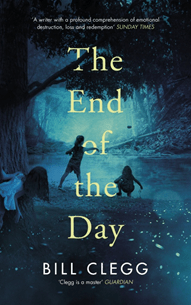
This isn’t an attempt to appraise this novel by Bill Clegg, but to respond to his moral imagination.

The phrase ‘moral imagination’ seems an odd one. It is rather old-fashioned perhaps – as if an attempt to invoke the achievement of a classic English novelist such as Jane Austen or George Eliot. The achievement of moral imagination at its finest is usually, rightly in my view, attributed to a passage from George Eliot’s Middlemarch. In this passage the authorial voice generalises the problem of the invisible, inaudible and sometimes unfelt ‘tragedies’ of which ordinary life would seem so full if our moral perception were sensitive enough. A S Byatt has argued that skill in handling authorial voices form ‘part of a wonderful ability to move us with generalisations’.[2] And a moral imagination must involve developing a reader’s moral imagination through sense perceptions that make general points about our common sentient humanity. Perhaps grasping such sentient humanity as a communal and shared refinement of our common sense organs is necessary for moral action. Because to be moral we need to be able to feel sometimes for those people, who might otherwise repel us, such as that dry stick of a man, Casaubon, the impotent scholar. Let us look at two related quotations from George Eliot’s (1871) Middlemarch.
That element of tragedy which lies in the very fact of frequency, has not yet wrought itself into the coarse emotion of mankind; and perhaps our frames could hardly bear much of it. If we had a keen vision and feeling of all ordinary human life, it would be like hearing the grass grow and the squirrel’s heartbeat, and we should die of that roar which lies on the other side of silence. As it is, the quickest of us walk about well wadded with stupidity.
________________________________________________________
We are all of us born in moral stupidity, taking the world as an udder to feed our supreme selves: Dorothea had early begun to emerge from that stupidity, but yet it had been easier to her to imagine how she would devote herself to Mr Casaubon, and become wise and strong in his strength and wisdom, than to conceive with that distinctness which is no longer reflection but feeling–an idea wrought back to the directness of sense, like the solidity of objects–that he had an equivalent centre of self, whence the lights and shadows must always fall with a certain difference.
Chapters 20 & 21 George Eliot (1871) Middlemarch
The triumph here, as Byatt says, mainly of the first of these quotations, is the imagination of a ‘we’ and ‘us’ that can bear being seen as stupid and, as yet undeveloped, because of the empathic grasp of the need for some moral stupidity in all of us, however intelligent, if we are to get through life. As Byatt also explains, the students she taught this novel to often felt uneasy about the authorial voice, seeing it as a limitation.
Modern novels are often predicated on this view of the authorial voice as an unnecessary or even ugly intrusion. It breaks the forever present edict, often extending to quite precise instructions to new writers, to ‘Show not Tell’ their readers about the lives of their characters. How then does the modern novel develop commonalities between readers and the fictional selves the author wishes us to see as facing common problems of moral judgement. I want to examine this by showing how I think Clegg, a literary agent himself and advisor to novelists, faces when guiding his readers to recognise and evaluate maturely the sources of abusive, repellent and morally ugly behaviour that has become characteristic in a character like Casaubon. I will dwell on one of the many fathers playing minor roles in The End of the Day but with devastating agency, who are evaluated, often via the relational perspective of their daughters or daughter-substitutes.
My focus is the migrant Mexican handyman and gardener of the rich Goss household, Joe Lopez. But Lopez himself becomes a key agent character in this novel firmly set in the borders of the United States of America (USA) only by virtue of being accessory to the agency of another father-figure, the employer, who fixes a ‘green card’ for the Lopez family and who will become its shadowy ghost progenitor in more ways than one. He is the father of the novel’s main protagonist White Anglo-Saxon Protestant (WASP) female figure, Dana Goss. In reading this some basic knowledge of the nature of Mexican migration patterns helps a reader but in Trump’s USA, such knowledge is at a premium.

Joe Lopez is brought into the novel only because his presence and legitimization as a citizen of the USA is necessary for Dana’s mother to secure the trusted domestic services of his wife, Maria Lopez. Dana’s mother, like many WASP women has a problem in getting reliable servants young enough to run their domestic lives. When WASP mother faces a ‘bad run with housekeepers and maids in the city at the time’, she requires her husband to act decisively.[3] Characteristically of a good modern novelist, Clegg does not tell us how to think about the power of the senior male Goss paterfamilias but shows us where and in what he fails as a moral agent in an immoral world in which we choose whether or not to collude. Dana remembers her father:
… tell a colleague who’d come their apartment for drinks that not since the days when staff was shipped from Africa had anyone gone to the lengths he’d had to go to in order to employ the Mexican family his wife had become fixated on.[4]
This perfectly exemplifies the art of ‘showing’ rather than ‘telling’ at its best. Nowhere are we told that Goss senior behaves quite uncritically and unreflectively with the entitlement of a white racist paterfamilias. We are shown an instance of his behaviour through the imagined viewpoint of his, at the time, young daughter hearing the most apparently inconsequential conversations between her father and an unremembered, by name at least, work ‘colleague’.
Dana’s viewpoint acts to mirror the precise language that will, in the eyes of a reader, silently frame her father’s moral failures. Even the singular tense of the passive verb attached to the term ‘staff’ shows that this man reduces persons to class and role cyphers, wherein the acquisition of slave labour (‘from Africa’) can be equated with the exploitation of the poverty and marginalisation of poor and involuntarily divided Mexican families. The power of the sentence in a novel lies in the readerly intuitions it demands.
Mr Goss’ motivation to tell the story at all has to be intuited for instance. As I read it, I imagine that motivation to be the elder male Goss’ felt need to illustrate to his unnamed audience the ways in which he has been ‘forced’ to bow to the whims of his ‘demanding’ WASP wife and her, in his judgement, characteristic ‘fixations’. Illustrating himself as prey to what he sees as female irrationality, he will show how he responds to given conditions of the scarcity of domestic labour for the WASP middle-class family by using the relative poverty and powerlessness of migrants to appropriate that labour. The equation of that poverty and powerlessness with an implicit theory of slavery, colonialism and racism is clearly an equation a male WASP like Goss takes up easily from his immediate hegemonic class and race culture.
A question arises about how this use of SHOWING the moral qualities of Goss might differ from telling us about them. Some readers will continue to insist that the political reading comes from a subjective link, or assumed cultural bias, of certain readers, probably characterised by the current right-wing social media commentators as WOKE readers. Yet literature surely does not work that simply. Just because there is no voicing of authorial intention, as in the George Eliot example above, does not mean we cannot intuit such intention from objective characteristics of the writing.
In my personal view, I feel comfortable in stating that we KNOW that Dana Goss’ father is being critiqued here because of the writer’s choice to mediate the conversation through his daughter’s perceptions. This allows us to see hear the linguistic choices of her father and to intuit a difference of attitude to such choices than that made by Goss Senior himself by the mere fact that Dana remembers these words so well and selects them from her father’s discourse to illustrate in her mind the essence of the matters relating to the employment of migrant labour by white America. Critical attitude need not be spoken if it is potentiated, as it is here as a contest of values around socio-political behaviours like employing personal servants.
In effect the relationship between ‘I’, naming the agency (spoke or unspoken) of the writer and ‘us’ (the writer’s communal relation to an audience he or she claims to understand) because even when naming the point of view upon events, differences of view are forever potential – how a daughter sees her father and how that view develops for instance.
This is even more pertinent when we consider how the moral evaluation of Joe Lopez occurs in the novel, as he begins to be differentiated from the ‘type’ of the Mexican migrant, as seen by WASP USA, in the early passage cited above. Joe is after all a figure of patriarchal power to his own subordinated family as Goss, or even Eliot’s Casaubon. And more like the latter than the former (since Goss emerges in the novel as a sinister social and sexual abuser) he is also vulnerable in ways that Clegg wants us to be aware of and take into mitigation, just as George Eliot mitigates the judgement of the most evil act of Casaubon’s life.
Joe is an abusive husband and father, his actions rooted in a culture that is thoroughly sexist or patriarchal. The point is made continually. So dangerous is Joe that his daughter (he has two of course), Lupita, must become, we are told, ‘a scholar of [his] sleeping and eating and drinking patterns, all of which determined his moods: sentimental and tender, …; or quick-tempered and violent, …’.[5] This man is both sentimentally self-unaware and dangerous, not least in his abuse of alcohol. Lupita’s behaviour however is not offered to us by Clegg as being easy to judge. There is as much love in the relationship in the sharing of the ‘sentimental and tender’ as there is danger in his gendered violence. The sentence I cite above is best seen in full, because of the ingenuity of the unusual periodic sentence structure in which authorial agency is most easily seen. So here it is in full.
Lupita was a scholar of her father’s sleeping and eating and drinking patterns, all of which determined his moods: sentimental and tender, like the night before at Hatch Pond when he puffed on his pipe and spoke about his first year in Florida living six guys to a room and working fourteen-hour shifts at the fern farm in Ocada, how much he missed his family then; or quick-tempered and violent, as he was less than a week ago when her mother discovered she’d left her wallet at the grocery store. Without a word he grabbed a jar of olives and threw it across the kitchen at her where it cracked against her hip and she screamed and fell to the floor.[6]
The distribution of the events across two sentences is itself interesting. The second sentence, whose subject is clearly Joe, even if told from the physical perspective of his daughter at the margins of a family conflict, elaborates too the quick-temper and violence of an abusive and controlling male drinker. This Joe focuses his anger on the female objects who stand for his equally powerfully loved family from whom he been separated in the past, and thus ‘missed’. But that violence is absolute in its own sentence. We know it is isolated thus so that it cannot be entirely mitigated by the knowledge of Joe’s difficult life as the man of a divided migrant family working impossible hours for poor reward and hence in appalling conditions and his no doubt self-perceived love for his family. The subject of the first sentence is after all not Joe but Lupita. The complex subordinate clauses describe the sentence’s object, which is the patterns she perceives in Joe’s life of behaviours and the duality of moods dependent on them. Let’s take the word ‘sentimental’ since it is a word used by the author whilst describing the point of view of Lupita and thus potentially her choice of word.
To describe her father’s feeling as ‘sentimental’ would be to judge its authenticity as feeling in a way that is critical of Joe and yet the languid subordinate clauses illustrating those feelings also have a quality of fascinated love about them shared between daughter and father that is less critical of Joe than feeling along with him. Yet again what Clegg does is to take a view of Joe implying potential moral judgements of a quite complex king – that show how a view of the unethical nature of Joe’s behaviour might be mitigated without quite doing that.
George Eliot can see that her audience is both morally stupid about its judgements of human behaviour but capable of a more differentiated appreciation of the otherness of others, should it allow itself to feel that pain in the ‘roar at the other side of silence’. I would argue that Clegg invites us to feel the duality of Joe and relational judgements of Joe. The whole passage from which this quotation comes is a complex mediation of how Lupita learns about the relationships between men and women in family relationships and the role of power and powerlessness within such relationships. The passage as a whole shifts from Lupita’s beginning awareness of her father’s dangerous ambivalence to an overtly critical judgement, despite her victim status in this quotation, of her mother for accepting not only the role of victim herself but of accepting that his daughters might, and perhaps should, inherit this victim role. In response, Lupita learns an almost forensic response to male brutality against women, which she will, paradoxically, meet again in Dana Goss’s father abuse of Lupita, dressed as Dana.
Lupita had insisted her mother show the bruise, and when she pushed her slacks down along her thigh, it was already purple and yellow and the size of a dessert plate. She imagined most daughters would weep to see their mother this way, scream at their father, or even call the police. But Lupita …. [7]
If we read yet more of the few pages around this passage we will see that the complex judgements of Lupita are in part because she identifies as much with the racial and class oppression of her father as with the gendered oppression of her mother.
This is where I must bring in the passage I cite in the title of this blog. Yet again, it is worth seeing in a fuller version. Lupita is reflecting on the increasing violence of her father, Joe,. in his later life. By this point in the novel and her life as an independent taxi driver, she knows her father is now dead.
…, and when she thinks of him it is not with fear or fury anymore. She thinks how lonely his life must have been, how few skills he had to interact with people he loved or to navigate a world where he was, if not invisible, translucent enough that people looked through him. It’s not that he was despised or feared as Lupita knew many Mexicans were in other parts of the United States, it was that he was not considered. The Goss family relied on him but they did not care to know him. …… Lupita understood some of what he must have felt. She was a necessary interaction for most of the people she encountered each day, not a desired or chosen one. This, too, she had made peace with, long ago, but it is only lately that she can see between her life and her father’s a sameness. … She made more meals for him than her mother ever did, washed his clothes and hid the marks and scars he left on her. He did not know any better, nor did she. (my omissions).[8]
What I wanted to insist on here is that this passage is as much about the education of the moral and empathic imagination as is the famous George Eliot passage cited by A. S. Byatt in the article I cite above. What Byatt identifies is the ability of great writing to build an informed relationship between writer and her readers such that they grow into moral generalisations of an authoritative and communal basis:
The “I” is the authorial voice and we have our relation, as readers, with that voice. The “We” is part of a wonderful ability to move us with generalisations.[9]
Now Clegg does not ask us (as readers) to relate to an authorial ‘I’ but to the act of storytelling – the real visible sign of a writer’s agency. That agency can name characters (even if only as ‘she’) and represent their thoughts in a language somewhat between theirs and his own. Hence, he can appear not to tell us about characters but appear to allow characters to TELL us about each other. TELLING I would say is not an antonym of SHOWING in narrative. They act together technically. It is this fact that allows an author to TELL us about new ways of perceiving characters as the elements of that relationship change through common human metamorphoses as death. When Lupita discovers a ‘sameness’ between the lives of both herself and her father, her moral development serves for the author as a means of educating his readers. This goes far enough such that simplistic interpretations of characters, such as Eliot fears readers may make of Casaubon, can be avoided even for Joe Lopez.
Joe’s character must be understood, as Lupita later begins to understand herself too, as built intersectionally from different elements each operating in complex interactions between power and ethical aspiration. Joe’s violence cannot be understood in a gendered context therefore without an awareness of issues of class, race and identity born out of human power relations across all these domains. This is not to say, as some radical feminists do that male violence against women is mitigated by such understanding but that it is placed in a set of complex only partly communicating contexts implied by intersectional analysis. It’s not my purpose, nor am I qualified, to discuss the context of domestic violence in Mexican migrant communities of course but this link may help interested readers.

So, as I have said this is not an attempt to review or evaluate Clegg’s recent novel, but to show how a novelist’s technical armoury needs still to be investigated to discover their contribution not just to art but to socio-political and cultural education in social ethics. Clegg is such a writer par excellence. He is also a queer writer and despite my fascination with the queer tradition I leave the peculiar contribution this novel subtly makes to intersectional queer analysis. But believe me. I think such a development of the argument worthwhile.
Steve
[1] Clegg (2020): 219
[2] A.S. Byatt (2014) cited in Amis, M., Byatt, A.S., Hughes, K. & Mullan, J. ‘What Middlemarch means to me’ in The Guardian (online) 28 Feb. 2014. Available at: https://www.theguardian.com/books/2014/feb/28/middlemarch-george-eliot-martin-amis-as-byatt
[3] ibid: 5
[4] ibid.
[5] ibid: 204
[6] ibid: 204
[7] ibid: 205
[8] ibid: 219f.
[9] Byatt (2014: op. cit.)
 Steve_Bamlett_blog
One thought on “Being ‘a necessary interaction for most of the people she encountered each day, not a desired or chosen one’. Reflecting on a thought on the nature of complex moral empathy in Bill Clegg’s (2020) ‘The End of the Day’ London, Jonathan Cape. @TheCleggAgency”