‘… folded up into this language that robs the world of all its honesty. … this oblique shadow-speak’.[1] Booker 2020 Longlist Selection no. 2: Brandon Taylor (2020) Real Life London, Daunt Book Originals.
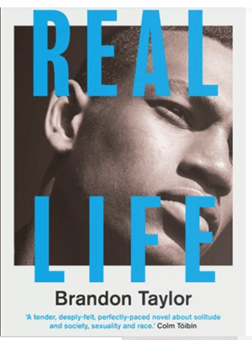
Brandon Taylor is a black queer writer who feels that some books, like his book, answer a need for black queer men to find themselves non-stereotypically represented in the world of writing may also, in doing so, reduce persons to their black queer experience alone. This he made clear in an interview with André Wheeler published in The Guardian on 5th March 2020, where he says:
“I’ve read stories about black life that to me make my life feel simple and small,” he says, striving to introduce new nuances to the black experience. “I’m like, ‘It’s not that easy, it’s not that straightforward.’ People are complicated, people are conflicted all the time about stuff they say and do and feel. I want to see more of that on the page, especially when it comes to black characters. I want black people to feel fully human”.[2]
That is a really important point. But it doesn’t mean that writers who attempt to represent what it feels to be fully human will be taken as doing that and I have noticed that even good and empathetic white reviewers struggle with dealing with the novel’s demonstration that Wallace, the protagonist, is also a complex character.

Let’s take Anthony Cummins in The Guardian:
Even so, Real Life makes clear that, besides its tragicomic indictment of white privilege, it’s still a story of young male self-absorption: witness Wallace’s shock when a Chinese American friend reveals her own experience of racism.[3]
I’m not sure for example that Anthony Cummins in his review really gets the balance right by posing the protagonists experience of racism against the ‘self-absorption’ of young men of whatever colour skin, which he presents as universal and perhaps colour-blind human characteristic.
Compare this to black reviewers in the USA and in the UK. The young Ghanaian novelist Michael Donkor, for instance, writes with much more nuance of what might seem, if only superficially so, the same duality identified by Cummins. But it is not the same. In Donkor’s assessment, self-absorption is as much a thing to be understood from situated individual experience of abuse as being the victim of unacknowledged racism. In fact these things interact as the novel shows – there is no duality between the exploration of black experience of racism and of human character. They are interacting aspects of the same thing.
Taylor’s treatment of racial politics in the novel is sophisticated and forceful too. Wallace astutely diagnoses the ways his privileged white peers “have a vested interest in underestimating racism”; the depictions of the micro and macroaggressions he faces as he moves through a predominantly white world are figured with piercing accuracy. …
…
Taylor is committed to precisely portraying Wallace’s inner life and lived experience as a deeply withdrawn individual, born no doubt from Wallace’s history of abuse. This dedication to psychological verisimilitude involves showing that, for victims, progressing beyond trauma is not always possible.[4]
Jeremy O. Harris, a black playwright, reviewed the novel on its release in the USA in February 2020. That piece is even more moving because it is not afraid of subjectively comparing the subjectivities of reader, protagonist and other unnamed persons from silenced black and queer histories. Thus it ensures racism is not seen as apparently detachable from common human experience – which is intersectional from the say so for most of us.
The simple truth of “Real Life” is that Wallace, like myself and many others who’ve wandered dark, white halls in search of a future, has made himself invisible by shedding the skin of his past, and adopting a new skin unadorned with the blemishes of history. But the only way to once again be visible, to the world or even to himself, is to adopt new bruises in place of the old, for to get where he is going, he must remember where he’s been.[5]
The internal landscapes shaped by physical and psychological abuse, familial and elsewhere, has a history that cannot merely be treated as separate from those of racist abuse. Both produce versions of damaged, as well as resistant new, subjectivities and hidden, sometimes secreted, dark places inside of people whom to the outside world seem ordinary and unremarkable.
In my own view, from the subject position of a white queer cis male, about which I think we need reflexive openness, Real Life is a novel about how what we name the ‘real’ is comprehended and enacted in this thing we call ‘life’. This explains my choice of quotations for my piece’s title. My main proposition, then, is that so much of this novel is about the language we choose both to represent what we know, or think we know, ‘real life’ is, and use to ‘script’ their and their social group’s enactment of ‘real life’. This is the language that Taylor, in prose that mimes the protagonist Wallace’s perspective, that aims merely:
… to repeat the pattern, to let himself be folded up into this language that robs the world of all its honesty. He does not want to get swallowed up by it again, by this way of looking at things without looking at them, by this oblique shadow-speak’.[6]
The sense that ‘life’ can be lived in a life patterned by false institutions and conventions, such that our very speech has the character of an ‘oblique shadow’ of what it is in ‘reality’, is paramount here. No doubt Wallace’s perception is moulded by the cruel realities of the physical abuse he received in his past, and whose expression to a putative but unlikely white jock student colleague, Miller, whom had previously aimed to appear heterosexual, comes as a surprise, even to Wallace who had preferred its suppression. Such experiences often court cover by the conventions and familial discourses that pretend these experience either do not exist or are outside norms that ensure that they do not therefore get spoken. Such experiences create the kind of ‘self-absorption’ noticed by the critics above.
But the same can be said of racism and homophobia, even types of homonormativity such as might describe the relationship of the two different gay couples: Cole and Vincent with their assumption of a closed relationship, and Nathan and Roman with their equally assumptive open one. Both of the latter kinds of discourse-bound patterns of relationship are challenged by ‘real life’ within the novel.
Wallace’s perspective describes this phenomenon in relation to racism perfectly as he listens to the reasons Simone, his academic supervisor gives him, for considering withdrawal from his research programme in the stunning white of the walls and halls of his academy:
Wallace feels a chasm opening up beneath him. He could say what Dana said to him. He could say that she is racist, homophobic. He could say any of the things he has wanted to say since he came here, about how they treat him, about what it feels like when the only people who look like him are the janitors, and they regard him with suspicion.[7]
Almost every which way that ‘real life’ can be masked by normative patterns and social artefact is exposed in the novel. Masks at best make a pretence of being a non-contradictory version of that which it is masking in order to both reduce the demand life makes on those whom it affords most power, be they white, male, gender and sex normative or otherwise. The masks we can choose are multiple since all people are made up of a complex combinations of intersectional identity markers, where power is delivered or given up in quite fragmented ways.
Wallace is himself finally cut off by being typed as misogynistic and, in a way that the author validates I think, is seen to be unable to realise that other people receive racism, such as Asian women, in quite different and, to him, invisible, ways. What we call an ‘ordinary act’ in real life is, if you look at it closely enough or from another perspective, or even describe it with a different syntax where object and subject shift places, or becomes queer in the sense of ‘strange to the norm’. Consider this scene where Wallace becomes sexually excited by the ‘ordinary act’ of eating by ‘a man’, who is ‘Off to the side’.
This is an ordinary act, so commonplace as to seem invisible, but when any such act is considered, there is a wild strangeness to it. Consider … [here follows a list of such acts seen up preternaturally close or with a sense of their unseen and uncomfortable dynamic] … Ordinary acts take on strange shadows when viewed up close.[8]
The ‘oblique shadow-speak’ mentioned here is the equivalent of what hides the real shadows of closer observation. The metaphor of shadows crosses the novel in ways that are too various to discuss at length – but so do those of surface and depth, in relation to lakes, vistas or interiors. They continually insist on a multiple number of ways of seeing that which we feel we see quite unproblematically. Variations in the sharpness of human vision contain this queerness, as in the first meeting in which Wallace sees and sees beyond and behind Miller and into a strangely amplified visual and recessive world. It is one of Taylor’s most beautiful and complex yet short sentences, which lacks both a grammatical subject and main verb – is all subordinate clauses: ‘Over Miller’s shoulder, a veil of delicate roots latched to the concrete, dark insects teeming in its recesses’.[9]
But the novel also rejoices in using more precise shifts of distance and perspective to vary a scene, even by the use of technology from microscopes to other more digital imaging potentials, all types that access for instance the lives, say, of nematode worms. Their transitions from and to hermaphroditic reproduction matter in this novel and give strange reflection to its themes of queer male sexualities and consequent identities caused in deliberate but unplannable genetic mutation.
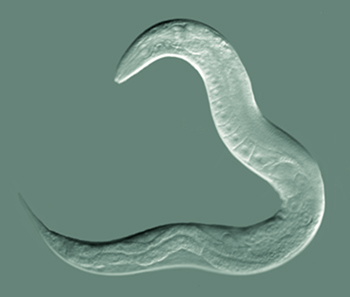
Of all the instances of which on the page I will cite below I love most this strangely comical meta-reflection, that only a gay male writer would have written, since it parodies the most sick of the homophobic eugenic fantasies still that swirl around us daily:
There was also the dicey prospect of generating males, which always seemed to result in animals that were too fragile, or uninterested in mating at all. And then, as always, the dissolution of the worms and the extraction of their genetic material, which had a way of revealing, after weeks of careful breeding and tracking of multiple generations, that the modification had been lost.[11]
If the short ur-sentence I quoted from page 11 (above) is one of the finest of its type, this is another wherein the periodic sentences most loses its way where it loses the sense of the outcome of the task it describes. We are at the end of it more conscious of being lost than of that which has been lost. I think it brilliant.
But the most brilliant of these periodic beasts are those that set us to determine the meaning of ‘real life’ amongst so many attempts to approximate it. It emerges from a reflection on the type of fish he aims to cook in batter for himself and Miller, whilst reflecting on his choice of staying in an academic world he has found empty or finding some other alternative, with or without Miller. It is full of near oxymorons, like the words ‘real life’ itself, which can mean what it says, or in some mouths its opposite. The ‘thin’ fish he fries have already mistaken their impoverished bodies for ‘fat contentment’:
have grown to fat contentment in tanks, raised expressly to be eaten, like the people who live in this city. their lives a series of narrowly constructed tubes filled with the nutrient-rich water they consume without even having to think about it. That’s all culture is, after all, the nutrients pervading the air we breathe, diffusing into and out of people, a passive process.[12]
So if like fish, people who think themselves fat and content are actually thin, ‘float to the surface’,[13] and are easily cooked and consumed, so the term ‘real life’ can take on opposite meanings across even a passage of Wallace’s surface, rather than deep, reflections, about staying in graduate school or not:
Is it into this culture that he is to emerge? Into the narrow, dark water of real life? He remembers Simone, leaning in towards him, the world vast and blue beyond her window, … He could stay in her lab and in graduate school. He could live his life on the other side of the glass, watching real life pass him by. Staying would be so simple, requiring no effort at all except to put his head down as in prayer and let the worst of it pass over him.[14]
My italics
You can ask disconcerting questions about the metaphor here. Does the ‘other side of the glass refer to the real window in Simone’s office which offers a larger world outside the tank of the graduate school. In what sense then is it the ‘other side’ since he is currently thinking of himself inside the lab. Or is he? His fluid reflections allow him to pass from inside to outside and to begin to free himself of a false life. The ‘narrow, dark water of real life’ that he starts thinking of, making a ‘realistic’ if conventional decision to stay in training that makes him consumable in a market economy, is contrasted to the ‘world vast and blue beyond’. By the time ‘real life is mentioned again it is its own oxymoron, a life outside the conventional option of an academic life not designed for him but for norms with which he has no empathy of imagination.
Furthermore, as a reader it took me time to enjoy this book. Its capture of the patterns of speech in the reported conversations of very early adult young people (stuffed as they are with the aspirations in which they are trained) is brilliant. Not unlike the versions of that kind of exchange you find in real life however, it also has the tedium of light gossip between acquaintances in which things are taken too seriously and yet not seriously enough, as if aping what is thought to be adulthood. It tires me by that very perfection of verisimilitude. But as you grow with the book, you learn that you and Wallace are being taken on the same journey to find something more like ‘real life’ than this seems to be.
A question remains for me – at least to satisfy myself for this piece of mine. Is the real life of Wallace after the novel to contain Miller or not? In many ways Miller is like one of those thin fish he so loves to consume, a water baby, with a more fluid sexuality than he likes to think, like that in the picture below of the gay Jock ideal. As Wallace guesses another way in which he and Miller differ from the norms of academic life on this campus is their working class origins. They like easy cheap food for instance.[15]

I think these are not the only intersectional commonalities between them. But there are intersectionally derived differences too. Whilst Wallace’s familial story of origin is about the abuse, violence and neglect he receives from his parents, Miller’s shared story of origin is about his initiation into being a perpetrator of male-on-male violent abuse. The pattern of interactive behaviour which they, uncomfortably for readers, go on to manifest as a couple, allows each serially to be both the perpetrator of violence on the other and receiver of violence from the other. It is an extreme recognition of ‘real life’ violence quite unlike the kind of unreal violence at the level of discourse in the world of the academe which both men otherwise experience on campus. That discourse with its middle class micro-aggressions can still hurt an individual extremely despite their abstraction.
Miller and Wallace do need each other at the end of the novel but all questions remain open about possible pansexual findings that might emerge from Miller’s later sexual life, the nature of their relationship as open, closed or something intermediate between these options. Their relationship is, at the most difficult, when they feel they have to understand it through some discursive approach, by talking about it, for instance. It is at its most hopeful when they seem like Milton’s Adam and Eve to be leaving paradise.[16]
They’re still sitting that way when the first sound of cars fill the streets below, and the world turns over itself, to begin again.[17]
And strangely enough the chapter which follows this returns to the first meeting of the whole group that make up the characters of the novel. What strikes in that that the very first meeting between Miller in this very final chapter predicts this silent end, with its echo of Adam and Eve, rather than the difficult, painful, difficult to absorb and or feel-comfortable-with interactions between them that make up their part of the novel: ‘Wallace and Miller walked apace with each other, quietly, not saying anything’.[18]

[1] Taylor (2020: 241)
[2] Brandon Taylor cited in Wheeler, A. (2020) ‘”I didn’t write this book for the white gaze”: black queer author Brandon Taylor on his debut novel’ in The Guardian 22nd August 2020. Available at: https://www.theguardian.com/books/2020/mar/05/brandon-taylor-author-real-life-interview
[3] Cummins, A. (2020) ‘”Real Life” by Brandon Taylor review – a brilliant debut’ in The Guardian (17th August 2020). Available at: https://www.theguardian.com/books/2020/aug/17/real-life-by-brandon-taylor-review-a-brilliant-debut
[4] Donkor, M. (2020) ‘Real Life by Brandon Taylor review – violent legacy of the past: This Booker-longlisted snapshot of the life of a queer black postgraduate forcefully tackles the effects of racism and abuse’ in The Guardian 22 Aug. 2020. Also available (from 21 Aug): https://www.theguardian.com/books/2020/aug/21/real-life-by-brandon-taylor-review-violent-legacy-of-the-past
[5] Harris, J.O. (2020) Jeremy O. Harris: Brandon Taylor ‘Subjugates Us With the Deft Hand of a Dom’ in The New York Times Feb. 18 2020 Available at: https://www.nytimes.com/2020/02/18/books/review/brandon-taylor-real-life.html
[6] Taylor (2020: 241)
[7] ibid: 255. Dana is a white co-student researcher who hates him and who may have sabotaged his research.
[8] ibid: 267
[9] Ibid: 11
[10] ibid: 7
[11] ibid: 8
[12] ibid: 307f.
[13] ibid: 306
[14] ibid: 308
[15] ibid: 305
[16] The world was all before them, where to choose
Their place of rest, and Providence their guide;
They, hand in hand, with wandering steps and slow,
Through Eden took their solitary way.
from ‘Paradise Lost’ Book XII ll. 646ff Available at: https://www.bartleby.com/4/412.html
[17] ibid: 317
[18] ibid: 324
 Steve_Bamlett_blog
One thought on “‘… folded up into this language that robs the world of all its honesty. … this oblique shadow-speak’.[1] Booker 2020 Longlist Selection no. 2: Brandon Taylor (2020) Real Life”