A Night Out with Eugene Onegin at the Durham Assembly Theatre @DStudentTheatre

Worn out by the ballroom’s noise
And turning morning into night
Sleeps peacefully in blissful joy
The child of luxury and delight.
He wakes at noon, or even later,
His life till dawn the same as ever,
Monotonous and varied, say,
Tomorrow just like yesterday.
But was dear Yevgeny content
Free, and in the flower of youth,
Midst glittering victories, in truth,
Midst oft repeated amusement?
Was he as vigorous and carefree
As at the feast he seemed to be?
Pushkin’s Eugene Onegin (Translated by A. S. Kline [2009]) Chapter 1 stanza 36: click title to access online.
It is not an idle question to ask if a night out with Pushkin’s hero would seem the morning after to be as entirely satisfying as it seemed when time flew in his company. Pushkin, saturated with English Romanticism and European culture, created Eugene out of a fantasy about Byron’s Childe Harold and translated him into a Russian context, together with Onegin’s belief in the economic theories of of Adam Smith. That this was not authentic way of being or believing – in Russia or indeed elsewhere – is what we learn about the fashionable Eugene and about the appearance of freedom we associate with his youthful beauty.
Is youthful beauty and his, in particular, as solid as we hoped? Two dear friends, my husband and myself went to a performance of Tchaikovsky’s opera on that dissolute youth last night. We went a little afraid that a company of young learners from the University could or would be able to measure up to musical theatre we knew, from report, to be very demanding. But this was a night to remember – as intense an experience as one could have hope for – as vigorous as needed but only carefree in appearance. This opera was a beautifully acted piece of moral thinking.
I am too ignorant of music to critique it and the effect on this performance of a very much reduced orchestration of Tchaikovsky but sitting there, on a first night with inevitable mistakes sounding more on rare occasions than they were, this was a night in which the music stayed King.
If the performance of the night, for acting and singing, was that of Poppy Metherell as Tatyana: then she in turn paid, through the moving rendering of all her individual and group pieces, a tender obeisance to the conductor, Leo Thomson, responsible also for overall musical direction. During the Letter scene and her most famous aria (see link for Metropolitan Opera excerpt – but Poppy’s would not have disappointed you) her eyes follow the conductor, and hence the direction of the rich and complex multidisciplinary event as a whole weave and weft of the arts. As she did so she still seemed to her audience to look at a dreamy but fearfully awesome distant future of possible hope and likely tragedy. This is acted opera, where even the finest piece of the ensemble (company and theatre) serves the whole.
In an opera suffused with the problems of growth to maturity and regression to comfortable pasts That past might that of one’s own past childhood or those the ‘storm and stress’ of the adolescence neighbouring cultures. The problem for Russia, as much in Tchaikovsky’s as Pushkin’s time, was enacted through the push for development and the choice that involved between established European models and new growth from a distinctly Russian past. Russia always seemed to be choosing a life aping the West, with its fashionable jadedness, and something younger that could mature more effectively within its own expanding borders.
This national problem is enacted in the opera as is the comparative ‘growth’ of Tatyana and Eugene, although it is also in the mild mockery of French singing culture that haunts the work’s ballroom. For whilst in this opera one of these characters, the woman, grows into enormous moral stature that recognises the depth of the passions and the imperatives of duty (a George Eliot theme of course), the other, a man, falls into hopeless regression. A regression is marked in the final empty statement of Onegin, that ‘all that remains is death’. It is like the rejection of the Europe of Goethe’s Young Werther. Instead the breath of youth retains its freshness and capacity to love selflessly by maintaining absolute dignity in duty in the face of everything else being doubtful. As George Eliot says:
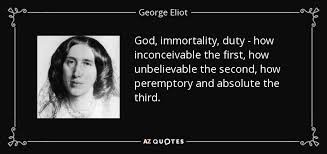
Tatyana is the Russian type of the George Eliot heroine, schooled into Kantian metaphysics. And Poppy carries all this. In comparison to Tatyana of course the role Of Onegin is one for someone whose music is fine but whose effects are those of the drama. And, though he sung perfectly, Edward Wenborn’s acting was what satisfied most in that grand performance.
Clad in tight pink jeans he was an effective seducer and, as an overgrown boy, he faded in the sun of Tatyana’s development to being just an illustration of the lack of moral authority, in love as in most things that beautiful young things can also be. It is a difficult role because the music is demanding but the lack of self-demonstration in a soaring aria can lose our sense of him as a star in his own opera. It is the part therefore for a professional and Edward was a true professional.
Even equally inadequate male roles are given finer individual moments and shine in these. Alistair McCubbin is a wonderful Lensky, whose aria in the duel scene was perfect. These moments Eugene lacks – his reflections being more like recitative with flourishes, or so it seemed to someone nowhere near knowledgeable enough of opera like myself. Likewise, Arnold Fortuna’s beautiful ball scene aria as Prince Germin. This was musical satisfaction that sprung a good lively actor in the ensemble ball room scene into individual prominence, making choice of loyalty to him in the next scene by his now wife, Tatyana, credible.
No performance, in singing, dancing or acting let this production down so it seems unfair to name only those few young people. Olga was of course excellent – true and coquettish at the same time, but so were the entire cast and chorus.
A chorus is as important here as in Greek tragedy and the handling of choric moments was wonderful, setting the scene for the contest of major voices (the challenge to a duel) in the first ballroom scene between Tatyana, Olga, Lensky and Onegin in a fine background tension of complex musical social chatter and gossip. Onegin excels here in these parts of dramatic conflict – his voice full of the conviction of manly assertion in a boyish moment. But the chorus is wonderful. And this was so whether it were a group of peasant labourers or a fashionable Petersburg gathering.
A word for the choreography, by Ava Cohen, needs to be given. Just as the musical direction had to suggest multiplicity and large volume, so the small stage of the Durham Assembly theatre needed motion that suggested the same. Cohen solved this problem by increasing the density of regularly and calmly placed bodily movement of chorus and cast within the cast so that large volumes and numbers were suggested not by counting the people but by the sculpturing of space by movement, small steps and forward and backward leg movements, in time to music even when the music made the discordant prominent. Of course producers and directors are praised by the invisibility of their necessity. These people deserve the high praise.
I don’t want to leave what I have to say about how much I loved my evening with Onegin without queering it a little. It is my firm belief that Tchaikovsky does queer the story. Building expectation of his love approaching though spurned, Lensky’s lovely aria reveals Onegin, and I feel that Lensky’s jealousy in the scene prior to it in the ball as best explained as motivated not just by his feeling that Olga has betrayed his love but that Onegin has too. As in Othello you can’t move so quickly to jealousy without complicated bi-sexual dynamics. Moreover, Tchaikovsky favours female passion over male in his music not because he is merely defending heteronormativity but because he is questioning it deeply.
But this piece wasn’t meant to be about that. Thank you DST for a wonderful evening.
 Steve_Bamlett_blog
What a wonderful evening we had, the blend of music, song and choreography was sublime. You watched it thinking sadly of those who hadn’t come, who wouldn’t know the richness of the experience…
LikeLiked by 1 person