Being a lover of second-hand books. An example of what it might mean to own a book.
People ‘of a certain age’ is how you think of describing those who haunt second-hand bookshops, book-fairs that occur across the provinces of the UK by of the PBFA and charity shops. That is the impression I have looking at those queueing at the fairs, including myself and husband, but impressions are dangerous. There are young people in the book-fairs. Book-collecting, often sneered at by book-writers as people besotted with the exchange-value of books rather than their use-value or even, for some, their aesthetic qualities, might yet revive.
I hope this happens. We once thought owning books would fall foul of the digital age but that thought is less certain lately: there is indeed evidence that people prefer hard copies of the books they read and perhaps prefer keeping hold of a copy, for whatever reason – and that needn’t be for re-reading – in this form. But I am a person of that ‘certain age’. I get books signed at literary book festivals by my favourite authors where possible. Our home (since my husband is also a collector – a more serious one of Lewis Carroll amongst other writers) groans under the collective weight of our books. Now some of these are potentially of monetary value but many more are kept for quite other reasons.
I wanted to focus on one I bought for £1 a week or two ago in the sale at a favourite bookseller, Jeremiah Vokes of Darlington. The book is the ‘New and Revised Edition’ of ‘Notes on the Science of Picture-Making’ by C.J. Holmes, former ‘Professor of Fine Arts in the University of Oxford’ published by Chatto & Windus.

But whilst Holmes is no longer a name to use in art-history or art appreciation, it is clear that he once was and one of the joys of book owning is attempting to recreate what the book meant to owners through the history of its possession. Charles Holmes has a brief Wikipedia biography.
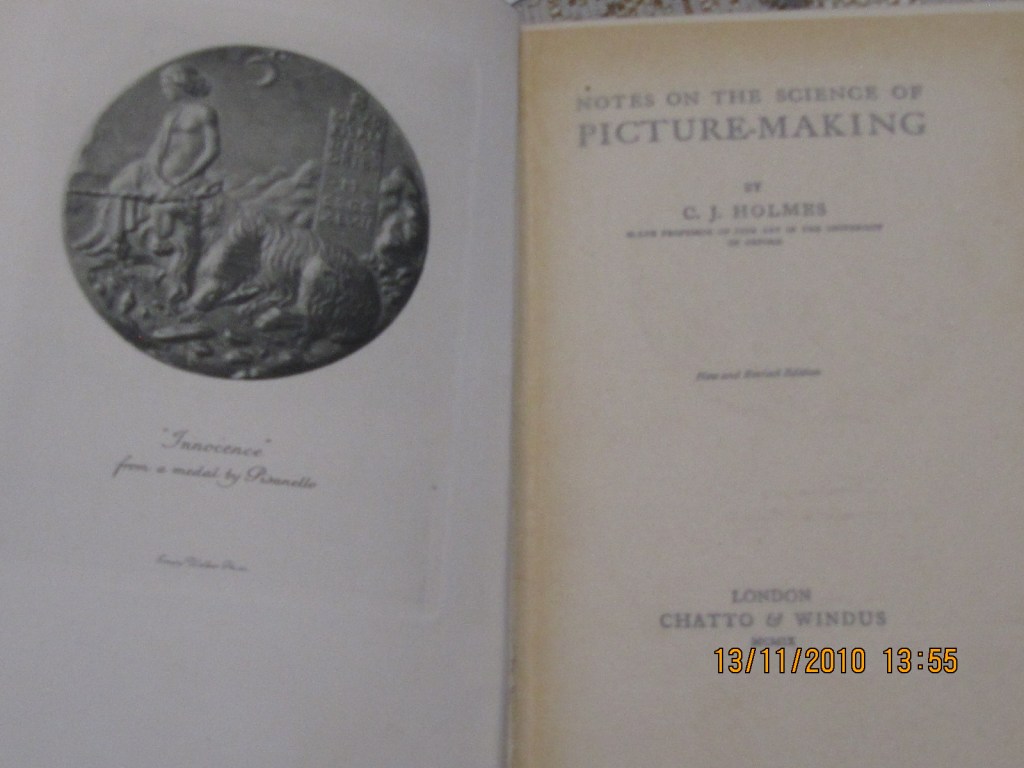
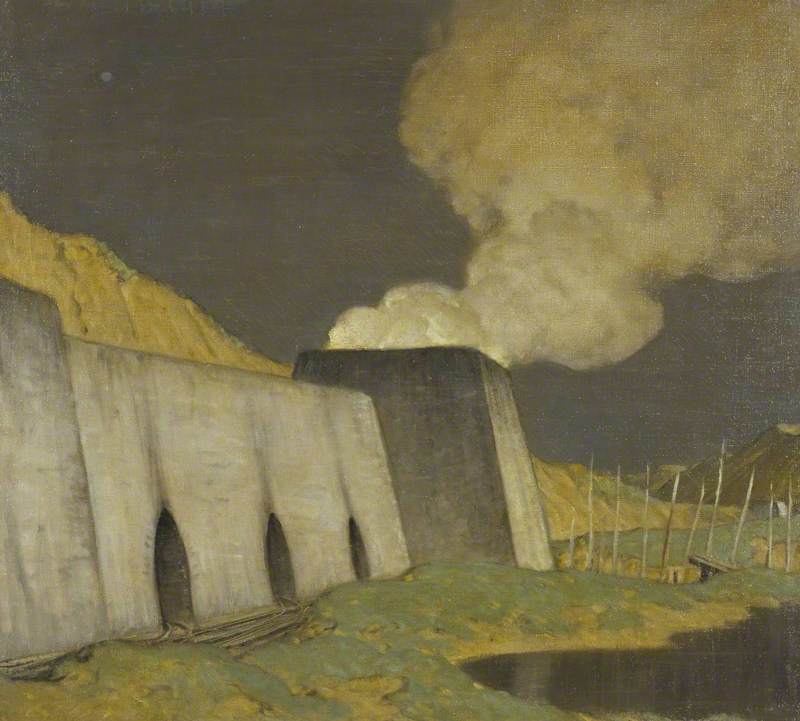
Holmes was associated with the Burlington Magazine, ran Vale printing press with the artists Ricketts and Shannon, whom were a cohabiting gay couple. He wrote an Athenaeum art column with Roger Fry. He was eventually Director of the National Portrait Gallery. He also created fine industrial age paintings such as The Burning Kiln (1914).
I have no reason yet but a curious interest (which I’m not belittling in that description) to want to research this and that is not the spirit of this piece. I’d love to hear however from anyone who could cast light on what I found tucked into this book and how each piece of ‘data’ (shall we call it) can be understood and their history of being aggregated in this book might reflect on its ownership and the meaning thereof.
There were a number of items inserted in this book as I found when I examined it after purchase. I will describe them selectively first.
ONE
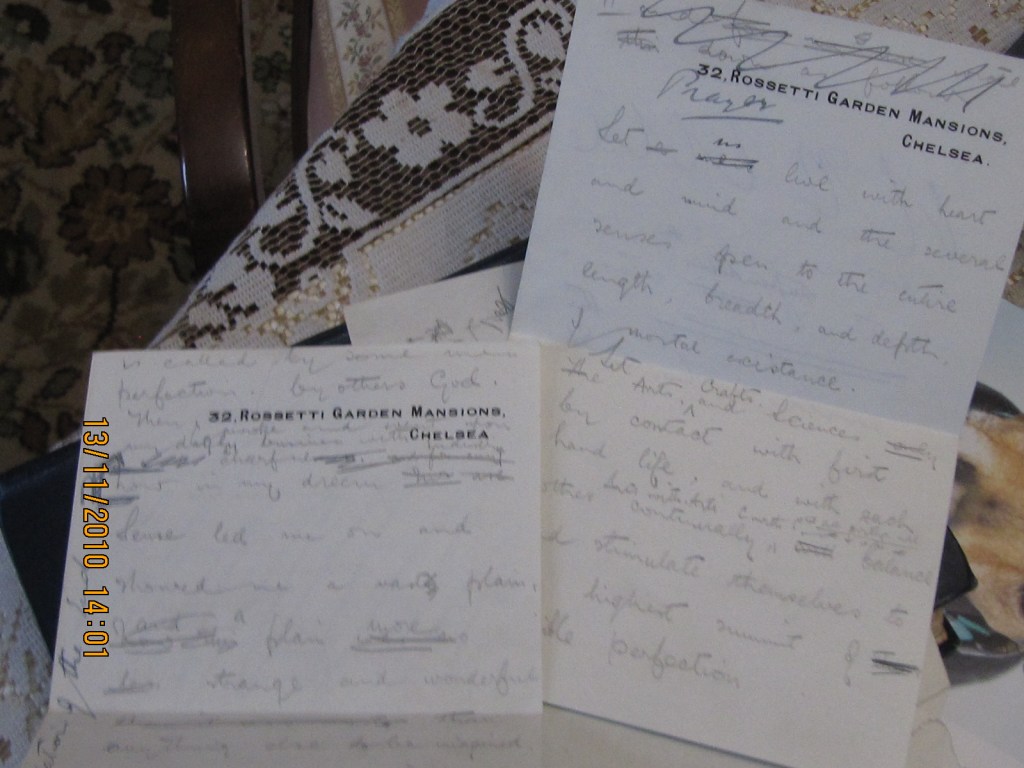
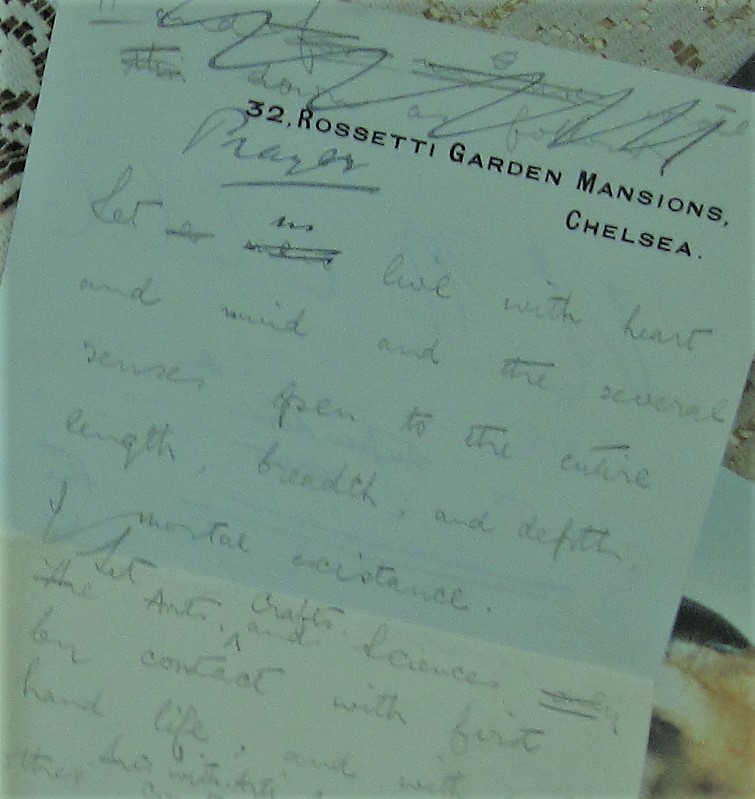
2. 5 sheets of folding headed notepaper with a printed address reading ’32, Rossetti Gardens Mansions, Chelsea’. The writing on these sheets is with pencil and has been edited. There are many word-substitutions and crossings-out – in what appears to be in ink the word underlined ‘Prayer’ has been written. We could take this as a title of an initial manuscript but its purpose is not clear. I couldn’t find the words of the Prayer in digital searches and it may never have been intended for publication. However, it is clearly a very humanistic rather than sacral prayer. Here is a taste:
Let
so whomus live with heart and mind and the several senses open to the entire length, breadth, and depth, of mortal existence.
TheLet Arts, ↑Crafts, and Sciencesonlyby contact with first-hand life, and with each other continually (omit superscripted line here)willbalanced and stimulate themselves to the highest summit oftheirpossible perfection.END OF FOLDED PAGE
NOTE on Printed Address: I found a history on the net of Cheyne Court and Rosetti Garden Mansions which were built around 1889/1890. They got their name because the poet & artist Rossetti lived earlier in Cheyne Walk. More research could happen if the dating of other data is more certain.
TWO
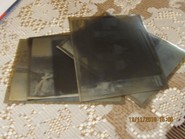
5 analogue photographic negatives. I took these for printing because they were largely illegible to me although I could see animals, persons and buildings. I will show and describe the developed pictures later.
THREE
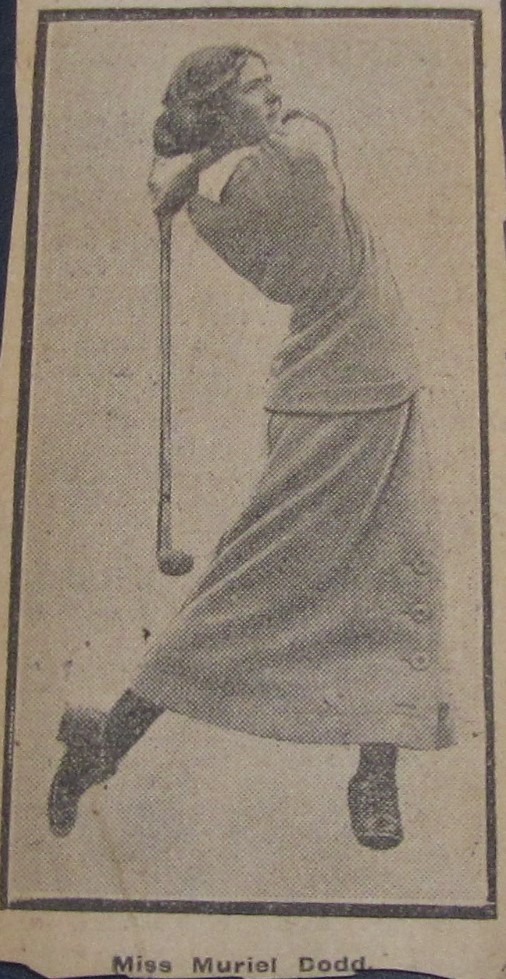
A photograph cut from a newspaper from a sporting news publication, judging by the story on the verso, of Miss Muriel Dodd. Dodd has a Wikipedia brief biography. in 1913 she was a lauded golf-player but became obscured, as so many talented women did by marriage in May 1916. Did she ever live in Rosetti Gardens Mansions? Was the owner a golf follower? I have no data yet.
FOUR

A review of the Slade School Students’ Exhibition – this will be the school at UCL – by C.H. Collins Baker at some date after 1912.[1] We can guess that the marks on this review are by the owner of our book by Holmes, who is quoted throughout the piece, and that this owner knew of and was about to meet C.J. Holmes. The handwriting in both pen and ink match, which suggests that pen and ink section indicators were by the same person at different times in which this was read. The pencil note at the bottom of the page reads:
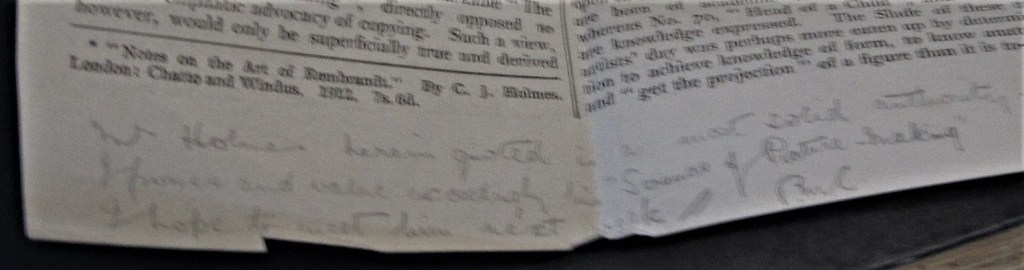
Mr Holmes herein quoted is a most solid authority.
I possess and value exceedingly his “Science of Picture-Making”
I hope to meet him next week // Illegible ‘word’ (is it a signature – see below)
The pen comment appears next to the reviewer’s name. It reads, as below:
⌠ Sweet
⌡sarcasm !
It would make sense that this comment in pen refers particularly to the lines of the review indicated by a pen marginal comment (not visible on the photo above) from what appears to be the same pen as this comment.
The text by the pen-mark reads:
From such teaching, “ in which the student is crammed with the canons and ideals of his predecessors … an early escape is the less of two evils “.
C. J. Holmes cited in review
The quotation is from the Holmes book, published in 1912 by Chatto & Windus: Notes on the Art of Rembrandt. However, that book’s argument is covered in our book too, as Collins Baker says.
This suggests that the book-owner had an interest in the teaching of art. Collins Baker had trained for 4 years at the Academy and his review aligns itself with Holmes in explaining that this very quotation from Holmes is only apparently inimical to Academy training, which involved copying from past masters. We might see this balance (of truth to perception and feeling against technique) in this passage from our book, emphatically marked in pencil in the margin by its owner.
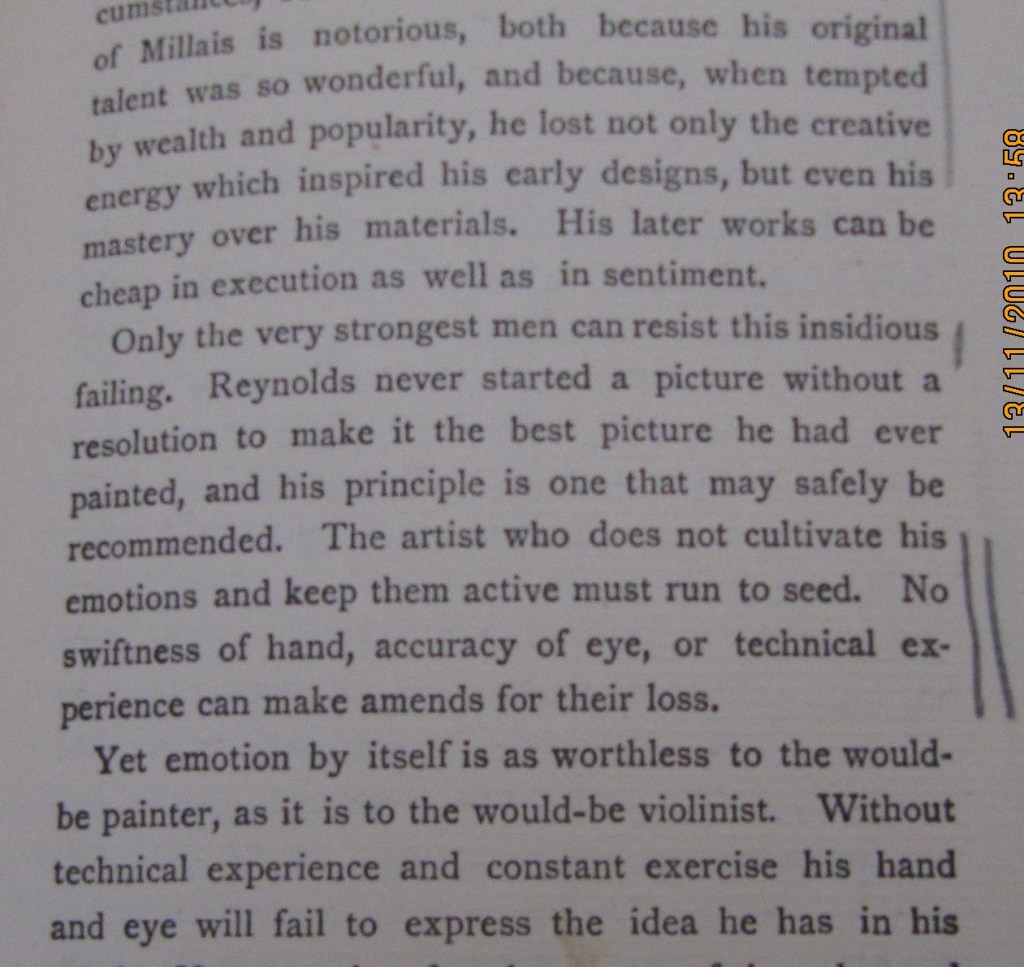
The review too is focused on that issue: whether the Slade Students’ work shows sufficient mastery of form such as might be gained by long reflective study of past masters. It belittles those who paint from observation alone, particularly women such as Miss Hilda Coltman, whom Baker names, claiming that her drawing shows she:
is perfectly acquainted with nothing, and obviously has abandoned any ambition really to know form.
That this is misogynistic there is no doubt. That raises a question about the owner of the book and their attitude to Collins Baker. The expressed desire to question the ‘solid authority’ they detect in Holmes may spring from a belief that Collins Baker misrepresents Holmes. Does this person also believe that Collins Baker is over-estimating the skills devised by formal copying in the Royal Academy. Is their view that Collins Baker is using ‘sweet sarcasm’ (we cannot know the intended tone) aligned to a need or desire to defend the Slade for its more observational methods in teaching painting.
One of the male painters dealt with in this review, dealing with different exhibitions, is Paul Nash, a painter who has survived the rest into modernity, but no marking of the text occurs here. It is useful to know however that Nash exhibited after only one year at the Slade in both 1912 and 1913, further perhaps dating our review.
The reader does however mark heavily parts of the review dealing with ‘Mr Sheringham’s silk paintings’ and underlines the venue name for his exhibition. This probably refers to George Sheringham.
There are then lots of clues which might indicate a role in the world of art as a painter or collector. The address was as near a contemporary London Bohemia as one might get one gathers from the slim evidence. Those are clues worth following up. But should they take into account the other data – the interest in women’s’ golf, the carefully editing writing based on beliefs in the confluence of ‘Art, nature and Science’. And the connection to Holmes and even , possibly, Roger Fry! What was this connection and what might it have become after the projected meeting?
_________________________________________________________________
This was as far as my speculation had got before I collected the prints of the negatives (TWO above). Would these provide some evidence bringing together the other data, if indeed it was connected?
In fact it opened up another line of inquiry altogether. For this reason I merely append the photographs. The filters used by me were not those of the prints original but ones that picked out to my eye the detail. Here they are:

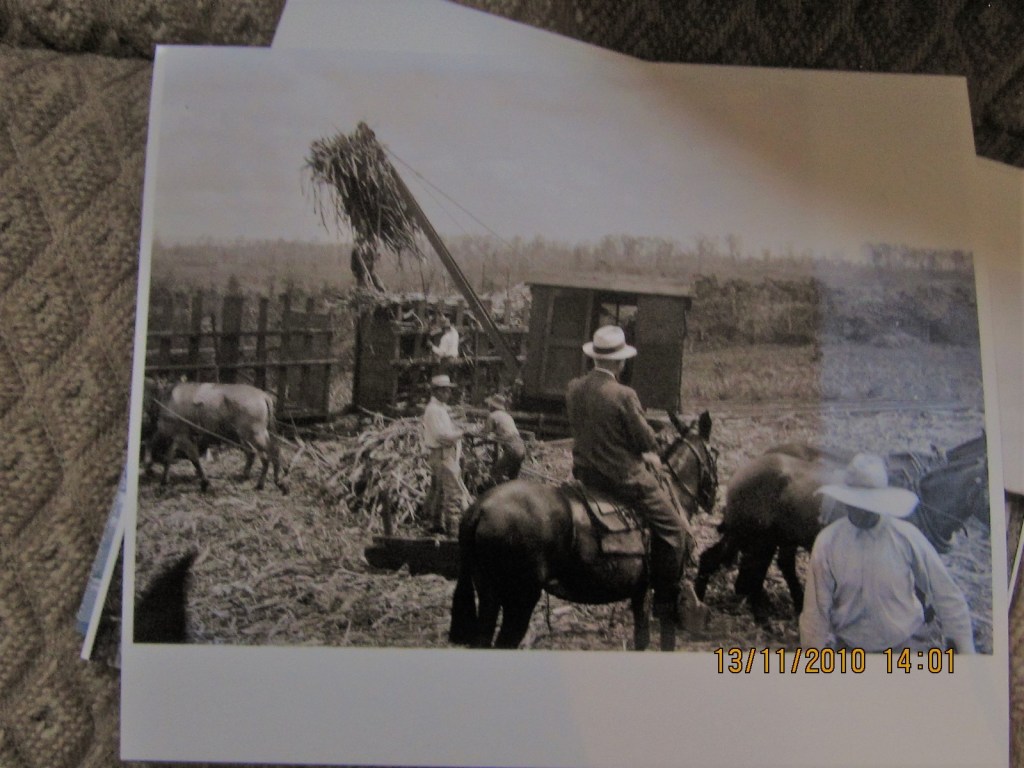

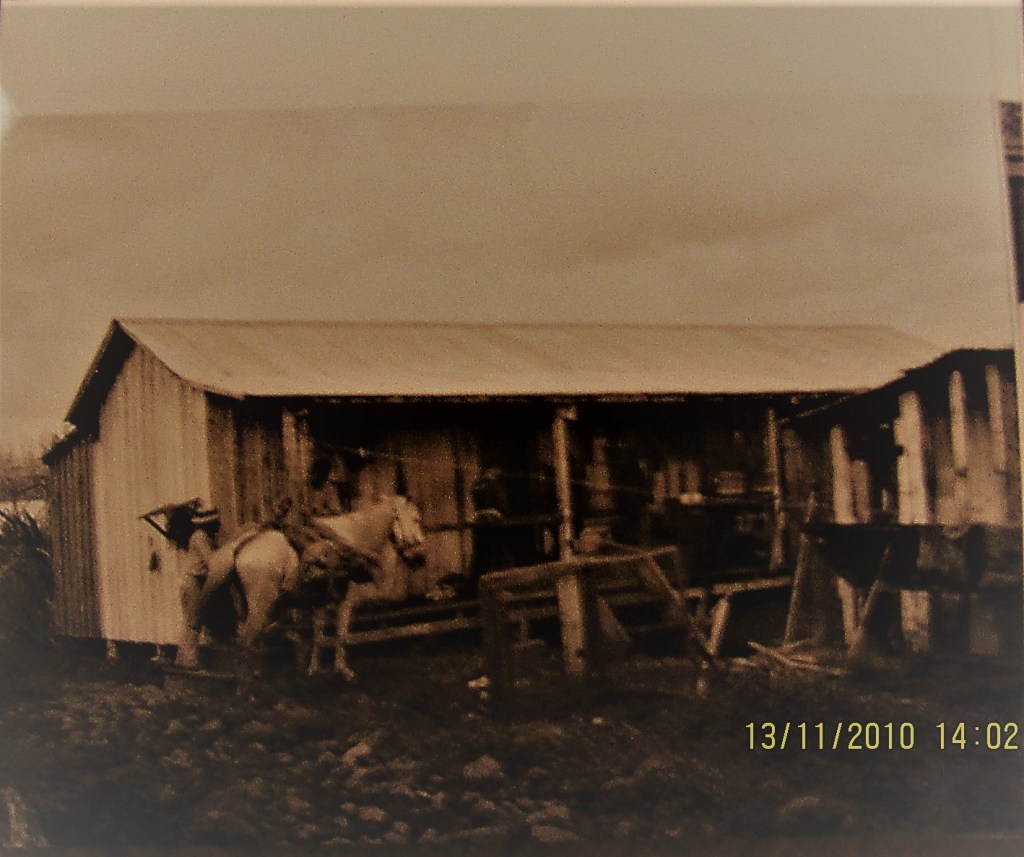

They show landscapes, working agriculture with rudimentary mechanisation (lifting machines, rail-running (?) wagons) and beasts of burden or travel – horses, mules and donkeys. They show people in a certain style of dress and, perhaps, a rudimentary dwelling or place of residence for short-term work. It feels to be America or perhaps Canada but that really is a guess. Is the style of beard or clothes identifiable in time and geographical origin? Are these people native to their landscape, colonisers or settlers? Does anyone know.
Again these photographs may or may not relate to the other data found all together in this book. Even if they do they leave us with more than one puzzle.
I do hope I can get some feedback on this. use the blog please if you chance to read it to make such feedback, even the most subjective of interpretations might help!
Steve
[1] The date must be after 1912 because the review quotes and cites another book by C.J. Holmes, published in 1912 by Chatto & Windus: Notes on the Art of Rembrandt.
 Steve_Bamlett_blog
One thought on “Being a lover of second-hand books. An example of what it might mean to own a book.”