‘The Suppliant Women’ Aeschylus translated David Grieg
Thursday, 10 Nov 2016, 18:11
Visible to anyone in the world- Edited by Steve Bamlett, Friday, 11 Nov 2016, 21:20
– Edited by Steve Bamlett, Friday, 11 Nov 2016, 08:56
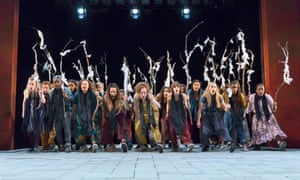
The Suppliant Women Aeschylus translated David Grieg
Following my tweet, I did indeed see this production at Newcastle.
The Making of The Suppliant Women can be still seen on https://youtu.be/Pj_qYUeYU2A via @YouTube. I saw this in Newcastle, although the film is of the Lyceum Edinburgh local cast.
Strangely enough I have always liked this play, stark as it seemed then to me to be.
In this production, it is not only that you get to hear the effect of the aulos (the double flute of Classical Greek music) and drums but that you get as near to the experience of seeing classical theatre as it is possible to recreate in a modern theatre, even down to the practice of pouring libations (minus the sacrificial blood fortunately), dance and absolutely profound effects in choric voice management. A bare stage otherwise comes alive.
The cast make visual illusions, using black veils to realize and lie upon their ancestor, cow Io. The themes of rape, migration, restlessness and stability, acceptance and fear as legitimate responses to primal fear just leap across time and suddenly evils like Trumpism & Farageism seem understandable in their primitive reality.
And the complexity. The idea of chastity in the context of a triangular relationship (with rape and marriage) is typically Greek (Carson Eros the Bittersweet) such that each of the three prongs interpret each other. The Danaid virgins in this production sing as a underlying accompaniment to the verse of the play, ‘Equal power to women’, and suddenly that seems a possibility.
At the beginning of the play a fragment of the final play of Aeschylus’ Danaid trilogy is read out – the enconium which shows Aphrodite wins out in the trilogy as a whole and justifies female submission to reproductive role. Yet had this fragment stayed in the rubbish heap at Oxyrhynnchus, would we have been able to temper the radicalism of this first play, I think not?
It was great to see a great figure of modern theatre, Grieg, working with a great contemporary classicist, Ian Ruffell. As in Greek theatre, they blurred the boundaries between the local and global, the amateur and the professional, high art and low emotion, doggerel and lofty verse in this play. When this was last done it was thought to be a reflection of a modern poet’s leftist bias: Tony Harrison first experimented in this line decades ago.
I wish I could say: ‘See it!’. I can’t. ‘Tis gone. Will it return. It ought. Will it set a trend for revivals of other plays on the way to oblivion – The Persians (the link is to the OU resource on the play from Oliver Taplin and the wonderful Edith Hall) for instance. We need it, lest we ever fall into the trap of thinking that Trumpist hate is a legitimate way of understanding that continentally proportioned but co-empathetic huge difference that lies between cultures.
If you saw the wonderful adaption of Euripides’ The Women of Troy (as Queens of Syria) by real exiles from cities like the lately fallen Aleppo, you will have loved and been pained too by this too.
All the best
Steve
 Steve_Bamlett_blog