Reflecting on Ben Ashcroft’s (2013) Fifty-One Moves Hook, Hampshire, Waterside Press
I ordered and read this book because I had been impressed by tweets by its author about his remarkable struggle against addiction, crime and overwhelming feelings of rejection. I enjoyed it for several more reasons.
Of course the main story is one of recovery, and perhaps of relapse, and one problem with such stories of personal recovery is that they demand a kind of closure at the end that over-simplifies what is actually achieved in such lives. Ben’s final statement about change is that ‘you just have to want to do it enough’ (p. 138). It feels to me that this over-simplifies the effects of Ben’s story which, I think, insists that lots of external factors have to come together in a lucky moment in order to make motivation towards change work, including projects to assist young people that he himself has now set up.
But this isn’t to diminish Ben’s achievement and the altruism at the centre of what recovery means for him – it has to mean recovery for others too. That very fact facilitates change in the social circumstances that make personal decisions to make a personal change in your own life more difficult.
One of the reasons I loved it is because it deals with Ben’s youth in Calderdale. It describes the area from which my mother originated and where her family still live and the sense of place it evokes enthrals me. It also deals with a similar class and geographical setting to my own childhood (for me in a West Yorkshire council estate) whilst emphasising the differences that made my childhood so different from his. Sense of place is an idea that is often a source of a romanticised association and sometimes sentimentality. There is some of the former (but not the latter) in Ben’s recollections of Sowerby Bridge. He now lives in a ‘nice place looking down on’ it (p.140). Whether intended or not, there is a sense here that Sowerby Bridge is a different place to live in than a place to ‘look down on’.

Yet early life in Sowerby Bridge is romantic in one way – in those moments of freedom taken from school and home in fishing. Calderdale is a deep Pennine dale with steep sides to the heights above it. Sowerby Bridge is the gate to towns like Hebden Bridge and Todmorden that seem submerged in their valley, where to live there is to always want to look up and away into an escape. Ben fished and that got him up through the clough sides to Hill Top Dam.
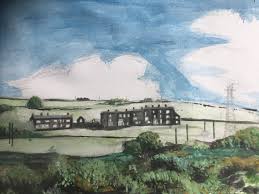
The place is a height, a look forward, although the dam served, as all did in the area, a relentless industry already past terminal decline in the 1980s of Ben’s childhood. Hight gives openness, the rural amidst an urban crowd below with little of what we name ‘urbanity’. But Sowerby Bridge acts in the book as the centre of stillness in the storm of Ben’s life. A place ‘before the moves’.
Moves are changes over which Ben has no choice. Moves from town to town, family to family, from both to institutions and between institutions. The latter range from children’s homes to the grotesque and inhuman use of ‘out of area’ placement homes involving children already damaged by insecurity to distant places. The latter are shown to be chosen with the minimum of planning or frankness about them. One such change takes him to the Home of Christine and Darren, who physically abuse and neglect him. The first move though is initiated by the difficulties in his mother’s life as a single woman, with diminished ability and motivation to care directly for her family, from Sowerby Bridge to Mixenden. Mixenden is nearer to Halifax but not near enough to advantage from a larger town’s resources. If Sowerby Bridge is Ashcroft’s ‘Paradise Lost’, Mixenden is Hell.
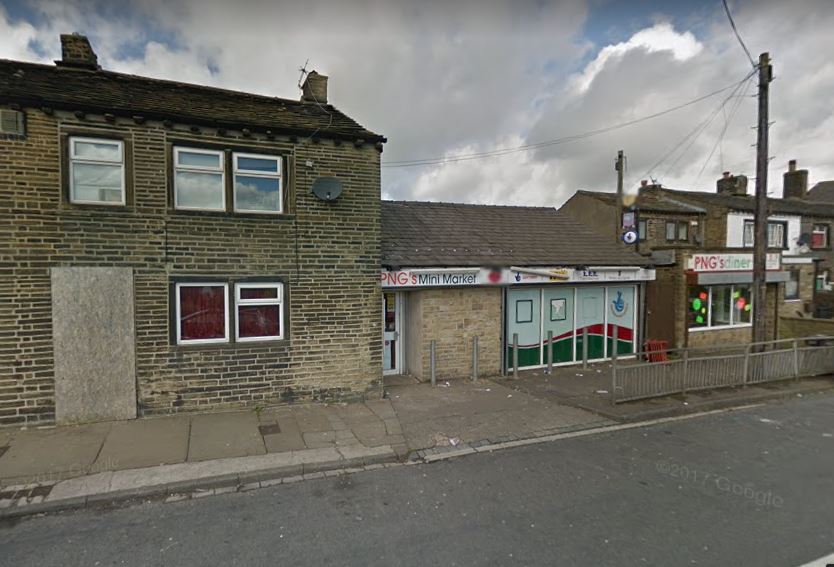
My life was a nightmare now, I could not go out for fear of getting bullied or attacked because that sort of thing happened around Mixenden.
(p.43)

The responses to moves are described almost coldly, certainly without any overt demonstration of the conflicting emotions they involved. They are named these emotions but further than that Ben does not go. In a sense that makes his statement of the inappropriateness of the response of others – police, parents, care workers, social workers, courts – easier to accept if you haven’t seen it for yourself.
They include self-harm (p.59, 108 for instance) and uncompleted suicides (p. 99f.). Strangely enough a caring response only happens after the main suicide attempt and his report of abuse. You can’t help but accept that he only receives kindness and understanding here because it is written into the protocols of safeguarding policy regarding abuse allegations. It is the only time he has a good word for the police: ‘They were the first police officers I have liked, but I suppose that this time we were meeting me under different circumstances.’ (p.100)
That ‘we’ may be a proof error in that sentence but for me it works – even Ben is meeting himself under ‘different circumstances’, as a victim rather than perpetrator of crime. What is clear is that authorities with a power, and often a duty under law, rarely do this in a way that involved Ben and that allowed him to talk, until (p.112) in a secure unit for serious offenders in Kent: ‘They were encouraging me to talk, which helped.’ Otherwise care authorities ‘other’ him by their own talk. His analysis of the use of ‘kicking off’ as a way that youth workers can talk of young people without listening to them is masterly (p.63). I have found some psychologists to use the term ‘acting out’ to a similar effect.

There are exceptions but so rare they are, in this book, named directly and bid farewell in the brief goodbye of the book. One is John, who uses his relationship to maintain Ben’s belief in himself.
He’s the only person that has said that to me, John sees the good in people.
p. 82
Just reading this will not show you the virtues of this book and the story it tells. After reading it, we need to haste back into its description of the worst abuses because they are still current and may be growing. There is no room for complacency about the issues Ben raises.
Read it, please!

Steve
 Steve_Bamlett_blog
2 thoughts on “Reflecting on Ben Ashcroft’s (2013) ‘Fifty-One Moves’ Hook, Hampshire, Waterside Press”