Reflecting on Outrages: Sex, Censorship & The Criminalisation of Love (2019) by Naomi Wolf, London, Virago.

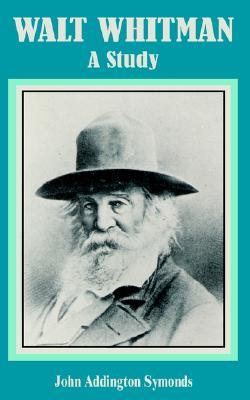
I bought this book with trepidation on its release. It has taken till now to get down to read it. Superficially considered (and that’s a self-judgement) it tells a story I’ve heard many times and in many aspects, or so I thought. Books linking the stories and fictions (sometimes hard to tease apart) of Walt Whitman, John Addington Symonds, Simeon Solomon, Walter Pater, Algernon Swinburne and, inevitably, Oscar Wilde are legion and have poured into the public domain since early beginnings in the 1970s, when as an activist for ‘gay rights’, I read all I could, especially when it linked to my other passions: literature and politics.
However, the book is highly recommended. That’s not least because it contextualises the great names here in otherwise unknown stories in history, and with the names, of young men who suffered privation and hardship as a result of offences against oppressive laws. That legislation, through many varied forms of which I’d only been vaguely aware, sentenced them to very hard punishments, for crimes without a victim. One feature of this legal story that I found illuminating, though it remains contested, is Wolf’s assertion that the high-point of legal oppression of men who, for whatever reason, had sex with other men, was not the 1885 Labouchere Amendment. Added to a Bill aimed at raising the age of consent to sex for girls to 16 (p. 241), its significance is misread, according to Wolf, in the common story told by other tellers of queer history.
That Amendment does give us a title for this book in that it defines certain ‘Outrages on decency’ that were to become subject to the law’s purview. However, although this amendment widened massively the number of people whose lives became subject to state law and the number of those actually sentenced under such law, one reason for this was the law was less draconian in terms of allotted punishment than that prevailing before 1885. For that reason earlier law sometimes gave up to 12 years of hard service to males, sometimes of males only 15 years-old. It was also used mainly to punish males in lower social classes.
Labouchere remains significant though because what it criminalised was a much wider version of male indecency. Outrage need not express itself in physical terms nor even intentions towards physical expressions. As Wolf tells it the law changed over the period she covers from a base in which laws restricted ‘sodomy’ (which was not confined to certain sorts of people and relationships or even to the specific act of anal sex). Wolf shows how the focus of law after that became concentrated less and less on the physical act of male-to-male sex, increasingly known as B_g_Y with the contracted spelling shown like that in law. One feature of this was the kind of evidence required to prove that unlawful acts had occurred.
Originally buggery could only be proved by the evidence of the semen that had been discharged into the anus. This constituted a high burden of proof but it was also evidence that was difficult to attain. Hence fewer prosecutions could be made. It is only with the advent of ‘venerology’ (discussed Part V, Ch.15) that it was decided that a finer proof of the commission of an illegal act could be applied based on medical measurements of the state of the offending anus. We need to remember that passive sexual partners were thought to bear the burden of guilt and stigma for illegal acts – in analogy says Wolf, with the situation of all women – based on six measures of anal criteria. These six were often narrowed down to one alone – ‘extreme dilation of the anal orifice’ measured by a sphinctometer.[1]
Such evidence required no evidence of the completion of a sexual act but only the intention to thus complete to the point of observable signs of penetration being discoverable. Under this Act, according to Wolf’s evidence, widespread use of a kind of state torture was used on ‘suspect men – in search of the 6 signs that of the state of their anus associated with passive sex. Higher sentencing followed this more abstracted evidence of an ‘attempt’ at sodomy, requiring no actual or imagined deposit of semen.
The Labouchere Amendment further abstracted the offence and extended the evidence required for it to merely expressing an intent to sodomy, either in one’s own, or anyone else’s sexual life who might be effected by its promotion. Of course that latter change laid the base for criminalising anything that knowingly or not ‘promoted’ sex between men, including literature (fiction or non-fiction). The same process also occurred in the USA but at a different pace and with varied historical landmark dates towards that end. Hence the stories of Whitman and Symonds follow uneven trajectories as each embraces a need to disguise or even deny the meaning of any expression of homo-eroticism or close emotional homosociality. Symonds pursued Whitman to talk about the ‘meaning of Calamus’ since the Calamus poems were the most open expressions of physical love between men and would he thought, validate his life. The calamus plant itself was thought to be a very open symbol of the phallus.
But there are important stories Wolf tells about how developments in a less convention-bound heterosexuality felt to be as queered to society as was homosexuality. For instance the chapter on the role of divorce law in setting the context of masculine heterosexual hegemony is powerful (Part II, Ch. 6) as is the beautiful picture of the effect on sexual ideology of the relationship, and its public reflections, of Annie Besant and Charles Bradlaugh (Part VI, Ch. 20)
For this reason alone it needs to be read by queer activists and scholars. However, it also has much to say about how literature and visual art are used as evidence of changes in the criminalisation of victim-less somatic experience and homoerotic thought. None of this is new. But the book shows us how and why changes in the function of art as a maker and organiser of encoded signs and the interactions between different forms of code is analogous to issues in sexual history. Literature’s debt to the notion of the ‘secret’ owes much to its use by great artists like Whitman, and lesser ones like Symonds, to encode gay embodiment, interactions and romantic love. These writers disclose and secrete simultaneously issues of both sexuality and developments in the public role of art. As Wolf makes clear we see this in women’s writing – in the early work of Christina Rossetti for instance. However, the reading of Goblin Market here seems to offer nothing new to literary criticism.
Some significant light is shed on Symonds in terms of how code and disguise work together and how literary work gets owned or disowned (or manipulated strategically) by its author. These ways that remain relevant to how we read any literary work or look at the relation of literature, narrative, meaning and visual art. A favourite story of mine that runs through the book, in a minor role of course, is the Story of Simeon Solomon, who used iconography to blend a concern with both Jewish live and ideals, and his own sexuality. He did both with the demands of an audience unsympathetic (even hostile) to either in mind. The story of Solomon looks at how literary, and possibly psycho-sexual, allies, became divided by fear of contagion from each other. The trigger to these divisions was the ‘othering’ of sexual pleasure from biology. Artists could be cruel in distancing themselves from those ‘caught in the act’ of otherness – even when that act might have passed as acceptably in society in the past. The readings of Solomon visual works are some of the strongest in the work. These show works, that unlike Whitman and Symonds do not rest on a romantic chivalric masculinising of male comradeship, but of celebrations of ‘indeterminate gender’ (p.170):
The three embracing figures … could be men, but they also could be women – or some combination of those genders. … The only gender-related certainty about the figures in Sleepers and One that Waketh is that the image plays tricks on an audience’s assumptions about the genders of those who love.
(170f. See also p. 199).

These acts can be interpreted as tricks played by an artist to disguise their true sexuality. But equally, they could be displacing gender and relationship norms by something much more queer and not normative.
Solomon was abandoned by conventional, and even unconventional, society after his imprisonment for consensual sex with another man in a London urinal, and supported only (but lightly and at a distance) by Walter Pater, Edmund Gosse and Oscar Wilde.
A more disturbing example of the fickleness of the unconventional when their own public reputations were at risk are the obscene lengths that Algernon Swinburne went to distance himself from both the man and art we name as Walt Whitman and those very different versions named after Oscar Wilde:
… the former lyricist of flagellation, lesbianism, and sadomasochism wanted it to be known (through letters to Wilde) that he admired Whitman not for anything to do with sexual content, but for his poems that centred on noble, abstract themes.
p.234
I like this book. I’m keeping it on my shelves as a useful reference for the sources of the stigma that developed regarding some forms of bodily contact or emotional connection and the way these themes find resonance with art looking to its own function and purpose. Art for art’s sake, for instance, should be read as a statement of resistance to the way in which social and cultural norms betray the development of social relationships into ever newer forms of modernity.
Steve
[1] Wolf (2019:152-4). The quotation is from the French physician Auguste Tardieu whose forensic study of the 6 signs of the anus that had been penetrated was published (in French) in 1857.
 Steve_Bamlett_blog