Shaping contemporary local higher education without the constraints of the faculty.
Thank you to MIMA, Dr Martyn Huson & Emily Hesse for leading up a wonderful event at MIMA yesterday.
Collect together distinguished academics who appear willingly, not only as academics but also as people, to talk about their experience. Then elaborate and structure from that useful knowledge, skills bases and languages and you get something like this event.
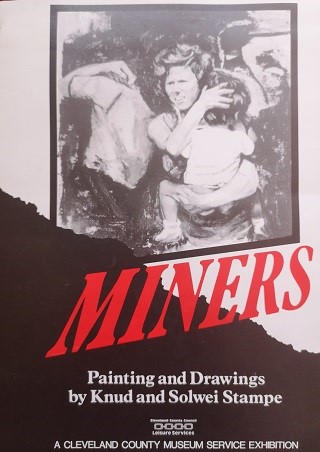
Focus it around a past event, its past, present and future meanings and further make it accessible by presenting issues around one short text – Berger’s introduction to a catalogue of radical mining art following the Miners’ Strike, then you have accessibility, openness and potential without the commercialism and reification of the MOOC or OPEN course economy.
And a text that is complex, self-contradictory, problematic and yet seeks to define ‘tenderness’ in ways that Emily Hesse beautifully elaborated –art, politics all in the remit of embodiment and affect.
Of course I’m a sucker for Nikos Papastergiadis’ contributions – he knew and visited Berger, can recount stories of encounters but put them not only a human context but a rigorous academic one without patronising his audience. His and Martyn Hudson’s contributions were wonderful ways of opening out one text at many levels, even if many questions remained after our short day. One was did he really come over from his Chair at Melbourne University just for this small, if significant, event. If so – all the more to his credit.
But I also wanted so much to query the protective nurturing words that Berger held out to his imagination of legitimated political violence against the ‘pitiless’:
I would shield any such hero to my fullest capacity. Yet if, during the time I was sheltering him, he told me …..
I find those words ‘shield’ and ‘shelter’ problematic. They seem to fill out the significance of the writer into something larger than just a voice, into something nurturing but something potentially over-authoritative as the voice of art may (and sometimes does) become.
I think I’d have liked also some sense too of how the exhibition after the Miners’ Strike related to the fact of MIMA’s major holdings, inherited from Middlesbrough Council Gallery, of Tom McGuinness. How is art that emerges from within the working-class at its work related to the global radical, if still neglected, art of Knud and Solwei Stampe. And could we too have seem more of the latter – 3 beautiful examples however were there.
But all this could not have done, especially since other urgent themes were explored, such as anti-racist and feminist visual art and its optima and querying and radical display potentials by Alison Lloyd, the process of development in the writing of women supporting men and eventually the whole community in the development of a voice that represented the women themselves. The work here by Carol Stephenson and Jean Spence was beautifully shared, alongside the sources in rare ephemeral pamphlet publications.
And then a video contribution from Tom Overton, Berger’s official biographer who has given us such great retrospective anthologies of Berger. Real questions were asked. But presence in the flesh works and Martyn Hudson and Emily Hesse brought their wonderful and beautiful felt perspectives on this great writer, intellectual, visual artist and compassionate person that was John Berger, however flawed like all of us. Martyn contextualised all this in terms of all of Berger’s oeuvre including his now being-neglected novels, especially A Painter of our Time and G. Emily made us need to read some of her writing and to that aim I’m dedicated – because if politics, art and affect can be related in our value systems, I’m sure Emily can help us.
And thank you MIMA for this great collaboration with the University of Northumbria. There is openness out there. We yet need to tap it rather than commodify it and sell it.
Steve
 Steve_Bamlett_blog
2 thoughts on “MIMA on Berger: Shaping contemporary local higher education without the constraints of the faculty.”